



‘Post-Reformasi effect’ uniting M'sians, experts say
Academics and community leaders said at a forum today that Malaysian politics needs to pivot away from divisive discourses about race and religion and shift towards the will of the people.
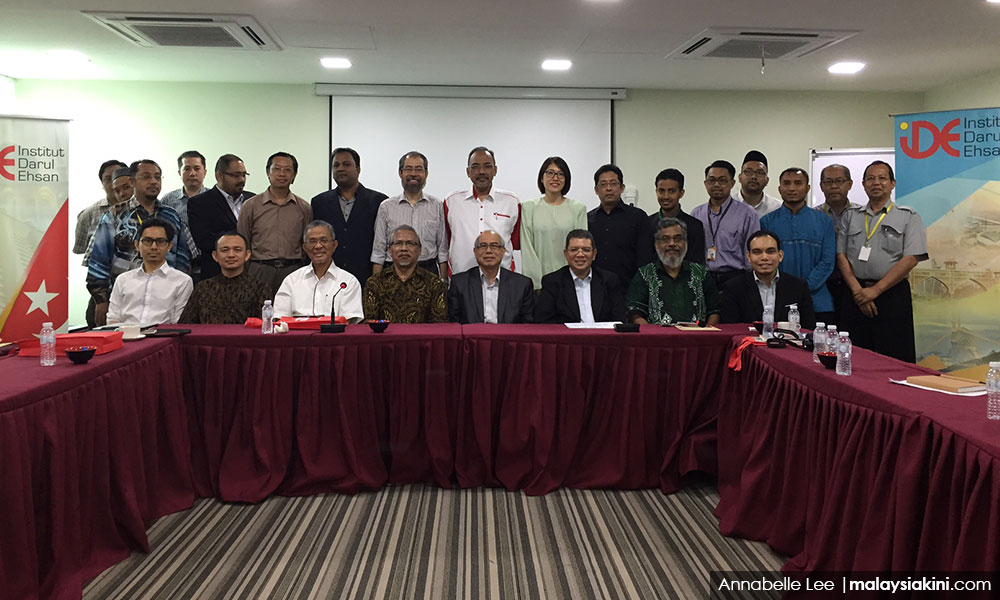
Speakers at the “Diversity in the framework of unity” forum at Institut Darul Ehsan (IDE) agreed that politicians were to blame for using the issues of race and religion for political expediency, resulting in the fracturing of Malaysian society based on perceived differences.
“Empty political slogans” put forth by the government, like 1Malaysia, did little to inspire unity, argued International Islamic University Malaysia political scientist Maszlee Malik.
“Instead, we need a new narrative that focuses on walking the talk, and it should come from civil society – universities, NGOs, religious bodies and societal groups...
Academics and community leaders said at a forum today that Malaysian politics needs to pivot away from divisive discourses about race and religion and shift towards the will of the people.
Speakers at the “Diversity in the framework of unity” forum at Institut Darul Ehsan (IDE) agreed that politicians were to blame for using the issues of race and religion for political expediency, resulting in the fracturing of Malaysian society based on perceived differences.
“Empty political slogans” put forth by the government, like 1Malaysia, did little to inspire unity, argued International Islamic University Malaysia political scientist Maszlee Malik.
“Instead, we need a new narrative that focuses on walking the talk, and it should come from civil society – universities, NGOs, religious bodies and societal groups.
“It should come from directly from the people, with as little government intervention as possible,” Maszlee said.
Rather than race and religion, Maszlee proposed that the narrative be guided by mutual respect, fellowship, responsibility, humanity, love, mercy and equal opportunity.
Also advocating a bottom-up approach to nation building were former Ideas chief operating officer Tricia Yeoh, Institute of Ethnic Studies researcher Denison Jayasooria, and Pusaka founder Eddin Khoo.
Based on his research on traditional Malay art forms around the country, Khoo argued that the grassroots were already taking matters into their own hands.
“The alternative narrative (to race-based politics) is already happening on the ground. Nation-building (activities) are happening all over the place and progressive politics comes from these movements – when small examples are used to challenge the general narrative.
“It's the post-Reformasi effect,” he said.
Despite wanting things like good governance from politics, Khoo said that the people remained stuck in discourse revolving around race and religion due to a shallow grasp of history.
“We are so easily insulted because we don’t have the historical strength, we have forgotten our history. History needs to be continually debated and challenged so we can learn to reconcile ourselves with our history and thoroughly examine our cultural worldviews,” he added.
A thorough understanding of religion would also emancipate Malaysians, especially Malaysian Muslims, from existing political narratives, said Siddiq Fadzil of Universiti Selangor (Unisel).
“We need to think about a new political discourse that doesn’t use words like kafir (infidel) and harbi (non-Muslim). Rather, diversity needs to understood in the framework of unity.
“We should promote the word ummah (citizens) and apply it to all Malaysians. Many think the word can only be used for Muslims, but it can be an inclusive term as well.
“And we should be having dialogues with people of different religions and races, that is the Quranic approach. In fact, the Quran is basically a dialogue between Mohammad and his followers.
“To have these dialogues, we need to accept people as they are (rather than impose our conditions on them). Accepting people as they are should be a principle,” Siddiq said.
Researching an end to race-based politics
The discussion culminated with the soft launch of the Pusat Kajian Pembinaan Bangsa (Nation Building Research Institute).
Parked under the IDE, it aims to be a platform for discussing issues related to race and religion, and seeks to propose policies and programmes that will increase national unity, especially at the grassroots level. It also aims to depoliticise race, encouraging a departure from race-based politics.
The institute will be led by Pakatan Harapan secretariat chief Saifuddin Abdullah, and will comprise Serdang MP Ong Kian Ming, lawyers Lim Chee Wee and Syahredzan Johan, academic Noor Inayah Yaakub, as well as economists Hafiz Noor Shams and Adli Zakwan.
Besides Siddiq, Tumpat MP Kamaruddin Jaffar and Unisel vice-chancellor Mohammad Redzuan Othman will serve as the institute's advisers.
IDE was set up by the Selangor state government in April 2015, with Menteri Besar Mohamed Azmin Ali playing the role of adviser.


