



Rafizi: Voters still feeling blue despite PM's 'feel-good' measures
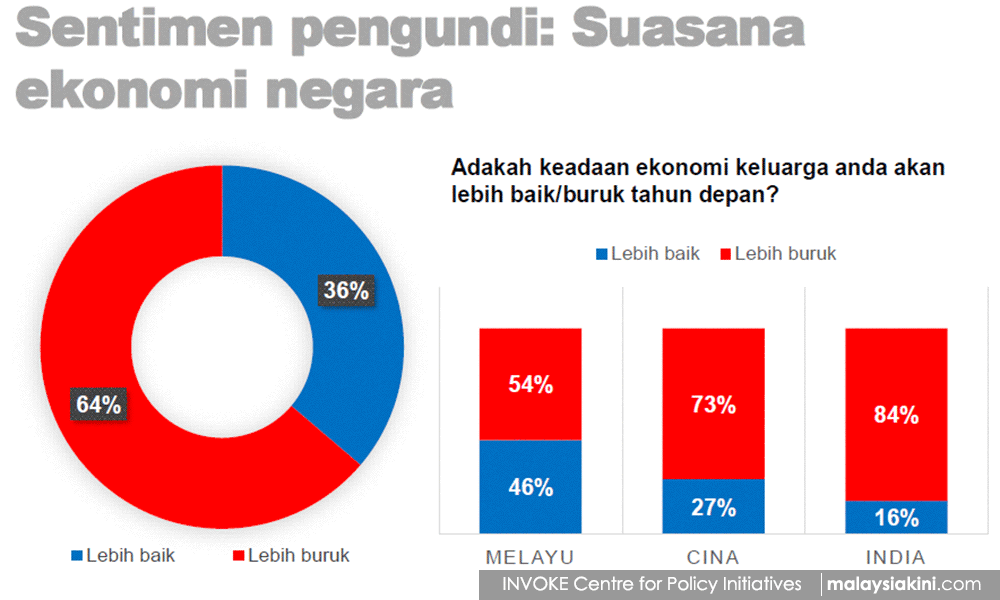
Prime Minister Najib Abdul Razak's feel-good policies and initiatives have failed to alter the people's pessimistic view of the economy, according to PKR vice-president Rafizi Ramli.
The Pandan lawmaker based this on the results of a survey carried out by Invoke's Centre for Policy Initiatives (Invoke-CPI).
"What we have discovered so far, announcements after announcements don't seem to shift the mood on the ground...
Prime Minister Najib Abdul Razak's feel-good policies and initiatives have failed to alter the people's pessimistic view of the economy, according to PKR vice-president Rafizi Ramli.
The Pandan lawmaker based this on the results of a survey carried out by Invoke's Centre for Policy Initiatives (Invoke-CPI).
"What we have discovered so far, announcements after announcements don't seem to shift the mood on the ground.
"It did not improve the sentiment. It has failed to create that feel-good factor among voters," he told a press conference in Kuala Lumpur today.
The survey showed that 78 percent of Indian respondents thought their family's financial situation was worse now compared to four years ago.
This is a much higher figure than the Malay and Chinese respondents, of which 61 and 66 percent gave the same response respectively.
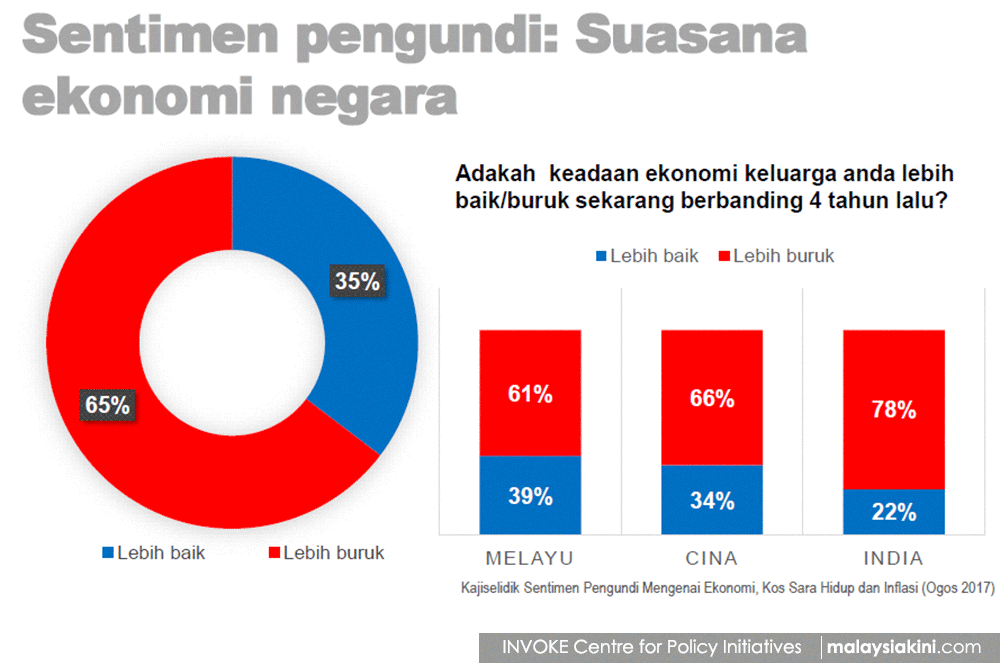
Rafizi said this showed that the Malaysian Indian Blueprint, which was launched by Najib in April this year, had little effect on Indian voters.
Invoke-CPI's survey on voters' sentiment of the economy involved 3,783 respondents and was conducted between June 10 and July 14.
Rafizi claimed the prime minister relied on major spending announcements aimed at creating a feel-good economic sentiment among the voters.
"Najib's main campaign is to show he is great, the economy is good, there are plenty of investment for the rakyat. We know it is meant to create a positive perspective on the economy's prospects.
"So we want to show him through this survey, I am sorry Najib, it has failed. It did not have that much impact," he said.
'Difference between reality and Najib's thinking'
Rafizi also pointed out that there appeared to be huge discrepancies between the official inflation figures released by the government and the inflation that the rakyat is experiencing.
Based on the survey, a majority of the respondents felt that the cost of most goods and services have risen by more than 10 percent.
Rafizi said this was in stark contrast with the official inflation figures at two to three percent.
For example, 50 percent of the respondents said the cost of groceries and food have risen more than 10 percent in the last year, with 37 percent believing the increase was between six and 10 percent.
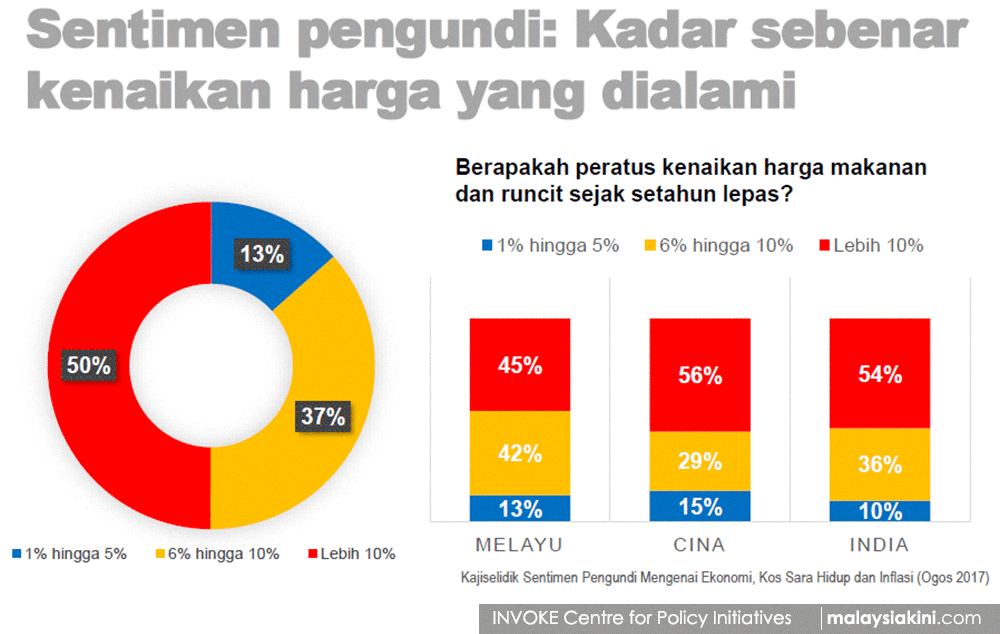
Only 13 percent believed the cost of groceries and food increased between one to five percent in the last year.
Meanwhile, 41 percent of respondents said fuel prices increased between 11 and 20 percent in the past year, while 25 percent said the increase was much higher, above 20 percent of the price.
The survey also revealed that 64 percent of respondents said the cost of clothing, schooling items and other miscellaneous items had inflated by more than 10 percent since last year.
Chinese respondents seemed to feel the pinch of this last category the most, with 82 percent saying the price of clothing, schooling items and other miscellaneous items inflated by more than 10 percent.
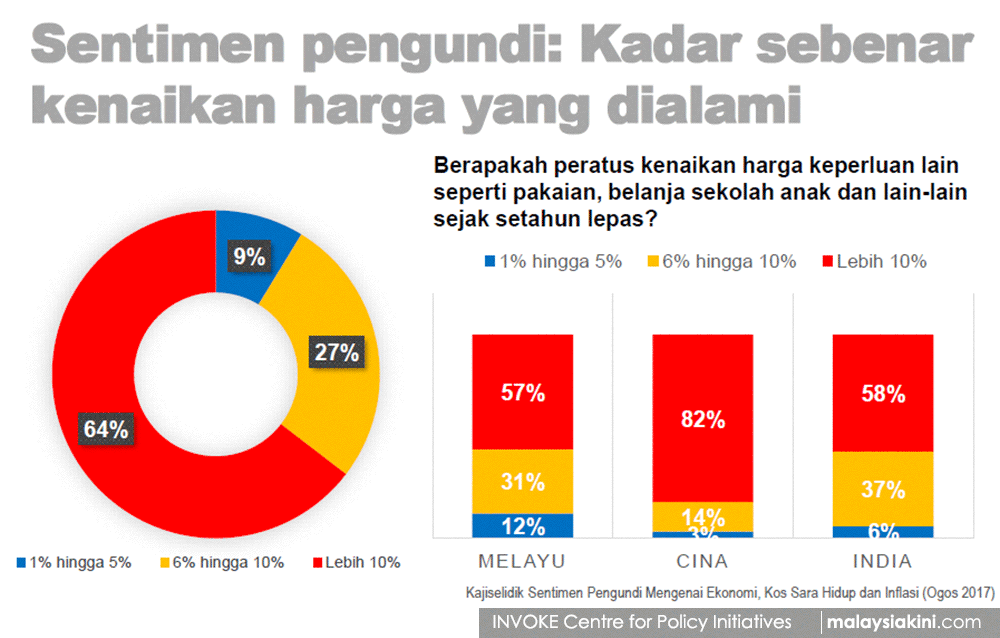
Rafizi speculated that it was because most Chinese parents send their children to Chinese vernacular schools which received little financial support from the government compared to other schools.
However, when it concerned electricity and water tariffs, 72 percent of the respondents said the inflation was below 10 percent.
Rafizi explained this was in line with the fact that tariff rates had not increased last year. He said this also showed that the respondents were being truthful about their answers.
"There is a huge difference between the official inflation numbers released by the government that is between two to three percent compared to the rising cost of goods that is felt by voters.
"When the government and Najib's administration keep announcing low rates of inflation...it provides an ever-growing gap between what is reality and what Najib thinks, and in turn creates resentment.
"Because over time, the public feels these are all lies. And that is why despite a supposedly good economic figure, we do not see that reflected in the sentiment of the voters," he added.
The rakyat, he said, then becomes less trusting of official figures released by the government, which would make it more difficult for Najib to sway voters with other major announcements.
"It is unlikely, in my opinion, that Najib can conjure anything within the next two months, even during the budget announcement, that can drastically improve the economic sentiment of the voters," he added.


