



Embracing neurodiversity through music therapy
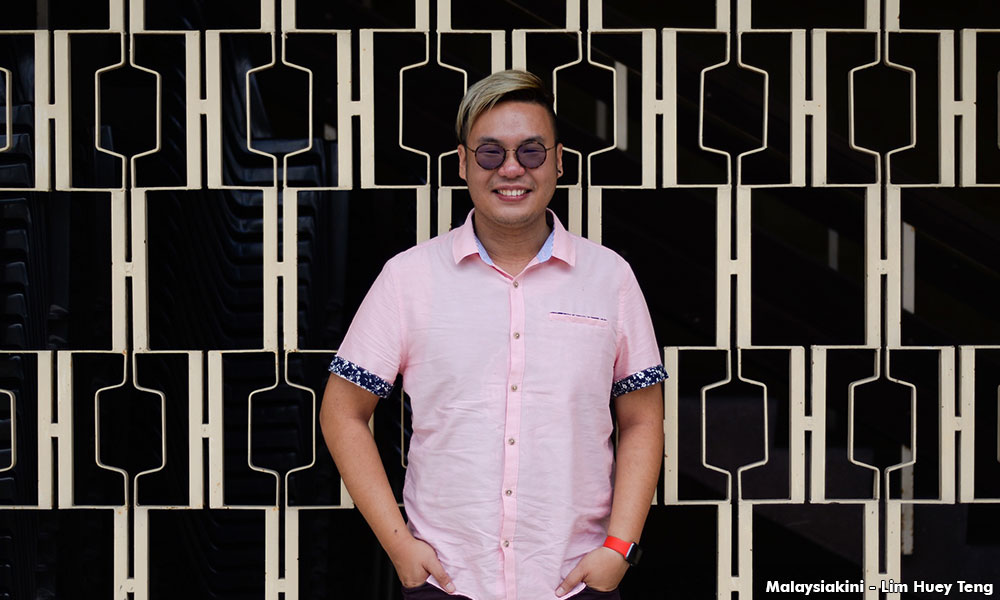
MALAYSIANS KINI | It is easy to spot Low Ming Yuan when we first meet at Pulp cafe in Art Printing Works, Bangsar.
He stands out from the crowd with his striking blond hair, pastel pink shirt, and black earstud. Round glasses give him a studious air.
The look of a creative scholar befits Low, a music therapist working with autistic people who have been living and studying in the US for the past 14 years.
The 31-year-old is the only certified Malaysian practitioner of the Nordoff-Robbins approach to music therapy, which broke new ground when it was first established for its use of music to communicate and build relationships with a wide range of special-needs children.
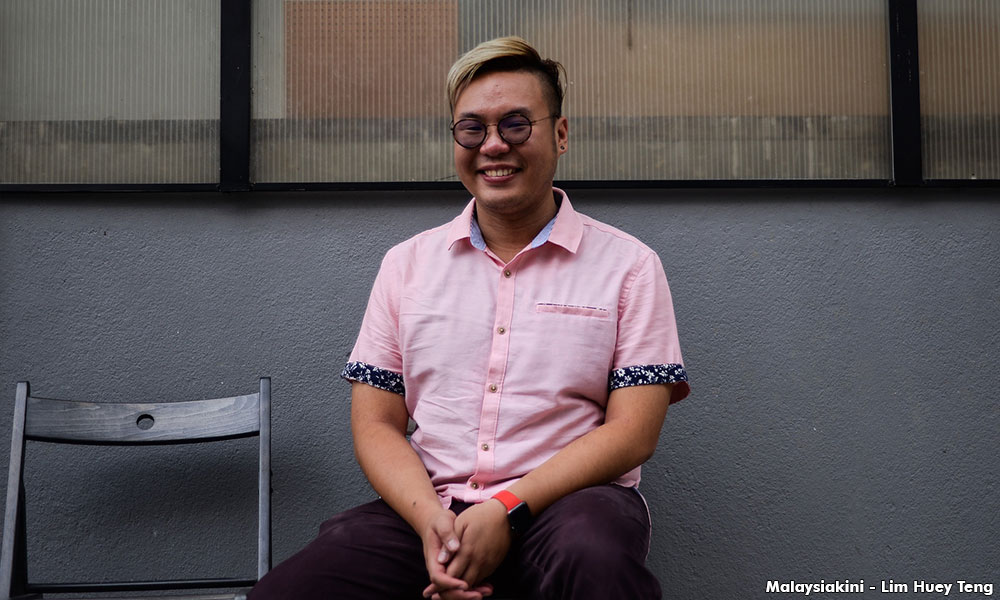
“The two founders of the approach, Paul Nordoff and Clive Robbins, found that music could reach - and I’m using the words they used back then - ‘the most unreachable children’,” Low says.
He explains that the approach is “based on musical connection”.
“It’s not just the therapist playing music for the client; the client is also actively making music with the therapist,” he adds.
The Nordoff-Robbins approach to music therapy, which was first developed in the US and England in the late 1950s, has since become popular across the world.
Interestingly, Nordoff-Robbins therapists use an improvisational approach, drawing upon the behaviour and emotions of its clients to interact with them through music.
“In Nordoff-Robbins, we actually see the person as a musical portrait, a musical being. Anything the client is presenting, their affect, like moving their fingers, tapping their foot, walking, just sitting there - the energy that they bring in is all music to us.
“Our job is to make music that reflects that. It has to reach out to the client, saying, ‘We understand what’s going on with you. This music is trying to reach to you’, and if the client can understand that, it becomes the basis of our communication,” Low says....
MALAYSIANS KINI | It is easy to spot Low Ming Yuan when we first meet at Pulp cafe in Art Printing Works, Bangsar.
He stands out from the crowd with his striking blond hair, pastel pink shirt, and black earstud. Round glasses give him a studious air.
The look of a creative scholar befits Low, a music therapist working with autistic people who have been living and studying in the US for the past 14 years.
The 31-year-old is the only certified Malaysian practitioner of the Nordoff-Robbins approach to music therapy, which broke new ground when it was first established for its use of music to communicate and build relationships with a wide range of special-needs children.
“The two founders of the approach, Paul Nordoff and Clive Robbins, found that music could reach - and I’m using the words they used back then - ‘the most unreachable children’,” Low says.
He explains that the approach is “based on musical connection”.
“It’s not just the therapist playing music for the client; the client is also actively making music with the therapist,” he adds.
The Nordoff-Robbins approach to music therapy, which was first developed in the US and England in the late 1950s, has since become popular across the world.
Interestingly, Nordoff-Robbins therapists use an improvisational approach, drawing upon the behaviour and emotions of its clients to interact with them through music.
“In Nordoff-Robbins, we actually see the person as a musical portrait, a musical being. Anything the client is presenting, their affect, like moving their fingers, tapping their foot, walking, just sitting there - the energy that they bring in is all music to us.
“Our job is to make music that reflects that. It has to reach out to the client, saying, ‘We understand what’s going on with you. This music is trying to reach to you’, and if the client can understand that, it becomes the basis of our communication,” Low says.
Low, who is currently pursuing his PhD in creative arts therapy at Drexel University in Philadelphia, recently received a grant from the Mid-Atlantic Region of the American Music Therapy Association to develop a quantitative ratings system to measure the impact of music therapy.
He describes his project as “a new scale that observes musical engagement”, with various levels to measure how much support is needed from therapists for clients to create music.
Low hopes that the scale will provide a new way to measure autistic clients’ social interaction and communication skills.
‘Typical Malaysian story’
Low was born in Kuala Lumpur and grew up in Malacca.
He describes his early beginnings in music as “a very typical Malaysian story”, starting out with group music lessons at Yamaha and progressing onwards to a Grade Eight certification in piano with Trinity College London.
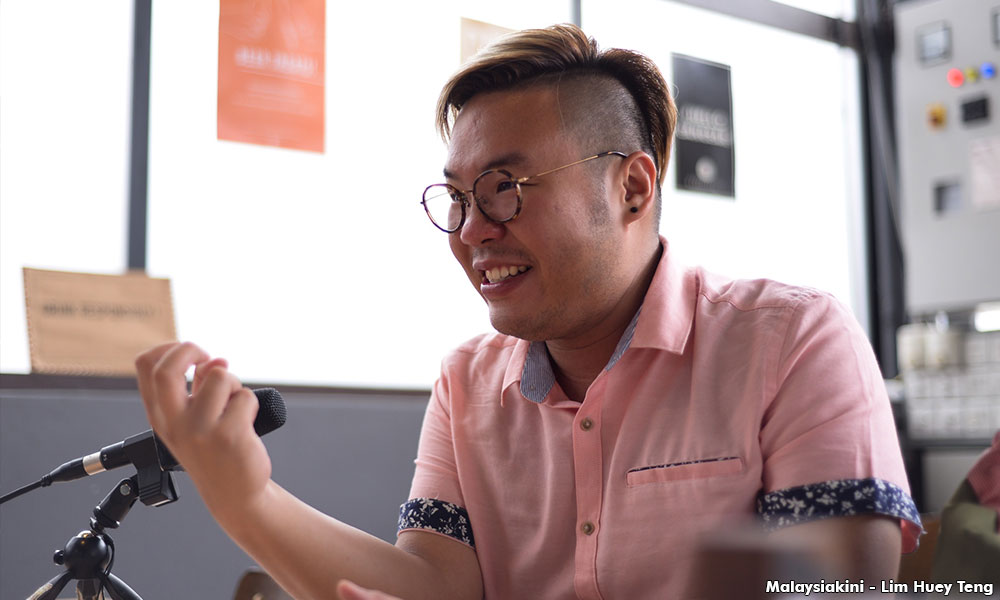
However, Low’s parents were not keen on him pursuing music as a career.
“I wanted to do something in music. I knew I didn’t want to perform; I don’t have the patience to practice for performance, and my parents didn’t quite see a future in me doing music education, so they encouraged me to explore things, but not performance or education,” he said.
Low discovered the existence of music therapy courses after doing some online research.
“I went on Google and I found music therapy. I get a bachelor of science, and a minor in psychology. My Malaysian parents should be happy about that, right?
“But little did they know that I would stick on with music therapy, even though they thought I would switch to real estate or pharmacy!” he laughs.
Along the way, his parents have changed their views about his career choices. “They are now extremely supportive. I couldn’t find bigger supporters of my career than my parents,” Low says gratefully.
Low completed his undergraduate and master’s degrees in music therapy at the Texas Woman’s University - “a co-ed university”, he hastens to add - before training at the Nordoff-Robbins Centre for Music Therapy in New York University. He worked at the centre for three years as a research and technical assistant, as well as a clinician.
The therapist is also a talented multi-instrumentalist. Having started off playing piano and classical guitar in school, Low was exposed to other types of musical instruments, such as brass and percussion during his time at university.
“You have to learn all kinds of instruments in music therapy, to give you new languages to tap into when you try to connect with your clients,” he explains.
Autism and neurodiversity
Low has been working with autistic people ever since his early days as an undergraduate.
“I find that it’s exciting getting to engage with people on the (autistic) spectrum because I do truly believe that music can facilitate that connection where all other kinds of connections have failed, or are less effective,” Low says.
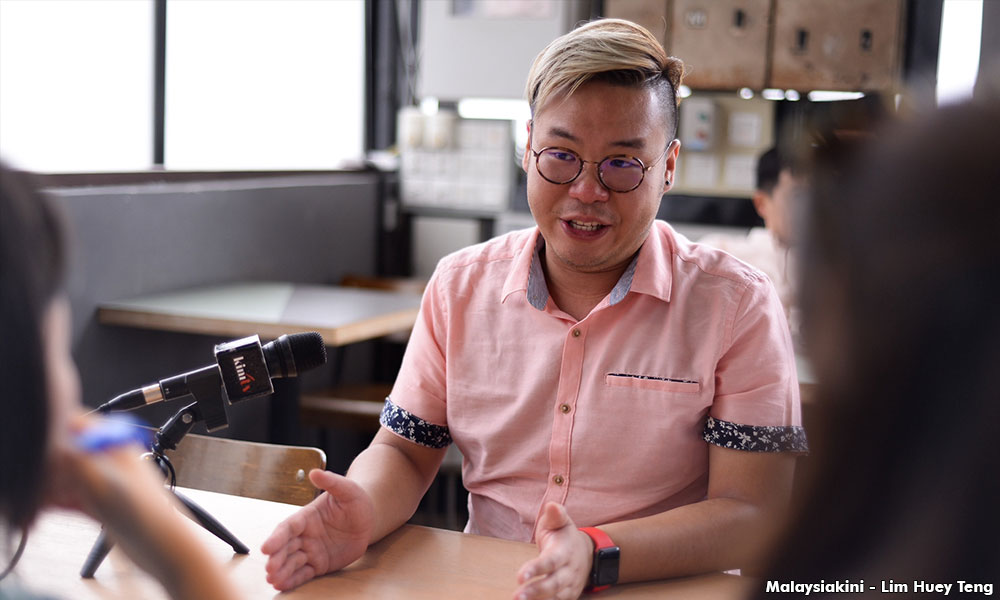
Autism, or autism spectrum disorder, refers to a range of conditions characterised by difficulties in social communication and interaction that typically present themselves in early childhood.
Low is particularly concerned about misapprehensions that the public may have about autism.
“There’s this misconception about autistic people. They are perceived as lonely or reclusive, but actually, they do crave friendships and relationships; it’s just that it works out differently with them.
“Music becomes this great equaliser for us to meet in the middle, to learn how to interact with each other,” Low says.
He is a strong supporter of neurodiversity, a concept that advocates for autistic people to be seen as individuals with “different strengths and skills that neurotypical people would not have”.
To that end, Low clarifies that Nordoff-Robbins music therapy aims to provide its autistic clients with tools to cope in society, rather than a medical “fix”.
“The stance that I, along with other therapists and the neurodiversity community, take is that we’re not out there to ‘cure’ autism. We’re there to reach clinical goals that could look like a myriad of things, like healthy self-expression skills, or engaging in creative endeavours, or to give you communication skills, or to make music.”
Low is currently a committee member of the newly-formed Malaysian Music Therapy Association. He notes the small number of music therapists in Malaysia - 12 in total - and acknowledges the importance of coming back home after he finishes his PhD.
“I’m planning to come back, because there is a need for music therapy here in Malaysia. Also, as a music therapist, part of my role is about inspiring and teaching the next generation of music therapists, and being involved in societal change.”
As the interview draws to a close, Low reflects upon the importance of therapeutic approaches that harness music and the creative arts, in relation to other professions and disciplines that address health and wellbeing.
“No therapy is an island, no therapy is superior to another. We’re all in this together to create a better world. But each therapy has its own unique contribution to what makes us human.
“For us creative arts therapists, its the creative arts that makes us human. Without the arts, we cannot find innovation, we cannot find hope, we cannot find faith. That’s where we find inspiration, and the beauty of life. That’s what helps us go on.”
MALAYSIANS KINI is a series on Malaysians you should know.
Previously featured:
War has no victors, says last surviving WWII vet
The one-man Malay literature archive
The last of generations of storytellers


