


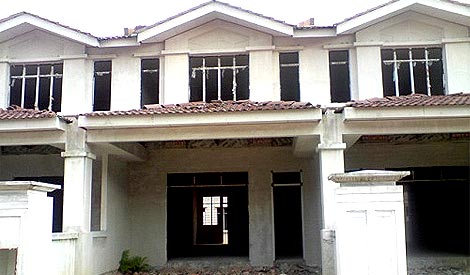

Pre-emptive measures and safety nets vis-a-vis abandonment?
Ministry: 134 abandoned private housing projects in three years.
A total of 134 abandoned private housing projects were recorded in peninsular (Malaysia) between 2013 and November, 2016, says urban well-being, housing & local government deputy minister in reply to a question in the Dewan Negara (Parliament) on Nov 6, 2016. She said the number included 26 abandoned projects this year.
COMMENT We will elaborate on the stringent rules and safety nets under the Housing Development (Control & Licensing) Act, 1966 (HDA).
The recently implemented (with effect from June 1, 2015) revamped Housing Development Act has plugged some of the loopholes, rectified inadequacies and even some questionable and grey clauses that existed in the original Act. The procedures for control and licensing of housing developers have been made more stringent so that non-bona fide developers would be marginalised.
New law - criminalising abandonment
One pertinent amendment to the HDA was on the issue of criminalising abandonment. This new amendment makes it a crime for housing developers to abandon their housing projects, with jail sentences included.
The new Section 18A states that any licensed housing developer who abandons or causes to be abandoned, a housing development or any phase of a housing development, which the licensed housing developer is engaged in, carries on, undertakes or causes to be undertaken shall be guilty of an offence and shall, on conviction, be liable to a fine which shall not be less than two hundred and fifty thousand ringgit (RM250,000) but which shall not exceed five hundred thousand ringgit (RM500,000) or to imprisonment for a term not exceeding three (3) years or to both.
New law - deposit of three percent on construction cost in the housing development account for a developer’s licence.
Section 6(1)(b) (Conditions or Restrictions for the grant of a Developer’s Licence) was enhanced to make the requisite deposit (refundable) from the current RM200,000 to three percent of the construction costs.
As to whether the new three percent deposit will curb abandonment, our contention is that it will indirectly reduce such incidents. Those developer-aspirants who are financially so weak that they are not able to raise the three percent deposit (it is refundable anyway) should stay out of the industry because the probability of them running into trouble is higher...
COMMENT | It is not that the ministry does not have the laws; it’s the laxity in enforcement.
Ministry: 134 abandoned private housing projects in three years.
A total of 134 abandoned private housing projects were recorded in peninsular (Malaysia) between 2013 and November, 2016, says urban well-being, housing & local government deputy minister in reply to a question in the Dewan Negara (Parliament) on Nov 6, 2016. She said the number included 26 abandoned projects this year.
COMMENT We will elaborate on the stringent rules and safety nets under the Housing Development (Control & Licensing) Act, 1966 (HDA).
The recently implemented (with effect from June 1, 2015) revamped Housing Development Act has plugged some of the loopholes, rectified inadequacies and even some questionable and grey clauses that existed in the original Act. The procedures for control and licensing of housing developers have been made more stringent so that non-bona fide developers would be marginalised.
New law - criminalising abandonment
One pertinent amendment to the HDA was on the issue of criminalising abandonment. This new amendment makes it a crime for housing developers to abandon their housing projects, with jail sentences included.
The new Section 18A states that any licensed housing developer who abandons or causes to be abandoned, a housing development or any phase of a housing development, which the licensed housing developer is engaged in, carries on, undertakes or causes to be undertaken shall be guilty of an offence and shall, on conviction, be liable to a fine which shall not be less than two hundred and fifty thousand ringgit (RM250,000) but which shall not exceed five hundred thousand ringgit (RM500,000) or to imprisonment for a term not exceeding three (3) years or to both.
New law - deposit of three percent on construction cost in the housing development account for a developer’s licence.
Section 6(1)(b) (Conditions or Restrictions for the grant of a Developer’s Licence) was enhanced to make the requisite deposit (refundable) from the current RM200,000 to three percent of the construction costs.
 As to whether the new three percent deposit will curb abandonment, our contention is that it will indirectly reduce such incidents. Those developer-aspirants who are financially so weak that they are not able to raise the three percent deposit (it is refundable anyway) should stay out of the industry because the probability of them running into trouble is higher.
The increase in the finance cost in order to fork out the three percent deposit is negligible when measured against the potential gross development value. Furthermore, any additional cost (interests) is only incurred during the construction phase because upon project completion, the three percent is fully refunded by the controller of housing.
However, the effectiveness of the revamped Act remains to be seen. It would only reflect its effectiveness after a period of time. However, we reiterate that much would depend on the degree of enforcement to be carried out.
Ornamental pieces
Our fundamental belief is that even the best of legislation to counter a particular situation would just remain as ornamental piece, unless strict enforcement is carried out against offenders, without fear or favour, so as to instil into them the respect and fearful feeling that the law commands.
The Housing Ministry is the guardian of the principal HDA legislation that was passed by Parliament. Yet, how do you account for the surmounting problematic housing projects? It is not that the ministry does not have the laws; it’s the sheer lack and laxity in enforcement. Let’s look at some of the existing stringent rules and safety nets that are already within the ‘Old Laws’.
(i) Sec 7A - (Duties to maintain housing development account)
7A (4) The licensed housing developer shall not withdraw any money from the housing development account except as authorised by regulations made under this Act.
7A (10) Any housing developer who contravenes or fails to comply with this section shall be guilty of an offence and shall, on conviction, be liable to a fine which shall not be less than two hundred and fifty thousand ringgit but which shall not exceed five hundred thousand ringgit and shall also be liable to imprisonment for a term not exceeding three years or to both
(ii) Sec 7C - freezing of the housing development account.
(1) If the controller has reason to believe that a licensed housing developer is carrying on his business in a manner detrimental to the interest of the purchasers or is contravening any of the provisions of this Act, the controller may in writing order a freeze on the housing development account and direct the bank or finance company, as the case may be, not to part with, deal in or otherwise permit any withdrawal of any monies from the housing development account until the order is revoked or varied or unless in accordance with any conditions as may be imposed by the controller at his absolute discretion from time to time during the currency of the order.
Even with the housing development account, no great measure at preventing misappropriation of buyers’ money, has proved to be a great ‘burden’ to those errant developers, going by their determination to avoid it. Meantime, we wonder whether the safety net was cast out, if ever at all, to salvage the failing projects. By the way, how many of these defaulting developers have been prosecuted?
(iii) Sec 7 - Duties of a licensed housing developer
Sec 7(f) not later than Jan 21 and July 21 of each year or at such frequency as may be determined by the controller from time to time or upon the request of the controller, send to the controller a correct and complete statement in writing made on oath or affirmation, in such form and containing such information as the controller may from time to time determine, on the progress of the housing development which the housing developer is engaged in, carries on or undertakes or causes to be undertaken until certificate of completion and compliance have been issued for all the housing accommodation in that housing development.
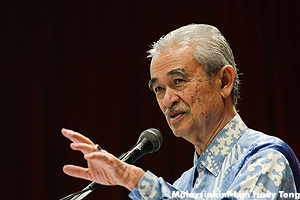 Former prime minister Abdullah Ahmad Badawi (photo) was on Nov 22, 2005, quoted as saying: “If the projects have been monitored on a regular basis from the start, any sign of them being abandoned could have been detected and the projects salvaged.”
The situation aptly applies to the lack in supervisory role, vide Form 7(f). If it has been constantly and effectively monitored by the minister and those under his charge with qualified personnel, symptoms of sickness (of a failing housing project) would have been diagnosed.
(iv) Sec 10A - powers of entry, search and seizure.
This section was copied en-bloc from the Income Tax Act and was included in the HD Act amended in the year 2002; but has this section been invoked to instil fear to the spine of those errant developers? If so, how do you account for those recalcitrant/repeat offenders? It can’t possibly be that the ministry is shy of publicity by not highlighting their achievement to the mass media.
(v) Sec 11 - powers of the minister to give directions for the purpose of safeguarding the interests of purchasers.
(1) Where on his own volition a licensed housing developer informs the controller or where as a result of an investigation made under Section 10 or for any other reason the controller is of the opinion that the licensed housing developer becomes unable to meet his obligations to his purchasers or is about to suspend his building operations or is carrying on his business in a manner detrimental to the interests of his purchasers, the minister may without prejudice to the generality of the powers of the Minister to give directions under Section 12 for the purpose of safeguarding the interests of the purchasers of the licensed housing developer:
(a) Direct the licensed housing developer in question to take such steps as he may consider necessary to rectify any matter or circumstance;
(b) Direct that a person be appointed or himself appoint a person to advise the licensed housing developer in the conduct of his business;
(c) Direct a company to assume control and carry on the business of the housing developer upon such terms and conditions as the minister may determine;
(ca) Certify that the licensed housing developer has abandoned the housing development;
(d) Direct that the licensed housing developer present a petition to the High Court for the winding up of his business; or
(e) Take such action as the minister may consider necessary in the circumstances of the case for carrying into effect the provisions of this Act.
Stories of developers ‘falling sick’ and being incapable of continuing with their housing project are not something new. Just recently, local media highlighted yet another outcry of buyers suffering from another abandoned housing scheme. Sympathies for these affected buyers are all written on the walls, but what possibly can they do?
Under Section 10 of the HDA, it is stipulated that the minister may direct the controller or an inspector to make investigation (under condition of secrecy investigate the commission of any offence under this Act or investigate into the affairs of or into the accounting or other records of any housing developer) if he ‘has reason to believe’ (ada sebab untuk mempercayai) that the housing developer in question is carrying on his business in a manner detrimental to his purchaser’ (menjalankan kegiatan yang memudaratkan kepentingan pembeli); or ‘has assets insufficient to meet his liability (atau sudah jatuh sakit).
This section is further enhanced and amplified with the inclusion of Sections 11 and 10A (Power of entry, search and seizure) and all the sections as I earlier referred. The minister and his ministry have wide ranging powers to intervene and salvage a ‘sick project’ and to offer ‘treatment to provide cure’ yet look at the numbers of abandoned projects which emerges a dire financial picture for naïve and innocent buyers.
Individuals and the community are being harmed by the laxity in enforcement and monitoring mechanism.
Conclusion
The public relying on the legislation are often let down by the enforcers. It is only good on paper and it will continue to remain in our archives unless the existing laws are used to their full capacity. The problem of enforcement was not because of the lack of laws. Enforcement programmes must be organised.
The public have been relying on this Act and the enforcers to protect them in their quest for home-ownership and many are fed-up with the lack of enforcement when problems surfaced. Lack of enforcement and monitoring weakens the provisions of the Act. Lets’ face it, there is no solution to abandonment. We just have to prevent it from happening.
Could pre-emptive measures be adopted and enforcement organised to avoid future abandonments? Your guess is as good as mine!
Yesterday - Part I: Extension of time vs abandoned project - fact or fallacy?
CHANG KIM LOONG is honorary secretary-general, National House Buyers Association (HBA).
The views expressed here are those of the author/contributor and do not necessarily represent the views of Malaysiakini.


