


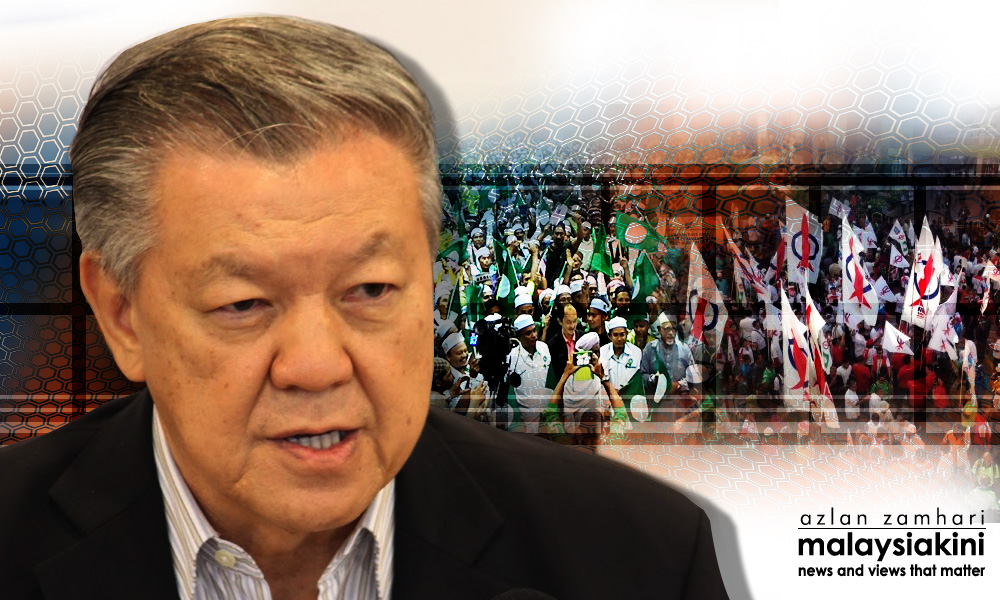

Ex-MCA president dissects PAS-DAP 'alliance of opportunism'
Prior to the tectonic shift in the national political landscape that occurred as a result of Anwar Ibrahim being dismissed as deputy prime minister in 1998, PAS and DAP had existed in their respective power cocoons.
However, when the situation changed, former MCA president Dr Chua Soi Lek said PAS and DAP chose to form an alliance, despite their opposing ideologies.
Speaking to Malaysiakini, the medical doctor-turned-politician claimed this was nothing short of political opportunism, aimed at garnering votes from those who would normally shun them.
Chua Soi Lek notes how the two parties now at loggerheads, had set aside their differences twice, for political rewards.
Prior to the tectonic shift in the national political landscape that occurred as a result of Anwar Ibrahim being dismissed as deputy prime minister in 1998, PAS and DAP had existed in their respective power cocoons.
However, when the situation changed, former MCA president Dr Chua Soi Lek said PAS and DAP chose to form an alliance, despite their opposing ideologies.
Speaking to Malaysiakini, the medical doctor-turned-politician claimed this was nothing short of political opportunism, aimed at garnering votes from those who would normally shun them.
“So DAP leaders visited Malay villages, and PAS attempted to market them as 'permissible electoral products' to the Malay/Muslim voters.
“On the other hand, PAS leaders went to Chinese areas, where DAP attempted to convince Chinese voters that PAS is reasonable, and not Muslim extremists,” he added.
The former health minister said both parties helped each other to transform into political powerhouses at the national level.
However, in 2001, their relationship in Barisan Alternatif went south and the leaders hurled insults and accusations at each other.
But prior to the 2008 general election, Chua said, the acrimonious past was forgotten, and another alliance was formed due to the “seduction of power”.
For the subsequent general election in 2013, he added: “DAP went all out for PAS and PAS went all out for DAP because they were convinced of taking Putrajaya. The failure to do this proved fatal to their relationship, and they blamed each other.”
Two years later, the strained ties became unmendable, leading to the collapse of Pakatan Rakyat.
“Now, we see the leaders of both parties blaming each other, and once again hurling insults despite joining hands, not once, but twice. This smacks of hypocrisy and opportunism.
“The simple fact is that both DAP and PAS betrayed their core principles and supporters for the sake of political rewards,” he added.
'Politics has become toxic in Malaysia'
Chua also pointed out how DAP veteran Lim Kit Siang has now found a new political comrade in the form of former prime minister Dr Mahathir Mohamad.
“In another case of political opportunism masquerading as an attempt to 'save Malaysia', two bitter foes have become friends.
“An online search would show how the two had accused each other of damaging the nation in the past, and now we have a partnership between two individuals who once considered each other to be the greatest villain the country had ever produced. Such is the irony of politics,” he added.
As for Mahathir's Parti Pribumi Bersatu Malaysia (Bersatu), Chua wondered if it would exist beyond the leadership of Prime Minister Najib Abdul Razak.
“I am just curious. Bersatu seems to be focused only on Najib and 1MDB. So what happens if Najib steps down and the 1MDB issue is resolved? Will Bersatu disband and return to the Umno fold, leaving its newfound allies in a lurch?” he asked.
Chua also expressed regret over how politics has become toxic in Malaysia, especially with the advent of the social media, where politicians from both sides and their supporters prefer to trade insults as opposed to engaging in civil debates.
“Even Malaysiakini. I am certain that once this article is published, the commentators will not look at the merits of my argument, but instead choose to criticise me on the basis of being a former MCA president, and also my past.
“Some will not even read the article, but open fire in the comments section based on the headline itself. And there are also the cyber-troopers,” he added.


