




Q&A: Pak Lah has powers to wipe out corruption
 Dr Edmund Terence Gomez, the top Universiti Malaya academic who was 'forced' to quit and later reinstated, tells
malaysiakini
how the war against corruption can be won in this final of a three-part series.
Dr Edmund Terence Gomez, the top Universiti Malaya academic who was 'forced' to quit and later reinstated, tells
malaysiakini
how the war against corruption can be won in this final of a three-part series.
Malaysiakini: You have written extensively on corruption and money politics. The new prime minister has vowed to wipe out corruption. Can he do it?
 Gomez:
If one wants to eradicate corruption, the first issue one has to address is some kind of devolution of power, to give autonomy to institutions which investigate corruption to act independently. Dr Mahathir Mohamad's legacy to Abdullah Ahmad Badawi was the extreme concentration of power in the office of the prime minister. Abdullah, if he is sincere about eradicating corruption, should allow institutions such as the Anti-Corruption Agency (ACA) to act independently.
Gomez:
If one wants to eradicate corruption, the first issue one has to address is some kind of devolution of power, to give autonomy to institutions which investigate corruption to act independently. Dr Mahathir Mohamad's legacy to Abdullah Ahmad Badawi was the extreme concentration of power in the office of the prime minister. Abdullah, if he is sincere about eradicating corruption, should allow institutions such as the Anti-Corruption Agency (ACA) to act independently.
 Dr Edmund Terence Gomez, the top Universiti Malaya academic who was 'forced' to quit and later reinstated, tells
malaysiakini
how the war against corruption can be won in this final of a three-part series.
Dr Edmund Terence Gomez, the top Universiti Malaya academic who was 'forced' to quit and later reinstated, tells
malaysiakini
how the war against corruption can be won in this final of a three-part series.
Malaysiakini: You have written extensively on corruption and money politics. The new prime minister has vowed to wipe out corruption. Can he do it?
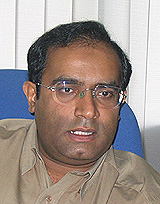 Gomez:
If one wants to eradicate corruption, the first issue one has to address is some kind of devolution of power, to give autonomy to institutions which investigate corruption to act independently. Dr Mahathir Mohamad's legacy to Abdullah Ahmad Badawi was the extreme concentration of power in the office of the prime minister. Abdullah, if he is sincere about eradicating corruption, should allow institutions such as the Anti-Corruption Agency (ACA) to act independently.
Gomez:
If one wants to eradicate corruption, the first issue one has to address is some kind of devolution of power, to give autonomy to institutions which investigate corruption to act independently. Dr Mahathir Mohamad's legacy to Abdullah Ahmad Badawi was the extreme concentration of power in the office of the prime minister. Abdullah, if he is sincere about eradicating corruption, should allow institutions such as the Anti-Corruption Agency (ACA) to act independently.
The problem is that there have been allegations of corruption involving even senior members of the cabinet. And, because of this, the ACA should not be taking its orders from the executive. This itself is a serious anomaly in terms of distribution of power. It is not enough to say 'I have set up an integrity institute to deal with this problem'. You must also show the capacity to allow institutions to act independently.
Since Abdullah became the PM, we had only two very high profile corruption cases - Eric Chia and Kasitah Gaddam. The rest have been minor cases. However, I know for a fact from my own research, that there have been serious allegations of corruption involving abuse of power by senior people.
We can cite the case of MAS (Malaysia Airlines) involving Tajudin Ramli and of UEM (United Engineering Malaysia) involving Halim Saad, both of whom were linked to (ex-finance minister) Daim Zainuddin. The MAS and UEM scandals precipitated by the 1997 crisis remain in limbo. What has been the outcome of those investigations? There has been an investigation into the allegation of abuse of power involving a senior minister, (Minister for International Trade and Industry) Rafidah Aziz. That too has not come to the fore. There have been allegations of irregularities involving (Works Minister) S Samy Vellu and the Telekom shares. What is the resolution to that allegation?
There have been allegations of impropriety involving ex-senior Umno leaders (ex-Malacca chief minister) Rahim Tamby Chik and (ex-Selangor mentri besar) Muhammad Muhd Taib. All these are high profile cases which Malaysians still remember. They are wondering why there is no information from the ACA about these investigations. Make public these reports.
Another issue is the role of the media. I see no evidence that the media has been given the avenue to write more freely about the problems that exist in Malaysian society. That is another issue when we talk of devolution of power - increasing the democratic space.
There are also arguments that it is easy for people to make allegations but unable to provide evidence.
Let me make this point. When you talk about corruption, you have to make certain distinctions. There is corruption, legally-defined, meaning that which you can prosecute using the law. Then there is patronage. Here, there is selective patronage involving distribution of economic concessions because it is allowed under affirmative action or to promote certain goals like creating Malay capitalists. And then you also have nepotism. This is favouritism involving family members of the executive.
In the case of Rafidah, it is an allegation of nepotism and abuse of power where her son-in-law was given equity in a company at a meeting that she was involved in. There are also allegations of nepotism involving Mahathir's sons, Mirzan and Mohkzani. Mahathir himself has acknowledged it. There is an allegation of nepotism involving Anwar Ibrahim when he was the deputy prime minister involving his father and his brother, which Mahathir has pointed out.
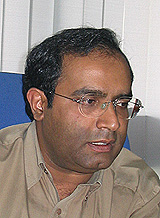 In the case of patronage, there is substantive evidence of selective patronage. Many people have been given contracts without open tender, ostensibly as a means to promote certain government policies like affirmative action.
They are different issues, but they all point to one fundamental point the abuse of power.
Legally, some of them cannot be prosecuted but there is a moral dimension too. To what extent has the government been transparent in the distribution of government concessions, ostensibly to create a more just system? Let's not play semantics here that you can't find evidence of corruption. We know it is happening. We know that there is substantive patronage. We know that there are allegations of nepotism. We also know there is evidence of corruption, legally-defined.
In all three cases, the government must come forward and explain why these things have occurred. Money politics is one classic example - it is the distribution of money to buy support, it is distribution of favours to secure grassroots support. It may be difficult to prove in a court of law. But the fact remains that the monetisation of Umno has led to serious allegations of the abuse of power to secure money to practise money politics.
Here, politicians in power can distribute concessions to particular businessman who will then use this to gain money, which will then be channelled back into the party, which is used to secure grassroots support, which will then allow politicians to remain in power. This is an abuse of the system. But the original distribution of concessions was through the implementation of government policies. Technically it is not corruption, but it is abuse of power.
Let's get to the core of the matter. It is an issue about power. It is an issue of how that power is deployed. The fact is there is concentration of power in the office of the executive. The PM, if he wants to, can act decisively, with the power that he has invested in his office. If he is keen on eradicating corruption in the country and creating a more transparent system of governance, he has the capacity to do it.. More importantly, he has not given the power to institutions to allow them to act independently.
Since you're an economist, how is our economy doing?
I would like to focus on economic policies. Abdullah has set out his economic policies for the country. One of the key issues that he mentioned when he became PM was, unlike the previous prime minister who focused on the creation of big businesses, he would focus on promoting small and medium enterprises. That is a very important economic policy recommendation.
 One of the key issues that came out in the 1997 crisis was that big businesses that had secured significant patronage from the government were not sustainable because their pattern of growth was primarily through loans, not through productive deployment of the concessions that they had received from the government.
However, SMIs and SMEs (small and medium industries, enterprises) which have not been privy to these kinds of concessions, have had to struggle in a much more competitive environment. They have been able to sustain themselves in spite of the crisis. They have done that even though they received very little support from the state, especially under the previous administration. This is primarily true of Chinese businessmen who have had to compete even more because they have to deal with government policies such as affirmative action, as well as the fact they have not been privy to any support from the state.
But the fact is these SMEs have not moved up the technological ladder because they have not received enough support, especially to invest in research and development. While they have managed to survive, their capacity to compete internationally is questionable, and that problem lies with the state. The state has not channelled enough support to these companies which have shown their entrepreneurial capacity but have little or no money to spend on R&D so that they can continue to climb the technological ladder. It is fortunate that the Abdullah government has recognised this and has started to help SMEs. I think this is a positive move on the prime minister's part. Distribute further concessions down to SMEs to help promote economic growth.
However, the problem again is - can the government show the capacity to deliver help to SMEs? That is my primary concern. I am looking forward to reading the Ninth Malaysian Plan to see what reforms are going to be implemented in the delivery system to allow bureaucrats to get down to the ground and distribute help to SMEs.
Why is this process important?
One of the fundamental problems over the past 10 years has been the quality of the bureaucracy in terms of its capacity to implement policies. This is something which even Mahathir had lamented. The previous PM argued that the bureaucracy is bloated and inefficient. To get round the problem, he established numerous think-tanks to give policy ideas to help move the country forward.
It's one thing to come out with policy ideas. It's another thing to get them implemented. The problem here is while they may have good policy agendas, which may come from outside the bureaucracy, the fundamental issue is - can these policies be implemented by the bureaucracy efficiently?
What is the quality of our students nowadays?
There are two problems with university students. One, they have no critical mind in the sense that they are not trained to ask questions. Their mode of learning is what we call the banking-in method. They feel the lecturers have to give them information which they would just digest and regurgitate during exams. This is not what university education is all about. So the whole process of retraining has to be undertaken.
The second problem is the quality of English among our undergraduates. In almost all courses, nearly 90 percent of the reading list is in English. If our students are not competent in the language, there is no way they can go through the reading list which will give them sufficient knowledge or expertise in their discipline.
The third problem is the quality of lecturers that we have. The quality of our lecturers has diminished. I can say this from my own experience in the university. As I said earlier, our scheme of service does not attract the best minds. We have a lot of dead wood in the university who are not contributing in terms of educating our students properly. Something needs to be done to improve the quality of the lecturers.
So the students who have come to the university have three fundamental problems. Language deficiency, lack of critical thinking skills and the poor quality of lecturers who train them. For these three reasons also, the students who come through our public education system are not adequately trained by the time they get through the university.
The fourth problem I want to stress is the curriculum. The structure of the curriculum tends to change depending on the nature of the economy. During times of economic boom, to get the graduates out into the market faster, the duration of the course is cut down from four to three years. In times of economic decline, there is talk to revert back to four years. This is no way to structure the curriculum. The lecturers in the university should be given the freedom to structure the curriculum on a sound academic rationale.
So the quality of students has been declining?
I think the facts speak for themselves. The fact is that the unemployment problem among graduates is serious. The fact is the private sector has complained that the quality of students coming out from public universities leaves much to be desired. That speaks volumes about the quality of our students. This is my biggest concern with the university today. Are our university students being trained properly? Are they given sufficient time to be trained or is the primary motivation to get them out as soon as possible, to serve market interests.
We should not mix the two - what our market needs and what we need to do to train our students properly. The ultimate aim of the university is to ensure that the students are properly educated. If they are well trained, they will be able to fit into the market system. It shouldn't be the market that dictates to us how we should train our students.
So the emphasis is on quantity instead of quality.
Yes, that is a very good point. We keep setting up so many universities. Now, we have about 17 public universities. We have enough institutions, but I wonder about the quality of the students. We may have graduates, but are they well-educated? Would they be able to stand independently once they are out in the market?


