



Traffic enforcement agencies to share data 'in months'
The government will finish linking the databases of three major enforcement agencies soon, to improve law enforcement on traffic-related offences.
He said the databases used by the police, the Road Transport Department (JPJ) and the Land Public Transport Commission (Spad) are supposed to be in sync since last year, but had been delayed by due to several hiccups.
Delays in JPJ, Spad and police database sharing due to hiccups.
The government will finish linking the databases of three major enforcement agencies soon, to improve law enforcement on traffic-related offences.
He said the databases used by the police, the Road Transport Department (JPJ) and the Land Public Transport Commission (Spad) are supposed to be in sync since last year, but had been delayed by due to several hiccups.
“Every agency’s (system) is run by different companies... There are different vendors, so they would have to sit down and connect.
“They are doing this now. I think there will be some breakthrough in this. We will do this quickly,” he told reporters when met in Rawang today.
He was asked whether the government has plans to strengthen enforcement against traffic-related offences, in the wake of an accident involving an express bus on Christmas eve last year.
The accident had left 14 dead and 16 injured after the bus plunged into a ravine near Pagoh, Johor.
“We need a lot of coordination. Now we are coordinated through the web. We are connecting, for example, when JPJ issues a summon, Spad should know that this car has been summon by JPJ; when Spad issues a summon, JPJ should know, or when the traffic police issues a summon.
“Now the websites are not connected. They are all very individual and this is our weakness. We have to strengthen this part,” he said.
Introduction of Awas
According to a report by the Malay Mail quoting Deputy Transport Minister Ab Aziz Kaprawi in July last year, the police and Spad would generally present a list of serious repeat offenders and vehicle registration numbers to JPJ on a monthly basis for blacklisting.
The report said that since the three enforcement agencies are not linked to a common system, the government was unable to keep repeat traffic offenders off the road, including bus drivers who have accumulated many summonses.
The report came in the wake of another accident in which an express bus ploughed into ten other vehicles after its brakes allegedly failed.
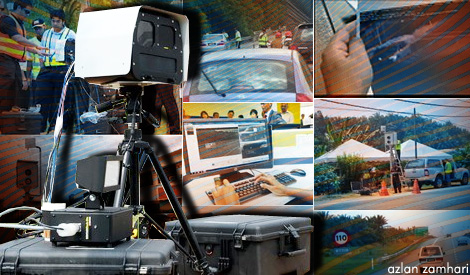
Meanwhile, Liow said the government will be rolling out the Automated Awareness Safety System (Awas) in stages over the course of this year.
The system is a combination of the Automated Enforcement System’s (AES) cameras and the JPJ’s Demerit Points System (Kejara).
He said the AES cameras would be place in accident-prone cameras, and the government has spent the past year gathering public feedback on where to place these cameras.
“We have received some requests: Some from local councils, some from highway authorities, and some from associations that want us to put in the cameras in certain routes and certain areas.
“We have discussed this and it will be implemented in phases,” he said.
Liow said there is no point in blaming each other after an accident as preventive efforts were more important.
He said the cameras would give drivers the perception that they could be caught breaking the law and slow down, hence reducing accidents. He expressed hope that this would receive wide public support.


