


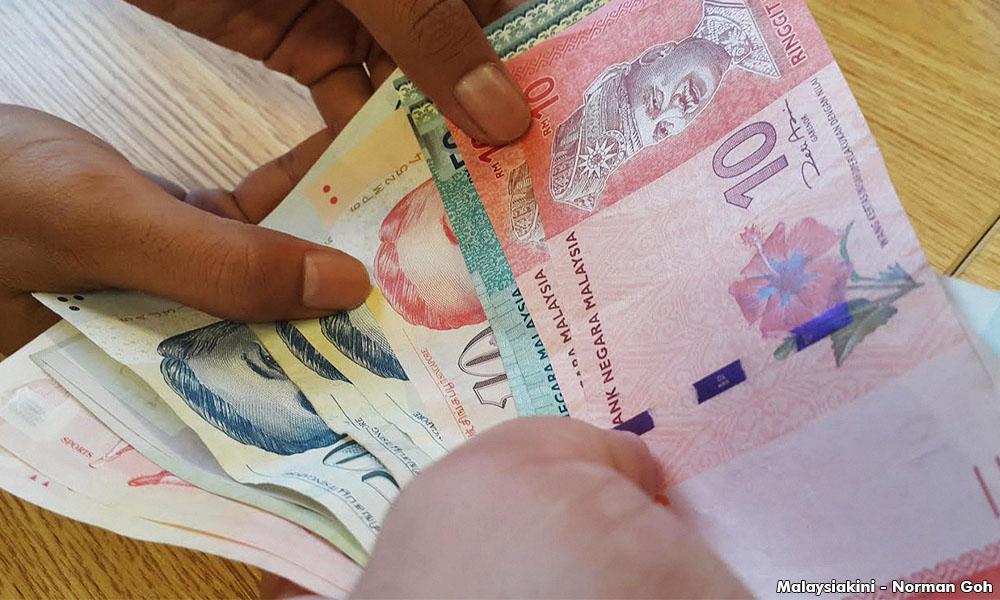

How political financing is done in other countries
KINIGUIDE | Malaysia is ranked 68th out of 167 countries in the 2015 democracy index.
KINIGUIDE One of the thornier aspects of running a democracy is political financing - how money is raised and spent for political purposes.
Thanks in part to the fallout of the 1MDB scandal, there is now a renewed push to introduce new laws that would formalise and regulate how this is done.
Prime Minister Najib Abdul Razak - who himself was implicated in the 1MDB scandal but was subsequently cleared of wrongdoing by attorney-general Mohd Apandi Ali - established the National Consultative Council on Political Financing (JKNMPP) in August last year.
The committee published a report making 32 recommendations in Sept 30 this year, including a new law dubbed the Political Donations and Expenditure Act (PDEA).
Its chairperson Paul Low is now in the process of consulting various political parties on the new law, and the process is slated for completion by the end of the year.
What’s at stake in this new push? And how are other countries dealing this issue? If you have ever wondered about these questions, this instalment of KiniGuide is for you.
To provide some basis for comparison, we will also be citing country rankings on the 2015 democracy index, which is the latest available version of the index compiled by the Economist Intelligence Unit based in London.
There are 60 questions in the democracy index questionnaire used to measure the health of a country’s democracy, including one on whether political financing in the country is transparent and well-accepted.
Why should we care about how political financing is done?
As with most things in life, running a political machinery costs money. Whether it is just to keep the lights on at a service centre or to run a nationwide election campaign, money is needed.
In democracies, most of a party’s funding usually comes in the form of donations from individuals and sometimes corporations. This is widely regarded as a part of one’s freedom of expression - that is, to express one’s political belief or affiliation by contributing financially.
On the other hand, money can also have a corrupting influence in a political system. Unless the matter is properly addressed, a wealthy election candidate could simply drown out a more resource-strapped opponent’s messages with aggressive campaigning.
This creates an uneven playing field for election candidates, as well as limiting the political arena to the wealthy.
Politicians with particularly ‘generous’ donors may also end up heeding to their donors and their interests, at the expense of the interests of their electorate.
For example, a lucrative government contract may be awarded to an undeserving contractor in exchange for kickbacks in the form of political donations for the ruling party, or a wealthy donor may leverage on their political funding to influence government policy.
Potential corruption in a political financing system is a widely recognised problem.
Article 7(3) of the UN Convention Against Corruption (UNCAC) - which Malaysia had ratified in 2008 - urges its signatories to “consider taking appropriate legislative and administrative measures [...] to enhance transparency in the funding of candidatures for elected public office and, where applicable, the funding of political parties.”
But then again, some donors may prefer to contribute anonymously. One legitimate reason to do this is to avoid potential backlash from supporters of the opposite camp.
How is Malaysia doing right now?
Malaysia is ranked 68th out of 167 countries in the 2015 democracy index.
Political spending in Malaysia is regulated primarily by the Election Offences Act 1954. Among others, it prohibits bribery and treating of voters, and imposes limits on when election campaigning can take place (for example, campaigning is prohibited on polling day).
It also imposes a limit on election campaign spending by candidates. A candidate running for a parliamentary seat can only spend up to RM200,000, while a candidate running for a state seat can only spend half of that amount.
However, there is no limit on how much political parties can spend on campaigning, even though the money is spent for the benefit of the party’s candidates.
In addition to the Election Offences Act, political parties are also required by the Societies Act 1960 to submit annual reports and audited financial statements to the Registrar of Societies. However, the Act is silent on whether it needs to disclose the identity of donors.
The Election Offences Act does require the identity of election candidates’ donors to be disclosed, however.
According to the JKNMPP, these laws and its enforcement mechanisms are “not robust enough”.
“The only law that exists today is about spending by candidates during the official campaign period and there is no law in donations,” it said.
How do other countries compare?
USA (democracy index rank: 20)
There are no limits on the election campaigning period and on campaign spending in the US - two characteristics that have led to some of the most expensive elections in the world.
However, there are contribution limits in place. Nevertheless, Individuals and groups (dubbed ‘Political Action Committees’ or PACs) can still spend unlimited sums of money supporting or opposing election candidates as long as it is run separately from any candidate’s campaigning.
Anonymous contributions are allowed but only up to US$50 (RM223). Any excess contributions - anonymous or not - are to be returned.
Candidates, parties, and PACs are required to disclose the money that they raise and spend, including identifying individuals who contributed US$200 or more (RM893). Such disclosures are made public through the US Federal Election Commission’s website.
Candidates running for presidency can also receive government funding for the election campaigns, although some candidates such as Barack Obama and Donald Trump had opted to forgo the funding and rely solely on private donations and their own resources for their campaigns.
Foreign nationals are not allowed to contribute unless they also have permanent residency in the US.
UK (democracy index: 16)
In contrast to the US, the UK does not have contribution limits, but has spending limits instead like Malaysia. Unlike Malaysia however, there are spending limits for both parties and candidates.
To simplify matters, this guide will only deal with parliamentary elections in Great Britain (England, Scotland, and Wales), as the rules vary by jurisdiction. Different rules also apply for referendums.
The exact limit on party spending depends on whether the party is contesting in England, Scotland, or Wales, and the number of seats contested. The sum also varies in each election.
At a minimum however, a party contesting in all three jurisdictions in the 2015 parliamentary election can spend up to £990,000 (RM5.5 million) in the election. The figure grows if the party contests in more constituencies.
A separate limit applies for election candidates’ spending, and is calculated partly based on the number of voters and whether the candidate is running for an urban (borough) constituency or rural (county) constituency.
As of the 2015 UK parliamentary election, each voter in a borough constituency adds 6 pence (RM0.33) to a candidate’s spending limit as of 2015, while each voter in a county constituency adds 9 pence (RM0.50). This is likely to account for the difficulty in reaching rural voters compared to urban voters.
As for donations, contributions to candidates above £50 and contributions above £500 for parties are regulated by the Political Parties, Elections and Referendums Act 2000 (PPERA).
The law requires that recipients of donations above that limit to know who their contributors are (and record it) and check whether they are allowed by law to make the donation.
Foreign contributions are not considered a ‘permissible source’, unless it is a UK-registered company incorporated in the European Union and conducts business in the UK.
All donations above the PPERA limit have to be reported to the UK’s Electoral Commission, and large donations or impermissible donations are also made public on its website.
Norway (democracy index: 1)
Unlike most democracies, Norway’s political parties are mostly funded by its government. According to the country’s Central Bureau of Statistics, public funding makes up 67 percent of overall political party financing last year.
The rest of the money comes from private donations, membership fees, and other sources.
The amount of public funding depends, in part, on the level of support that a party receives in a previous election. However, it must have received at least 2.5 percent of the popular vote or have at least one MP in order to qualify for public funding.
Norway’s Political Parties Act (PPA) expressly prohibits the government from imposing any conditions on how the money are to be spent, so the money is also spent on elections.
However, the PPA does require political parties to report their expenditures since 2014.
Private donations above NOK10,000 (RM5,168) must also be reported and made public on the Central Bureau of Statistics’ website, in addition to the party’s annual accounts.
Anonymous donations are not allowed in Norway and go to the public purse instead, and contributions from state-controlled entities and foreign donations are also not allowed.
There are no provisions for independent candidates to contest in Norwegian elections, hence the financing rules are party-centric and do not deal with funding for candidates.
Indonesia (democracy index: 49)
Indonesia is the highest-ranking country in South-East Asia in the democracy index.
Like Norway, Indonesia provided government funding for political parties according to their electoral performance, but that’s where their similarities end.
At least 60 percent of the public funding for Indonesian parties are required by law to go towards political education.
Political parties in Indonesia are required to submit their accounts to the government, but this information is not made public. This includes figures on the actual amount of public funding that each party had received.
There are no spending limits for politicians and political parties in Indonesia, but a contribution limit is imposed instead both during and in between election campaign seasons.
For individuals donating to political parties for example, a 2012 law limits the maximum contribution to 1 billion rupiah (RM333,644) during a campaign season.
Corporations are also allowed to contribute, but anonymous and foreign donations are both prohibited.
What’s next for Malaysia?
The PDEA recommended by the JKNMPP urges the creation of the ‘Office of the Controller of Political Donations’ to regulate political funding.
The PDEA is to a mechanism to ensure its independence, and the controller would be answerable to a bipartisan parliamentary standing committee headed by an opposition MP.
The political parties and individual politicians (who will be required to use a dedicated bank account for political work) will be required to submit their accounts to the controller, who is to publish it in an easily accessible way.
The law also requires reporting of donations and ‘third party support’ above RM3,000 a year to the controller.
However, the committee also recommends that the PDEA’s rules regarding full disclosure to be implemented by the 15th general election. For the next general election, it said it would suffice to disclose donor identities only to the controller.
“This is as an acknowledgement to the fact that some donors may fear of retribution and this may negatively impact the legitimate incomes of political parties and politicians if disclosure is enforced without proper preparation,” the JKNMPP said.
The committee also urges new laws against the victimisation of donors.
The proposed PDEA also calls for spending limits to be scrapped, and states that there should be no contribution limit either. The committee reasoned that the increased transparency that PDEA requires should be adequate.
“To create a level playing field, competitors should rise up to the challenge and garner more support for their work. At the same time, the ultimate decider should be the voters. With greater transparency, voters will know the amount of money that has been given to the party or politician.
“Voters can decide if the party or the politician has been ‘bought’ and make the corresponding choice at the ballot box,” it said in its report.
Anonymous donations (whether to the party or to individual politicians) would be confiscated by the controller, while foreign donations are banned.
State-owned enterprises and companies receiving government contracts are also banned from contributing.
This instalment of KiniGuide is compiled by Harith Najmuddin and Koh Jun Lin.


