



'Help Rohingya? Give them formal status in Malaysia'
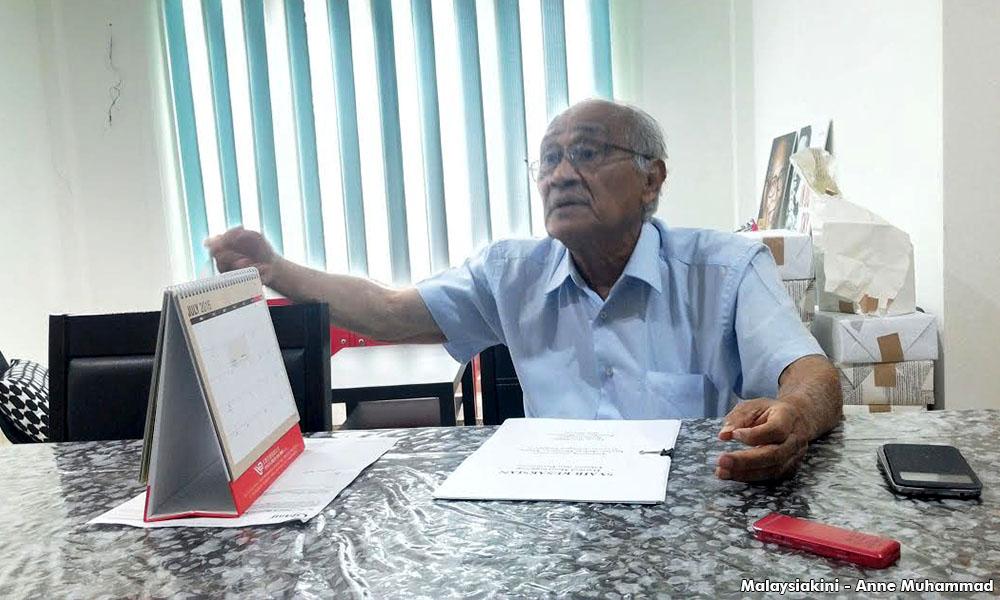
The Malaysian government can help the Rohingya community by recognising and helping those who are already in Malaysia, said former PKR deputy president Syed Husin Ali.
"If we truly want to help the Rohingya, then recognise their status here. Give their children a chance to be educated," he said on Twitter.
The Malaysian government can help the Rohingya community by recognising and helping those who are already in Malaysia, said former PKR deputy president Syed Husin Ali.
"If we truly want to help the Rohingya, then recognise their status here. Give their children a chance to be educated," he said on Twitter.
This comes after at least 10,000 people, including Prime Minister Najib Abdul Razak, attended a rally in Kuala Lumpur to protest against state-sanctioned violence against Rohingya community in Myanmar.
Similarly, PKR president Dr Wan Azizah Wan Ismail said the government must first recognise the community as refugees of war.
She said Malaysia must also use its position as a non-permanent member of the United Nations Security Council to press for an emergency motion against the killings.
Malaysia as Asean founder member must also lead the way to pressure Myanmar and do away with Asean's non-interference policy, she said in a statement.
"It is insufficient to merely voice out our sympathies to the Rohingya cause, but we must also employ our positions and responsibilities," she said.
The Rohingya community, who are mostly Muslim, are not recognised as Myanmar citizens despite their presence in the country for several generations.
They originate from the coastal state of Rakhine, east of the Bay of Bengal.
According to the United Nations refugee agency, UNHCR, there are 54,856 registered Rohingya refugees and asylum-seekers in Malaysia as of the end of October.
Refugees are not formally recognised in Malaysia, leaving them vulnerable to human traffickers, labour exploitation and extortion.
Children of refugees are also not allowed to attend government schools and are mostly educated by volunteers.
Transit point
Despite not recognising refugees, Malaysia has become a transit point for refugees, who are processed and transferred in third countries by agencies such as the UNHCR.
Last year Malaysia turned away boats carrying migrants including the Rohingya, but eventually took in 1,018 aboard a boat which tried to dock at Pulau Langkawi.
The boat was among several packed with economic migrants and refugees, who were left at sea by human traffickers following a crackdown in Thailand.
This followed the discovery of mass graves linked to human trafficking on the Thai-Malaysian border.
The 1,018, reportedly from Bangladesh and Myanmar, were placed in the Belantik immigration detention camp in Sik, Kedah.
Last May, 36 of those held at Belantik were transferred to the United States with the help of the UNHCR.


