



Seven more Orang Asli arrested after crackdown at another blockade
Seven more Orang Asli in Gua Musang, this time at Pos Pasik, were arrested after police moved to dismantle a separate blockade this afternoon.
The Orang Asli were held in a police truck for several hours before they were transported to the Gua Musang district police headquarters.
According to lawyer Siti Kasim, she had been waiting at the police station to assist the arrested Orang Asli as police had to make a long journey back to town from the interiors.
Seven more Orang Asli in Gua Musang, this time at Pos Pasik, were arrested after police moved to dismantle a separate blockade this afternoon.
The Orang Asli were held in a police truck for several hours before they were transported to the Gua Musang district police headquarters.
According to lawyer Siti Kasim, she had been waiting at the police station to assist the arrested Orang Asli as police had to make a long journey back to town from the interiors.
"We are still waiting for the arresting officer to do his job. The boys are still in the (police) truck," she said in a Facebook posting.
They are expected to be released after having their statements recorded.
Some 200 people, including families and friends, gathered outside the police station to await their release, according to Jawatakuasa Komuniti Badan Gabungan Aktivis Alam Sekitar Kelantan Malaysia communications director Mohd Hisyamuddin Ghazali.
"It's raining heavily here and the families are still gathered outside the police station waiting for the seven to be freed," he said.
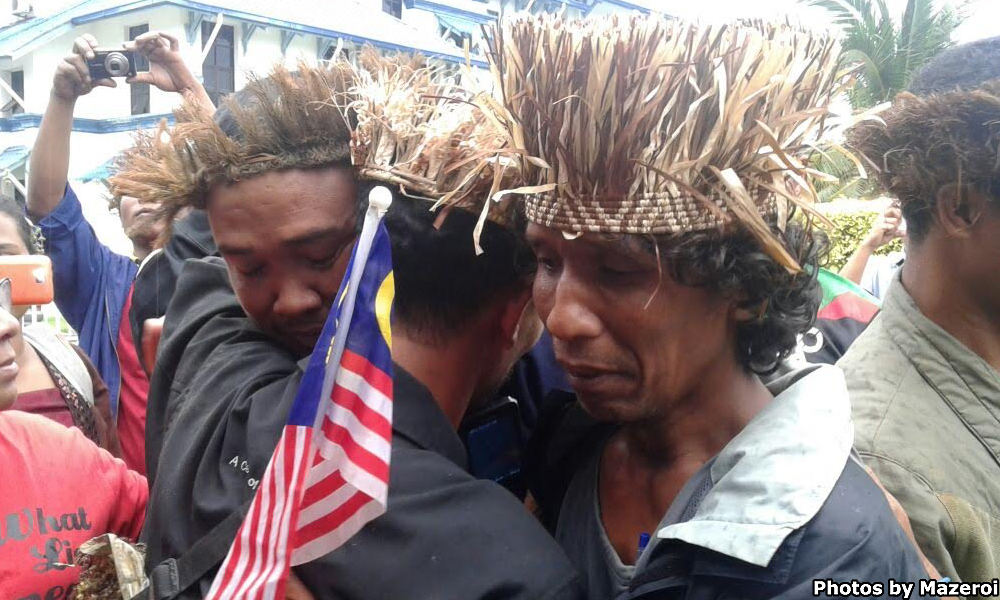
Some of those waiting outside included the families of 47 Orang Asli who were arrested at separate blockades and were released today, but were staying back to show support.
The 47 other Orang Asli were detained by police on Tuesday.
The Kelantan Foresty Department, accompanied by some 100 personnel from the police's General Operations Force (GOF) had moved in to dismantle two blockades at Pos Petei and Pos Bihai.
They were subsequently freed after after a two-day remand. No charges were brought against them.
Hisyammuddin Ghazali said the Orang Asli community is now convening a meeting to decide their next course of action.
The arrests came after 47 other Orang Asli were detained by police on Tuesday.
The 47 Orang Asli were subsequently freed after after a two-day remand.
No charges were brought against them.
The Orang Asli community in Gua Musang had set up multiple blockades against loggers.
The Kelantan government had demanded the blockades be removed, stressing that the logging were legimate activities and an important revenue for the state.
However, the heavy-handed approach in ending the blockade had sparked condemnation from human rights groups.


