



Consumer group urges provisional halal cert for small traders
The Malaysian Islamic Development Department (Jakim) has been told to find a compromise for the bumiputera business owners who find it a burden to comply with the stringent requirements for a halal certificate.
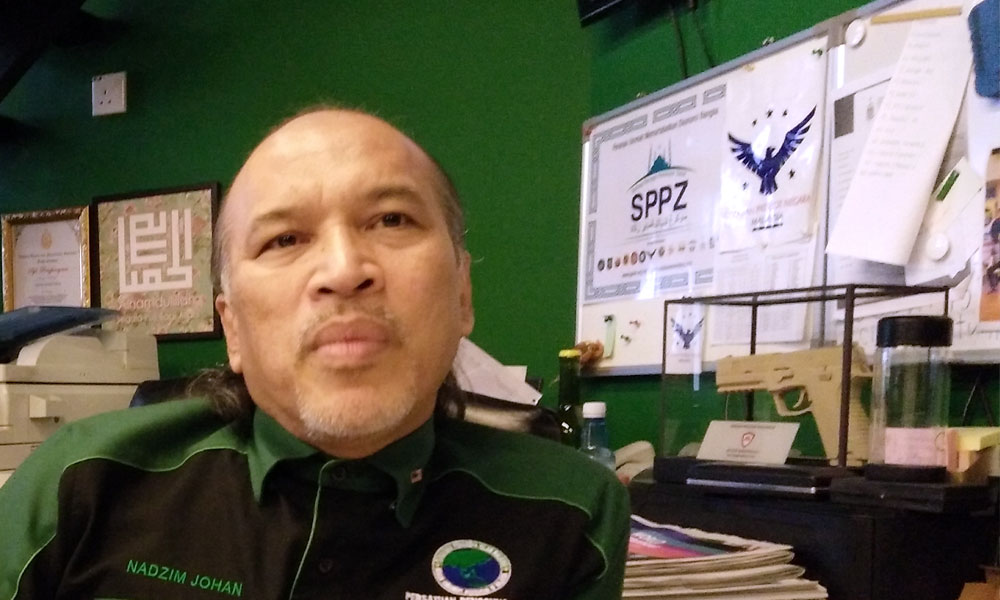
Malaysian Muslim Consumers Association (PPIM) chief activist Nadzim Johan proposes a two tier halal certificate - a full halal certiticate and a temporary second-class halal certification.
The Malaysian Islamic Development Department (Jakim) has been told to find a compromise for the bumiputera business owners who find it a burden to comply with the stringent requirements for a halal certificate.
Malaysian Muslim Consumers Association (PPIM) chief activist Nadzim Johan proposes a two-tier halal certificate - a full halal certiticate and a temporary second-class halal certification.
He is responding to Rural and Regional Development Minister Ismail Sabri Yaakob's call for less stringent requirements for bumiputera business owners.
"PPIM is caught in between, we want to protect the consumers and we want to give a chance to the small traders (who are facing difficulty to obtain a halal certificate)," Nadzim told Malaysiakini.
"As you are aware, the official statistic show that more than 80 percent of halal certificate holders are non-Muslim corporations," he said.
"I would think maybe less than 20 percent of Malay businesses manage to cross the hurdle (to secure a halal certificate). Many cannot pass (the requirements)," he added.
To comply with halal requirements, applicants must folk out a huge sum - easily between RM50,000 and RM200,000 for investment - which small traders find hard to cope with, he said.
With the halal industry boom, he said, these Malay businesses may risk losing out or even closing shop in the long run because of the limitations of the market, as they can only sell their food at roadsides and stalls instead of hotels or even hypermarkets.
"For a Muslim who wants to start a business, their business cannot grow big overnight. So, we have a Catch-22 situation.
"They are required to have a proper kitchen where the food cannot be produced in home kitchens or backyards. Many small traders produce their food in home kitchens.
"Even if you want to rent a kitchen, it may not meet the requirement as it has (specific requirement for) proper flooring and proper supervision," he said.
"We want to find a middle way, temporary in nature, where the ultimate must be halal (standards) that comply with all the existing requirements," he said.
"The middle way (should be) something that is not haram, and before the highest level of the best halal requirements and thoyyib (wholesome)," he added.
He suggested those who hold the proposed second-class halal certificate must comply with the basis requirements of halal and 50 percent of the hazard analysis and critical control points (HACCP).
"So, the second class certificate can be slightly different, maybe less technical requirements. However, the policy should remain and the safety and hygiene cannot be compromised," he said.
Nadzim, however, said those who receive the second-class halal certificates must get the full halal certificate in three or four years.
Elaborating further, he suggested the religious authority to consider allowing food to be produced even in home kitchens.
"You cannot say when they produce in home kitchens it is haram (forbidden). It is between goodness and pure halal," he said.


