



Going for that elusive gold
QUESTION TIME Although we lost our best chances for an Olympic gold last week, the consolation was the biggest medal haul so far at the games with four silver and one bronze. But, sadly the outlook for a future gold is the bleakest so far, a reflection of the poor state of sports in our country, and lack of coordinated effort to improve our status as a sporting nation.
The first to achieve a silver in the Rio games was the diving pair of Pandelela Rinong Pamg and Cheong Jun Hoong in the women’s 10m synchronised platform. It was a fantastic performance by the duo, losing out to the strong Chinese in the event.
Malaysia did not have a long heritage in diving until the arrival of Pandelela on the scene, who unexpectedly stormed into a bronze medal victory in the 2012 London Olympics at the women’s individual 10m platform event.
Her achievements and the tireless efforts of the diving coaches have nurtured new talents in diving such as her partner in the medal-winning performance, Jun Hoong. The other is Nur Dhabitah Sabri who qualified for the final event of the 10m platform dive together with Pandelela. This time, Pandelela - who won bronze in this event in 2012 - was unfortunate and came in at 11, with Nur Dhabitah bettering her at 9th place. Malaysia had the distinction of having two contestants in the final, the other two countries being China and Canada.
In cycling, Azizulhasni Awang did the country proud in Rio by getting a bronze, Malaysia’s first ever in cycling, at the men’s keirin event. As in diving, in 2012, this is new ground for Malaysia, achieving major honours in an event which Malaysia was not noted for. That does make his achievement all the more commendable.

At the Barcelona Olympics in 1992, badminton was admitted as a sport with men’s and women’s singles and doubles - four events. Mixed doubles debuted in 1996. Hopes were high that with badminton in the Olympics we will get our first medal - possibly gold.
Badminton gave us our first Olympic medal but not gold way back in 1992, 28 years after we began participating in the Olympics from 1964 - a bronze in the doubles by the Sidek brothers, Razif and Jailani. Hopes had been high that this top doubles pair could bring back a gold but it was not to be. Cheah Soon Kit and Yap Kim Hock came closer to that elusive gold with a silver at Atlanta in 1996. Another Sidek, Rashid, took bronze, the first individual medal for Malaysia in badminton the same year.
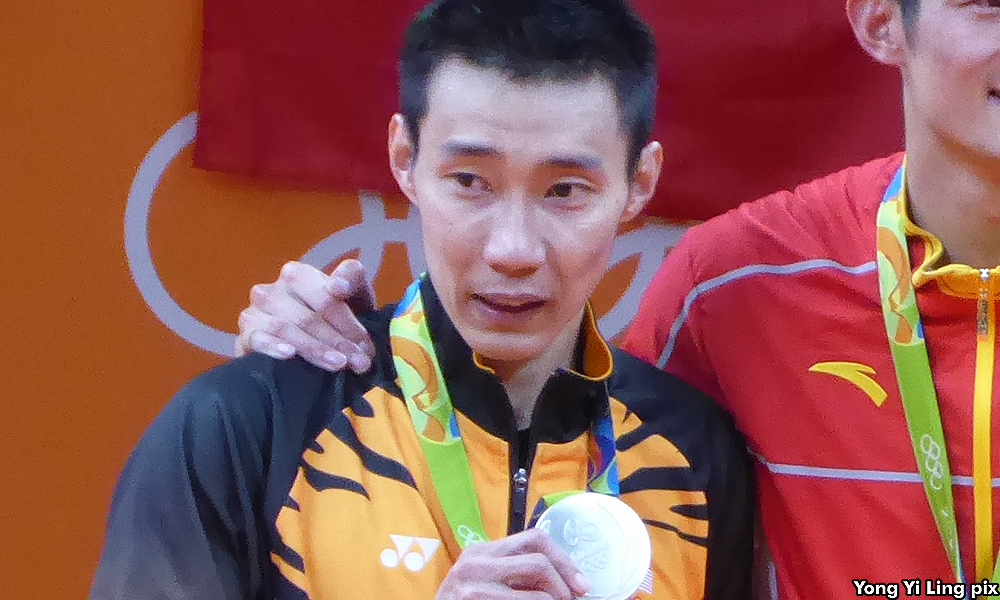
There was a drought of medals in 2000 and 2004 and then in Beijing in 2008, along came Lee Chong Wei. Again, we were expecting gold but he was defeated in the finals by Lin Dan in 2008 and then again in the finals in 2012 by the same man - his nemesis, they said...
QUESTION TIME Although we lost our best chances for an Olympic gold last week, the consolation was the biggest medal haul so far at the games with four silver and one bronze. But, sadly the outlook for a future gold is the bleakest so far, a reflection of the poor state of sports in our country, and lack of coordinated effort to improve our status as a sporting nation.
The first to achieve a silver in the Rio games was the diving pair of Pandelela Rinong Pamg and Cheong Jun Hoong in the women’s 10m synchronised platform. It was a fantastic performance by the duo, losing out to the strong Chinese in the event.
Malaysia did not have a long heritage in diving until the arrival of Pandelela on the scene, who unexpectedly stormed into a bronze medal victory in the 2012 London Olympics at the women’s individual 10m platform event.
Her achievements and the tireless efforts of the diving coaches have nurtured new talents in diving such as her partner in the medal-winning performance, Jun Hoong. The other is Nur Dhabitah Sabri who qualified for the final event of the 10m platform dive together with Pandelela. This time, Pandelela - who won bronze in this event in 2012 - was unfortunate and came in at 11, with Nur Dhabitah bettering her at 9th place. Malaysia had the distinction of having two contestants in the final, the other two countries being China and Canada.
In cycling, Azizulhasni Awang did the country proud in Rio by getting a bronze, Malaysia’s first ever in cycling, at the men’s keirin event. As in diving, in 2012, this is new ground for Malaysia, achieving major honours in an event which Malaysia was not noted for. That does make his achievement all the more commendable.
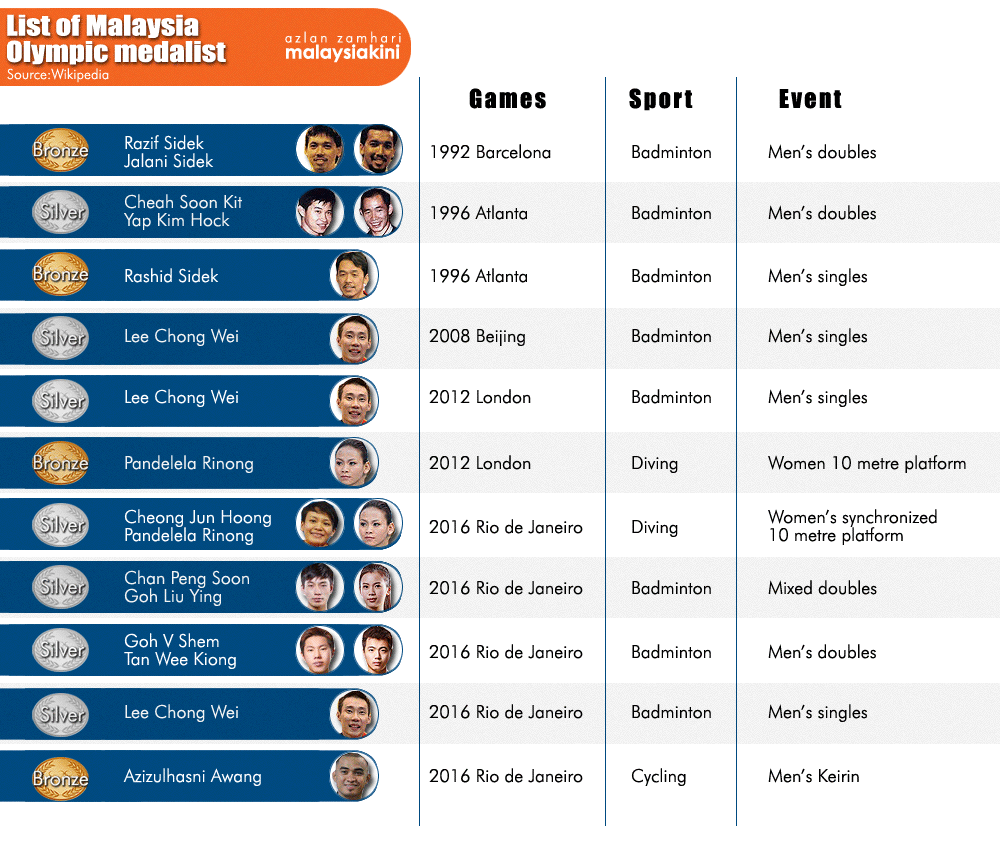
At the Barcelona Olympics in 1992, badminton was admitted as a sport with men’s and women’s singles and doubles - four events. Mixed doubles debuted in 1996. Hopes were high that with badminton in the Olympics we will get our first medal - possibly gold.
Badminton gave us our first Olympic medal but not gold way back in 1992, 28 years after we began participating in the Olympics from 1964 - a bronze in the doubles by the Sidek brothers, Razif and Jailani. Hopes had been high that this top doubles pair could bring back a gold but it was not to be. Cheah Soon Kit and Yap Kim Hock came closer to that elusive gold with a silver at Atlanta in 1996. Another Sidek, Rashid, took bronze, the first individual medal for Malaysia in badminton the same year.
There was a drought of medals in 2000 and 2004 and then in Beijing in 2008, along came Lee Chong Wei. Again, we were expecting gold but he was defeated in the finals by Lin Dan in 2008 and then again in the finals in 2012 by the same man - his nemesis, they said.
Despite being the best badminton player in the world, he did not have a gold at the Olympics. Chong Wei’s medals were the only ones from badminton for 2008 and 2012. The only other medal was Pandelela’s bronze for 2012. The best Olympic overall result so far was a silver and a bronze.
World’s no 1
Coming into Rio 2016, the only realistic medal hopes were Pandelela and Chong Wei. Chong Wei, who was embroiled in a doping scandal in 2014 and suspended, recovered from well over 100 ranks down to become number one again by the time the Rio Olympics came around. Hopes were high that he would take it this time. He is probably Malaysia’s greatest badminton player ever and was ranked first worldwide for 199 consecutive weeks from Aug 21, 2008 to June 14, 2012, almost four years.
So a gold at badminton, if things went well, and a medal in diving (the Chinese are just too good to beat here) was the expectation. But it turned out better in some ways and worse in others. The silver in diving was great as well as the bronze in cycling. But the surprise was that Malaysia was in three badminton finals - out of five, a fantastic achievement under the circumstances. There was Chong Wei who got rid of his nemesis Lin Dan, now third ranked, in the semi-finals after a bruising three-setter.
The other two were the mixed doubles pair of Chan Peng Soon and Goh Liu Ying and the men’s doubles pair of Goh V Shem and Tan Wee Keong. The mixed doubles pair was ranked 11th in the world and not even expected to come into the finals. So the expectations of a gold placed on such fragile shoulders was unfair. They lost quite emphatically to the third-ranked Indonesian pair.
The men’s double pair was ranked 12th in the world and again not expected to get a medal although they came heartbreakingly close with two match points which were both botched by services into the net. They lost to the fourth-ranked Chinese pair.
The only hope for gold left was Chong Wei, who played hard but who seemed exhausted from the bruising battle with Lin Dan the day before with net play uncharacteristically erratic and smashes somewhat sparse. But he tried and he tried hard, losing narrowly. That fickle lady of fortune - luck - was simply not on his side.
Yes, again that gold eluded us, but it was not the fault of the players/participants all of whom, with the exception of Chong Wei did better than expected, but his performance was still great. However much Malaysians were disappointed, the disappointment of the players who were so close to gold and did not get it was much higher.
This is the time when much will be said about getting that elusive gold in Tokyo come 2020. But really, that should have been thought about at least four years back and preferably at least eight years ago. If anyone noticed Japan’s strong finish at the Rio Olympics, that’s because they have already started preparing long ago for the Tokyo games.
Let’s takes a real look at our chances. Our best prospect for gold is or should I say was Chong Wei. He won’t be around for Tokyo. Is there another prospect for singles gold? None. The next ranked Malaysian after Chong Wei is 29th placed Iskandar Zulkarnain Zainuddin. We have two others in the top 50. China has two in the top 10, Indonesia one, Denmark three. We have no gold prospects in the men’s singles.
In doubles, we have no one ranked in the top 10, one at 11th and another at 16th in the top 50. In the top 10, South Korea, Indonesia, China and Denmark have two each, Japan has one. In mixed doubles, our silver medalists are ranked 11th. In the top 50, the next ranked Malaysian pair is 26th. China have four in the top 10, Korea and Indonesia, two each, and Denmark one.
In the women’s singles we are pathetic with three in the top 50 with the highest ranked at 29th. In the doubles, it is worse - one in the top 50 with a ranking of 35.
Realistically, there is likely to be no gold from badminton - we are no longer a badminton superpower the way China, Indonesia and Denmark still are. As Chong Wei rides into the sunset after a good run but without Olympic gold, so does our gold medal hope in the Olympics for the foreseeable future.
The reason for that is obvious enough and have been reiterated a thousand times - good sports officials, proper coaching, no favouritism on any basis, no corruption, getting the talent in at least 12 years before they go for tournaments, programme continuity, etc. That’s the only way to get enough gold medal contestants up there - not just in badminton but other sports as well - in the hope that some will strike it rich for the country.
You have to plan for gold and then work for it. And you have to do this for each sport you want to excel in.
P GUNASEGARAM no longer plays badminton. Contact: t.p.guna@gmail.com.


