



Why has the MACC an alarming problem?
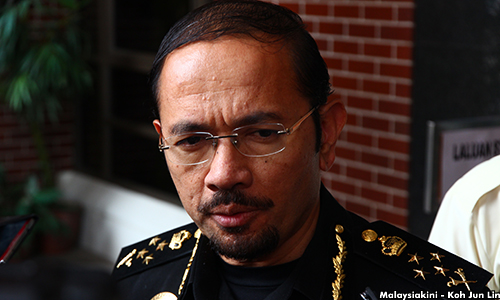
COMMENT The deputy chief commissioner prevention) of the Malaysian Anti-Corruption Commission (MACC) Mustafar Ali has publicly described the negative public perception of the MACC as “quite alarming”.
He is right! The public perception of the MACC and its effectiveness in fighting corruption is indeed seriously negative and alarmingly so.
Worse still, this poor public perception of the MACC is broadly perceived as actually justified.
COMMENT The deputy chief commissioner prevention) of the Malaysian Anti-Corruption Commission (MACC) Mustafar Ali has publicly described the negative public perception of the MACC as “quite alarming”.
He is right! The public perception of the MACC and its effectiveness in fighting corruption is indeed seriously negative and alarmingly so.
Worse still, this poor public perception of the MACC is broadly perceived as actually justified.
As a past chairperson of the MACC panel on the prevention of corruption, I and many of my colleagues had felt a deep sense of frustration in trying hard to improve the bad public perception against the MACC.
I can therefore empathise with Mustafar’s sense of despair and even hopelessness, in his determined and dedicated struggle against worsening corruption in our country.
After all, Malaysia has been performing poorly on the Transparency International Corruption Perception Index(CPI), despite some relevant efforts by the MACC to improve the CPI ranking.
Why then is the public perception so poor and alarming?
Instead of lamenting over the poor public perception of the MACC, we should all seek to find out why does this poor public perception of the MACC continue to persist and perpetuate itself on almost a permanent profile?
I believe that the MACC must know, after all these years of struggle against corruption, that the public perception is indeed bad and declining because, inter alia -
1. The public generally do not believe that the government is sufficiently seriousness, determined and fully committed, to fight corruption to the finish. Much of the public still say that if the government was really serious, more ‘big fish’ would have been caught by now, despite whatever the MACC may defensively assert.
2. The major cause and mother of corruption is widely deemed to be ‘money politics’. So far, the introduction of tougher laws to fight money politics have been soft and slow in coming. They must be made stiffer.
Otherwise huge gifts can be made unconditionally to those in high places as ‘donations’, which would normally be reasonably regarded as corruption. Why would anyone give such generous gifts, unless it is for some questionable reason and consideration?
It is incredible that anyone, especially foreigners, can be so magnanimous to give away so much so kindly. No one in his right mind would give gigantic gifts to those who hold low office, as they cannot get or receive favours in return. Only the rich and powerful can and will do so for some gain, at the expense of the people.
3. Those relatively few in sensitive positions, whether political or official, enjoy corruption. It's so easy this evil way, to get rich quick and become very wealthy, very soon. So they argue, why rock the boat? Their perception is - why should they fight corruption, when they can make ‘hay while the sun shines and while the going is good’? That is the scourge in our society.
So how can we the people help the MACC get more support to more effectively combat corruption?
The MACC must commission an independent and professional study to ascertain why the people have alarmingly negative perceptions of the MACC. Please make sure the study is transparent and made widely available to the public. Thus, the rakyat will develop more empathy and support for the MACC.
4. The MACC has been crying out for Reforms of its laws and its organisation. One reform that Mustafar has alluded to in his useful press interview, is the old Macc appeal to institute an ‘Independent Service Commission for the MACC’.
This has been consistently opposed by the government. Hence the people ask again, how serious then is the government in really wanting to combat corruption?
5. Another important issue that Mustafar referred to was the serious constraints suffered by the MACC, in that it has no powers to prosecute.
In other words, although Mustafar did not say so, the MACC can do its best investigations, but the attorney-general may take little or even no action. He can just close the case.
So the MACC investigations can be left high and dry. Thus, in the public eye would then be perceived as a toothless tiger?
6. The government, for all these reasons. should thus appoint a commission to revise, update and reform the MACC Act to ensure that it is much more powerful and effective.
This is not difficult to do if there is strong political leadership and political will on the part of the whole Parliament itself.
The loyal opposition should also push to introduce legislation against money politics, instead of opposing some positive changes.
7. Finally, the government must seriously consider introducing laws, like in some countries, where those suspected of corruption must bear the onus of proof, that they are not corrupt. Thus those who ‘live beyond their means’ and have accumulated wealth that they cannot account for, will have to prove their innocence of corruption.
Conclusion
Corruption in Malaysia has almost got out of control. It’s perceived to have permeated our whole national system. Most Malaysians now have frustrations and fearful forebodings that our beloved Malaysia can be eaten away by the while ants of corruption, in our fragile multi-racial and multi-religious society.
What I have said cannot be mentioned more pointedly without be rude and rough. I cannot speak crudely as a former senior civil servant and former president of Transparency International- Malaysia. But I believe I have made my point strongly and can only hope the government will please listen to us the caring rakyat.
We therefore have to act fast to reform the MACC and our anti-corruption laws. Otherwise we will face wider and uglier perceptions of more corruption. Will we then have strong prospects of a weakening socio-economic and political future?
We must all resolve to unite in our struggle to fight corruption, like a jihad, to save Malaysia from further decline.
God bless Malaysia.
RAMON NAVARATNAM is chairperson of Asli/Centre of Public Policy Studies.


