



Bauxite mining - an environmental catastrophe in the making
COMMENT On Jan 28, Centre to Combat Corruption and Cronyism (C4) team members decided to 'turun padang' (go to the ground) on an expedition to Kuantan, to explore the regions where the controversial mining of bauxite ore that had hit the news for its seemingly dangerous and uncontrolled activity.
After a comprehensive observation of the affected areas - including the surrounding ocean and the port - an immediate and easy observation could be that an environmental disaster and tragedy has unflooded around the city of Kuantan, leaving us with questions over how did things come to arrive at this stage, in such a short space of time?
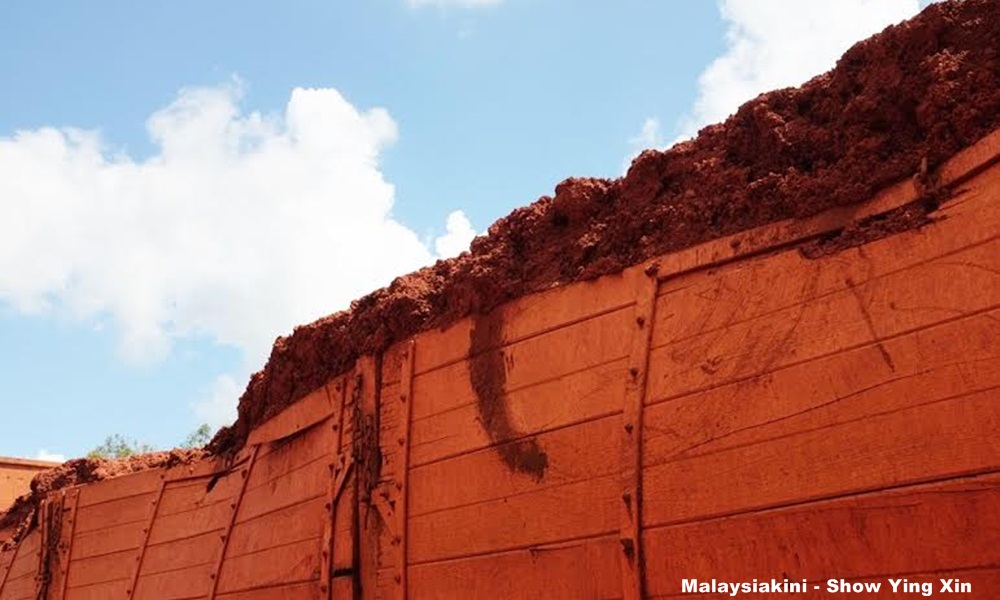
Tons of red earth were being sent on barges, loaded onto ships and moving out in droves to the lands of China. The bauxite mining industry has a plethora of environmental impacts, with the capability to cause severe pollution to air, water and damage on the land itself.
COMMENT On Jan 28, Centre to Combat Corruption and Cronyism (C4) team members decided to 'turun padang' (go to the ground) on an expedition to Kuantan, to explore the regions where the controversial mining of bauxite ore that had hit the news for its seemingly dangerous and uncontrolled activity.
After a comprehensive observation of the affected areas - including the surrounding ocean and the port - an immediate and easy observation could be that an environmental disaster and tragedy has unflooded around the city of Kuantan, leaving us with questions over how did things come to arrive at this stage, in such a short space of time?
Tons of red earth were being sent on barges, loaded onto ships and moving out in droves to the lands of China. The bauxite mining industry has a plethora of environmental impacts, with the capability to cause severe pollution to air, water and damage on the land itself.
The first instance of damage comes from the destruction of the topsoil, as bauxite ores lie beneath the upper ground layers. The damaged topsoil would never be as productive after the mining process, but the situation is exacerbated in Kuantan, as deregulated mining meant that there were no efforts towards the rehabilitation of topsoil.
This has severe consequences on the Felda residents in the area, as they now lacked the capability to sustainably reuse the lands that they had loaned to the mining companies.
The cost of rehabilitation, which takes up at a minimum six months, is also far higher than the compensation that the mining companies had paid them. The compensations were also reported to be used without foresight, as there were cases of it being used to purchase vehicles or other forms of luxury goods.
Meanwhile, the Kuantan residents are exposed to health hazards as bauxite mining has two significant consequences on the surrounding environment. Through washing and refining, bauxite mining produces a red sludge as a by-product of the mining itself, and it is a toxic combination of iron oxide, silica, and titanium oxide, along with other chemical compounds.
Covered in red mist
This chemical by-product is stored by the mining site, letting it seep into the water sources under the earth. Sources of water, as a result, become polluted with highly toxic chemicals, rendering them hazardous to consume.
The general vicinity of Kuantan is also covered in red mist, as uncanvassed bauxites - either in storage or transportation - resulted in the spillage of bauxite onto the surrounding environment.
Bauxite dust is known to have various environmental effects, such as respiratory issues with those exposed to it, the formation of acid rain, and hindering the productivity of plants (such as the durian).
Since bauxite transportation relies primarily on the port, oceanic life is also threatened, as deregulated storage once again allows bauxite to spill into the surroundings. Seaweeds die, and fishes have red bauxite sludges in their gills and chemicals in their systems, rendering them inconsumable. The survivability of the marginalised is threatened once again, as fishermen now have problems maintaining their livelihood.
Fishermen reported that during rainy days, the pristine green-blue oceans had turned into a sea of red , as bauxite from the ports spill and taint the areas around and beyond.
Socially, truck regulations, or the lack thereof, also pose a sincere problem. Trucks were reported to hog the roads, where fleets of trucks - supervised by “Tontos” - would move continuously out of the mines and towards the ports, causing severe traffic congestions.
The Tontos are like highwaymen that enforce their order through violence, reminiscent of the lawlessness of the American Wild West.
Transport trucks were also very poorly maintained, managed by reckless truck drivers who were paid by the load. As a result, transport trucks sped across Kuantan haphazardly with ill-maintained trucks. Cases of wheels falling off, trucks overturning and other accidents were frequent before the moratorium .
Innocent residents of Kuantan were often involved as well, including a case where a pregnant lady had passed away due to one such accident .
We just described a pretty lawless situation, with tremedous environmental and quality of life issues surrounding the bauxite mining obsession. And that isnt even so much part of our core mandate... so, where does C4's concerns come in?
It is here, that we ask the fundamental questions for accountability along the state command chain.
State authorities seem to have turned a blind eye on this monstrous issue, as Pahang Menteri Besar Adnan Yaakob seems encased in deniability, coming up with contradictory statements that simultaneously deny water pollution, yet discourage the people to consume said water source.
OSA not much help
In the meantime, hiding the state findings on water pollution level behind the Official Secrets Act (OSA) hasn’t helped much with the confidence deficit being experienced by the people.
The mounting question on issuance of land permits, of who has provided the miners access and permission to exploit the lands, also seemed like an open secret, where people know the answer, but none dare question it. On a federal level, Prime Minister Najib Razak himself has not made any statement at all on the matter.
C4 further urges the Malaysian Anti-Corruption Commission (MACC) to begin a stringent investigation on the bauxite issues in Kuantan, as the state government is presumed to have lost the plot, and accountability to the people has been thrown out the window.
A realignment of priorities, encouraged by the MACC, would therefore be necessary to inspire confidence in the state authority and help demonstrate genuine investigations, without fear nor favour.
Additionally, there is also the alleged issue of the RM180 million of untaxed bauxite profits, which should warrant an MACC investigation on its own right.
With public funds being used for repairing and cleaning the streets due to bauxite transport trucks, rehabilitation of bauxite mines and the cleansing of polluted waters, the misappropriated funds should be used for these public services.
C4 further urges a breakdown of the clean-up costs and how much more taxpayers money is indeed involved.
All these questions must be answered in no uncertain terms before the moratorium is lifted.
Kuantan must shift towards sustainable, long-term economic goals where it uses these short-term bauxite profits to reinvest into the state, and nurture any promising industries that may be beneficial to the growth of the state.
With the right investments, the state could even shift into a cohesive part agriculture, part service industry, promoting the livelihood for current and future generations and enhancing the economic and social welfare of the state.
CYNTHIA GABRIEL and RICHARD YEOH are both directors, Centre to Combat Corruption & Cronyism (C4).


