



Chief justice: Don't judge us before reading our judgments
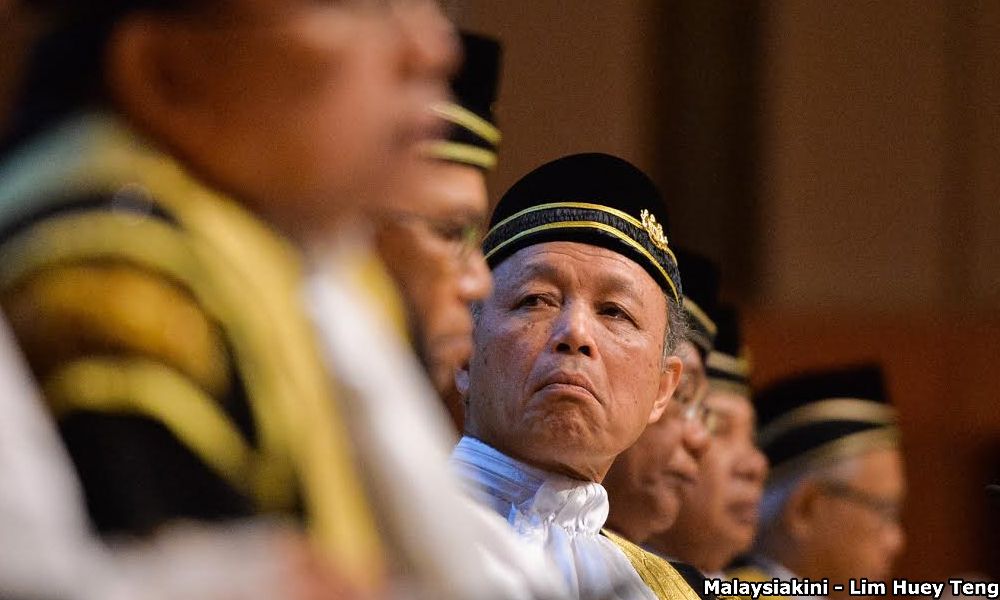
Chief Justice Arifin Zakaria said while the judiciary welcomes criticism, the people should read the judgments before throwing brickbats.
"This is part of the accountability of the judiciary. I would like the people to dissect the judgments and tell us where we are wrong," he said.
Chief Justice Arifin Zakaria said while the judiciary welcomes criticism, the people should read the judgments before throwing brickbats.
"This is part of the accountability of the judiciary. I would like the people to dissect the judgments and tell us where we are wrong.
"But they don't do that, as they call us names, like being heartless... That is uncalled for as this is not criticism.
"That is running down the judiciary without reading the judgments. Criticising the judiciary for its judgments is always welcomed as it is part of the common law tradition," he added.
Justice Arifin said that nobody has been arrested for criticising judgments.
But the top judicial officer in the country said some even called judges "stupid" or accused them of being biased, which was uncalled for.
He added that it would be fair if the public scrutinise the judgments outside court the way lawyers dissect the findings of the lower and superior courts.
‘Unless executive agrees’
Asked to comment on a proposal forwarded by Court of Appeal judge Hamid Sultan Abu Backer, who wrote the dissenting judgment in the K Pathmanathan @ Mohd Ridhwan Abdullah vs M Indira Gandhi case, Arifin said it was improper for the judge to make the comment.
He said that this was within the boundaries of the executive or legislature, and not up to the judiciary.
“This involves policy matters and it is not proper for it to be brought up, unless the executive agrees to it,” Arifin said.
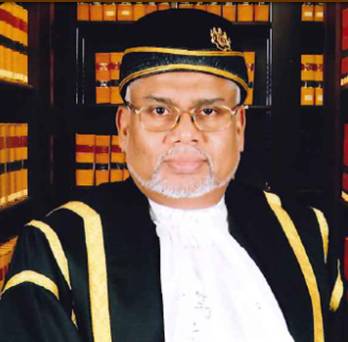 Hamid Sultan (
photo
) had, in his minority judgment, proposed the setting up of a special court to look over what he called as “hybrid cases”, involving Muslims and non-Muslims.
Hamid Sultan (
photo
) had, in his minority judgment, proposed the setting up of a special court to look over what he called as “hybrid cases”, involving Muslims and non-Muslims.
In his judgment, he wrote that provisions in state law indicate that in all state syariah legislations, if the issue is to be decided involving a Muslim and a non-Muslim, the jurisdiction does not lie with the Syariah Court.
“Common sense will dictate that it has to fall under the civil courts and convoluted jurisprudence does not help. If some comfort needs to be given to litigants in hybrid cases, it does not stop Chief Justice Arifin Zakaria from directing special courts to hear syariah matters between Muslims and non-Muslims with judges conversant in both the laws,” Hamid Sultan wrote.
Arifin also did not want to comment on the Court of Appeal's findings that the Syariah Court was the proper jurisdiction to determine whether someone is a Muslim or otherwise, as in the Pathmanathan vs Indira Gandhi case, for fear it would be sub-judice.
“I think the matter may go on appeal and it is improper for me to comment on this for fear it may influence others,” he said.
In his speech during legal year today, Arifin pledged that the judiciary will continue to enforce the law without fear or favour.
“That is the cornerstone of the rule of law, which is the foundation of our society. It is the foremost insignia of good governance.
Arifin said to meet the challenges of a plural nation like Malaysia, the core values of rule of law should be adhered to, namely the Federal Constitution, recognition that all are equal before the law, independence of the judiciary, ensuring law is clear and applied predictably, access to justice for the public, and incorporating moderation and proportionality in the enforcement of laws.


