




Independent panel sought to access high-profile graft cases
An independent panel should be set up to determine if prima facie evidence is required before high profile corruption cases investigated by the Malaysian Anti-Corruption Commission (MACC) are referred to the attorney-general to decide on prosecution.
This has been suggested by Parliament's Special Committee on Corruption (SCC), headed by Senate president Abu Zahar Ujang, in the 2014 SCC Report.
The report, which was released in the Dewan Rakyat yesterday, cited in particular SRC International Sdn Bhd and the RM2.6 billion political donation that went into Prime Minister Najib Abdul Razak's personal bank accounts to justify the need for such a panel.
An independent panel should be set up to determine if prima facie evidence is required before high-profile corruption cases investigated by the Malaysian Anti-Corruption Commission (MACC) are referred to the attorney-general to decide on prosecution.
This has been suggested by Parliament's Special Committee on Corruption (SCC), headed by Senate president Abu Zahar Ujang, in the 2014 SCC Report.
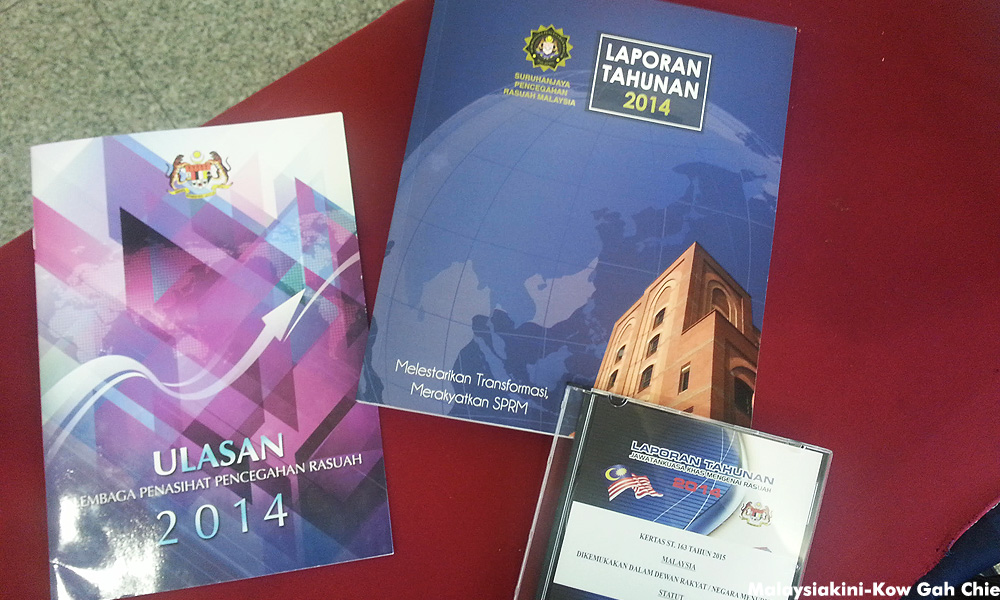 The report, which was released in the Dewan Rakyat yesterday, cited in particular SRC International Sdn Bhd and the RM2.6 billion political donation that went into Prime Minister Najib Abdul Razak's personal bank accounts to justify the need for such a panel.
"SCC proposes to the attorney-general to set up an independent panel to look at the investigating papers of high-profile cases, such as the SRC International and the RM2.6 billion donation.
"MACC should table its finding and investigation outcome to the independent panel to determine if a prima facie case can be established before the matter is referred to the attorney-general to make a decision," the report says.
The proposal complies with the message given by the Conference of Rulers on Oct 6, it said.
The rulers had in a joint statement reminded all parties to ensure the government is trusted, its leaders respected, political stability maintained and justice is dealt fairly and transparently in accordance with the laws.
"There are concerns that a confidence crisis may occur following the failure to offer a convincing explanation and answer," the rulers said.
In its report, SCC stressed the independent panel is not meant to take over the role of the Operations Review Panel (ORP), which acts as the check-and-balance mechanism for ongoing cases and on reasons whether cases are to be prosecuted or dropped.
"The (proposed independent) panel is only to look into special high-profile cases on a case-to-case basis before they are refered to the attorney-general," its report states.
Aim: To reduce negative perceptions
It is proposed that five legal experts with high integrity sit on the new panel. The aim of the panel is to reduce the negative perceptions the people may hold against the government and the MACC.
SCC also voiced its dissatisfaction that the allocation for MACC has been slashed to RM251 million under Budget 2016, from RM294 million in 2015.
MACC will also see a 10 percent reduction in its emoluments, from RM178.9 million in 2015 to RM161.6 million in 2016.
"SCC is of the view that allocations for critical agencies like MACC should not be reduced. Enough funds should be provided to ensure MACC operates effectively," the report says.
 SCC, a seven-member body, was established under the MACC Act to advise the prime minister on matters related to corruption.
The other members are Senate deputy president Doris Sophia, Dr Tan Seng Giaw (DAP-Kepong), Irmohizam Ibrahim (BN-Kuala Selangor), Fauzi Abd Rahman (PKR-Indera Mahkota), Takiyuddin Hassan (PAS-Kota Baru) and Noraini Ahmad (BN-Parit Sulong).
In its report, SCC also pointed out that the government has yet to respond to several proposals it has brought up. These are:
- The definition of "gratification" stipulated in the MACC Act should include the awarding of tenders, projects, contracts or procurements, as well as land, by a civil servant and a member of the executive for self-interest. (The proposal was brought up from 2011 to 2013 and the government and Attorney-General's Chambers have yet to respond.)
- The appointment of the MACC chief commissioner and the establishment of the Malaysian Anti-Corruption Services Commission should fall under Parliament. (This proposal was brought up from 2009 to 2013; and is in the process of engagement.)
- A provision for "corporate liability" has to be included. (This suggestion was brought up from 2011 to 2013; the government is in the process of engagement and scrutiny.)
- A specific provision to deal with "misconduct in public office" is needed to deal with wastage of public funds. (This proposal was brought up from 2011 to 2013; and the government is in the process of scrutiny.)
- A cooling-off period is needed to make sure retired civil servants, particularly high-ranking officers, will not be able to use their influence in the government to benefit their new employers. (The proposal was brought up from 2011 to 2013; the government is yet to respond.)
Meanwhile, the Anti-Corruption Advisory Board (ACAB), which is headed by Zaitun Zawiyah Puteh, criticised the government for being too lenient with its errant officers.
The 2014 ACAB Report calls upon the government to punish errant officers according to their wrongdoings.
Despite the views given by MACC that appropriate action be taken against officers who bypass the law and disregard national interest, sometimes the action taken is not serious if compared with the wrongdoing, it says.
The status of the MACC chief commissioner should be lifted to rank with that of the auditor-general and the judges, who are appointed under the Federal Constitution, the report adds, without elaborating on this.


