




‘DPM Husam’ disclosures set off flurry
COMMENT There were two principal disclosures by former PAS vice-president Husam Musa in a speech he made on the hustings in Salor, the state constituency in Kelantan where he is the elected representative.
One was that there was an attempt by PAS president Abdul Hadi Awang to get a coalition of PAS and Umno assemblypersons, together with two or three crossovers from PKR, to form the government in Selangor at the height of the crisis resulting from Khalid Ibrahim’s refusal to vacate the menteri besar’s office.
COMMENT There were two principal disclosures by former PAS vice-president Husam Musa in a speech he made on the hustings in Salor, the state constituency in Kelantan where he is the elected representative.
One was that there was an attempt by PAS president Abdul Hadi Awang to get a coalition of PAS and Umno assemblypersons, together with two or three crossovers from PKR, to form the government in Selangor at the height of the crisis resulting from Khalid Ibrahim’s refusal to vacate the menteri besar’s office.
Strictly speaking, this disclosure is not entirely new for as Husam himself explained in the same ceramah, Hadi had admitted to having tried the manoeuvre; only he had not sought the party’s permission nor attempted a justification. Husam pronounced the lack impugnable.
The second important disclosure that Husam made was that had Pakatan Rakyat won the last general election (GE13), and had Anwar Ibrahim been installed as prime minister, Husam would have been appointed deputy PM . This, Husam said, was what Saifuddin Nasution of PKR, an Anwar lieutenant, told him.
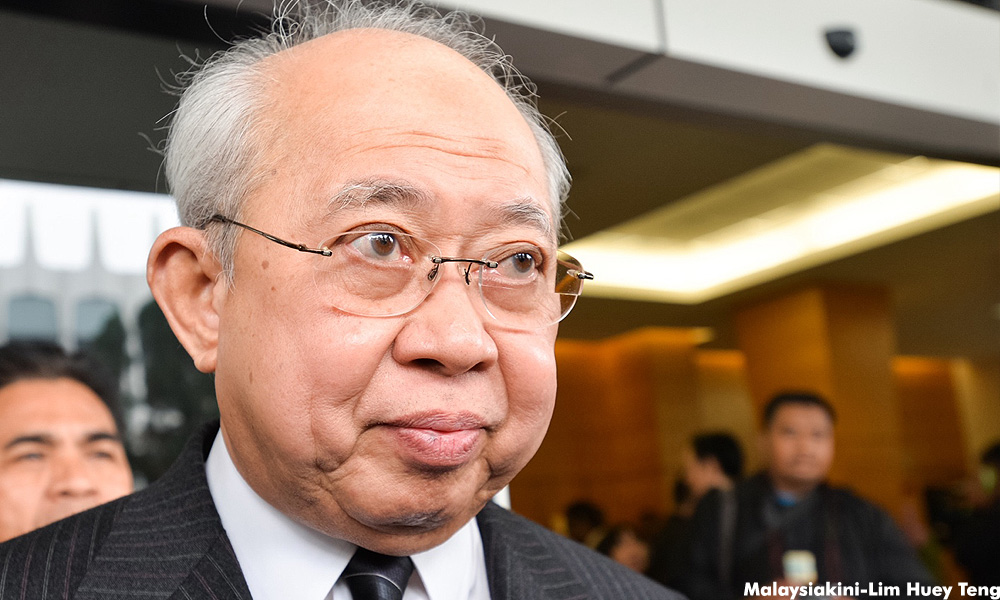 This revelation is not implausible because a little over a month before GE13 which was held on May 5, 2013, Anwar, who at that time was the announced PM-designate of Pakatan Rakyat, was told by a PAS delegation led by Hadi that if Pakatan Rakyat emerged winners, the Islamic party’s choice for PM would be Tengku Razaleigh Hamzah (
photo
), the Umno MP for Gua Musang.
This revelation is not implausible because a little over a month before GE13 which was held on May 5, 2013, Anwar, who at that time was the announced PM-designate of Pakatan Rakyat, was told by a PAS delegation led by Hadi that if Pakatan Rakyat emerged winners, the Islamic party’s choice for PM would be Tengku Razaleigh Hamzah (
photo
), the Umno MP for Gua Musang.
Anwar would have been dismayed by this eleventh-hour PAS betrayal of the consensus reached among Pakatan Rakyat on who should be PM but he would have kept his disappointment to himself, possibly evincing to loyalist Saifuddin that he would have his own back on Hadi by appointing Husam as the DPM should Pakatan Rakyat win the polls.
This sequence of probabilities is plausible, especially when seen against the backcloth of Husam’s surprise decision to stand for the Putrajaya parliamentary seat where Anwar and the late Nik Aziz Nik Mat, the former MB of Kelantan, put in campaign appearances for Husam.
Though these appearances were not enough to enable Husam to prise the seat from incumbent MP Tengku Adnan Tengku Mansor of Umno, they were indicative of Husam’s standing in the Pakatan Rakyat choreography.
In light of the disclosure about Hadi’s connivance with Umno during the crisis in Selangor over who was to replace Khalid as mentri besar in 2014, and the revelation about Husam’s lofty standing in the Pakatan Rakyat pecking order, the crisis that convulsed PAS in June this year when the party held its elections now seems like it was all inevitable.
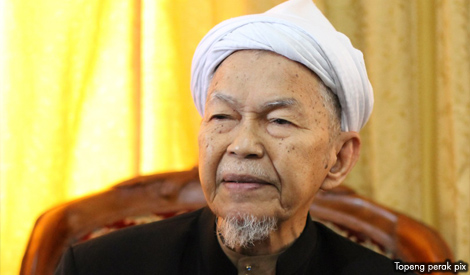 The conservative ulama faction was just waiting for Nik Azz (
photo
) to pass on before they made their move to corral and sideline the professionals-cum-progressives in the party.
The conservative ulama faction was just waiting for Nik Azz (
photo
) to pass on before they made their move to corral and sideline the professionals-cum-progressives in the party.
Nik Aziz, although not of the progressive wing, was flatly opposed to any collaboration with Umno, leave alone a unity government with them.
Path to collaboration opened anew
With his death on Feb 12, the path to collaboration with Umno opened up anew, leaving the progressives, who were flatly opposed to the move, unable to stymie it.
The rout of the progressives in party polls held in June meant that they had no more place in PAS, with the formation of the splinter, Amanah, regarded as the inevitable consequence of the unbridgeable divide between conservatives and progressives.
Husam belongs with the progressives but he did not leave PAS to join Amanah which is what several progressive stalwarts of the party have done.
Instead he has chosen to stay back and criticise PAS from within, a move that is likely to get him the boot.
Before matters arrive at that stage, the newly-formed opposition, Pakatan Harapan, which groups DAP, PKR and Amanah, should move preemptively to salvage Husam.
A recent poll by the Ilham Centre holds that the Malays in Penang do not trust the DAP to safeguard their interests.
This means that DAP, which is the strongest component of Harapan, must think out of the box on how to overcome Malay qualms about them.
A good way to go about this would be to appoint Husam, who is strong on economics, to be in charge of the wakaf land in Penang.
There is plenty of this land and little is being done to add value to the Muslim economy.
Husam’s apointment will bolster the standing of Harapan among the Malays, not only in Penang but in the rest of the country.
DAP will also gain from this radical measure as whatever boosts Harapan will redound to DAP’s benefit.
The opposition, minus the lone-ranging PAS, must be proactive rather than merely reactive to events.
In appointing Husam to take charge of wakaf lands in Penang, DAP will be emulating Husam’s move in taking on Umno in Putrajaya at GE13, which was boldness itself.
TERENCE NETTO has been a journalist for more than four decades. A sobering discovery has been that those who protest the loudest tend to replicate the faults they revile in others.


