




Samy: MRRII flyover cracks due to design flaws
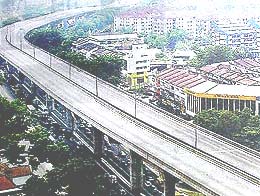
 Works Minister S Samy Vellu, in an about-turn, today revealed that the cracks in the two-year-old Kepong flyover of the Middle Ring Road II (MRRII) was the result of a design fault and "improper anchorage" of its columns.
 Works Minister S Samy Vellu, in an about-turn, today revealed that the cracks in the two-year-old Kepong flyover of the Middle Ring Road II (MRRII) was the result of a design fault and "improper anchorage" of its columns.
The minister had earlier insisted there was no flaw in the flyover's design as a consultant originally hired to investigate the cracks had certified that the design was safe.
The 1.7km stretch of the highway was closed to traffic last month after 33 cracks were found in the pillars and beams in the Kepong flyover.
A third consultant, United Kingdom-based Halcrow Group, was later brought in after the Australian consultant engaged by the flyover project's contractors provided findings which contradict those from the German consultant appointed by the government.
Design deficiency
"The main cause of the excessive cracking in the crossheads to the T-shape piers is deficiency in the design and anchorage of the column reinforcement into the crosshead where it is required to resist out-of-balance movement under certain loading conditions, both during construction and in service."
 This was among the findings contained in the Halcrow's report presented yesterday by the company's bridge engineering director Roger J Buckby at a meeting with officials from the Works Ministry, Public Works Department, and the contractors and consultants involved in the MRRII, said Samy after attending this morning's parliamentary question-and-answer session.
Samy also added that the Halcrow report found a deficiency in the "design of transverse reinforcement in the top of the crosshead to resist splitting forces between bearings."
The veteran minister insisted, however, that it was not on account of inadequate reinforcement but the improper 'placement of the steel and anchorage' that was the cause of the cracks.
"The job has been done, but the placement of the steel and the anchorage was not done properly and this has caused all the problems up to now. The design also did not indicate the proper anchorage of the beams and the columns. These are the two main factors that have to be repaired," he said.
RM20m repair costs
Samy also told journalists at the Parliament lobby that the repair works of the MRRII, which cost RM238.8 million to complete, would be no more than RM20 million and may initially be borne by the government in order to expedite the repairs.
"Right now we are asking the contractors to do it. But if the contractors say they are not interested in doing it on account of insufficient funds, are we going to wait until they get the funds?" he said when asked about who was going to foot the repair bill.
"I have to present to the government and ask the government to make an allocation to repair the flyover, then we have to go through the usual procedures to determine whether to recover from the contractors or not."
Samy added that discussions on the repair estimates was moot until Halcrow had presented a detailed report relating to the scope of and time needed for the repair works.
Though Halcrow had requested two months for the completion of the final report, the ministry expected it to be completed within a month, he said.
The minister did not give any indication when the repair work will be done.
The RM238.8 million MRRII project - awarded to the consortium of Sukmin Sdn Bhd, Bumihiway (M) Sdn Bhd and Konsortium Kontraktor Melayu - has come under intense scrutiny since the flyover in Kepong, north of Kuala Lumpur, was closed for a three-month repair on Aug 8.
The opposition DAP has called on Samy to resign over the scandal but this was brushed aside by the minister.


