



'Gov't can't afford to bring down excise duties now'
Aidila RazakPublished: Jan 20, 2014 9:43 AM | Updated: Jan 20, 2014 9:48 AM
The government's poor financial standing is preventing it from reducing excise taxes, which make up two-thirds of the duties paid on imported cars.
The government's poor financial standing is preventing it from reducing excise taxes, which make up two-thirds of the duties paid on imported cars.
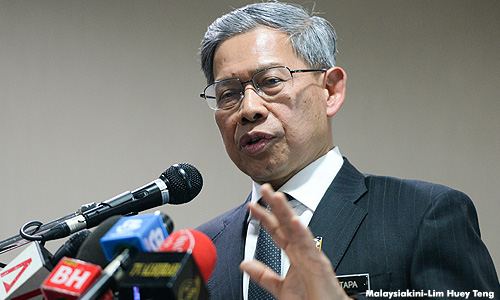
However, International Trade and Industry Minister Mustapa Mohamed said that this does not mean it will not review excise duties when it is in a more comfortable position.
"The automotive sector is very important and contributes to the government coffers from RM7.4 billion in 2010 to RM9.8 billion in 2013, and the biggest component is excise duties comprising 75 percent.
"Given the current situation of the budget (deficit), it is not possible to review excise duties.
 "But in the next few years as the fiscal position improves, we will consider looking at gradually bringing excise taxes down," he added.
Speaking at the launch of the National Automotive Policy 2014-2020, he stressed that although excises duties on paper is 65 to 105 percent, exemptions have seen the average importer pay about 50 percent.
"I hope this puts some closure on this contentious issue of excise duties," he noted.
Pakatan Rakyat, in its proposed policy to bring car prices down, suggested cutting excise duties gradually with the goal of completely removing the duties.
To temporarily plug the hole in government revenue, Pakatan proposed auctioning approved permits (APs) to import cars before phasing out the APs as well.
The government is studying the discontinuation of the APs which have been blamed for distorting the market and promoting rent-seeking by politically-linked individuals.
Meanwhile, Mustapa announced that by Jan 1, 2016, there will be zero import duties for vehicles imported from Australia and Japan in line with free trade agreements.
"This creates pressure and competition in the industry, compared to 30 years ago," he said.
However, International Trade and Industry Minister Mustapa Mohamed said that this does not mean it will not review excise duties when it is in a more comfortable position.
"The automotive sector is very important and contributes to the government coffers from RM7.4 billion in 2010 to RM9.8 billion in 2013, and the biggest component is excise duties comprising 75 percent.
"Given the current situation of the budget (deficit), it is not possible to review excise duties.
"But in the next few years as the fiscal position improves, we will consider looking at gradually bringing excise taxes down," he added.Speaking at the launch of the National Automotive Policy 2014-2020, he stressed that although excises duties on paper is 65 to 105 percent, exemptions have seen the average importer pay about 50 percent.
"I hope this puts some closure on this contentious issue of excise duties," he noted.
Pakatan Rakyat, in its proposed policy to bring car prices down, suggested cutting excise duties gradually with the goal of completely removing the duties.
To temporarily plug the hole in government revenue, Pakatan proposed auctioning approved permits (APs) to import cars before phasing out the APs as well.
The government is studying the discontinuation of the APs which have been blamed for distorting the market and promoting rent-seeking by politically-linked individuals.
Meanwhile, Mustapa announced that by Jan 1, 2016, there will be zero import duties for vehicles imported from Australia and Japan in line with free trade agreements.
"This creates pressure and competition in the industry, compared to 30 years ago," he said.


View Comments0