




Audit report serious, or mere 'window dressing'?
MP SPEAKS Unlike delays in the previous years, parliamentarians were caught by surprise that the Auditor-General’s 2012 Report was tabled yesterday morning, before the end of the second sitting of the year.
MP SPEAKS Unlike delays in the previous years, parliamentarians were caught by surprise that the Auditor-General’s 2012 Report was tabled yesterday morning, before the end of the second sitting of the year.
 While we are happy to see this minor improvement, I would like to remind our Prime Minister Najib Abdul Razak that this is still insufficient because one of the proposals put forward by the Performance Management and Delivery Unit (Pemandu) in fighting corruption is to have the Auditor-General’s Report tabled in Parliament periodically for every sitting, so that members of parliament can debate on it more often, instead of only once a year.
Delays and government inaction in addressing concerns or recommendations arising from the Auditor-General’s Report have led to unfavourable public perception over the ability of the government to act on cases of corruption and fraud.
As most of these problems pertain to the current reporting process, the Reducing Corruption National Key Result Areas (COR NKRA) has proposed the implementation of four new initiatives in the Government Transformation Programme (GTP) 2.0 to streamline the auditor-general’s reporting process.
Specifically, the transformation will entail fast-tracking access to the Auditor-General Performance Audit Report:
Presently, the auditor-general presents its performance audit once a year, but the amount of information contained in the report is overwhelmingly large.
This initiative calls for the auditor-general’s performance audit report be tabled thrice yearly, thereby enabling speedier and more efficient processing of its contents enabling quick remedial action.
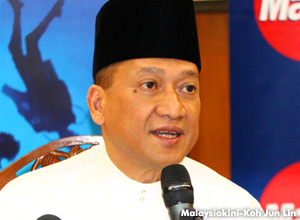 According to an answer by Mohamed Nazri Abdul Aziz (
left
), the then Minister in the Prime Minister’s Department, on Oct 15, 2012, the National Audit Department was ready to move towards the direction of tabling their reports three time yearly.
According to an answer by Mohamed Nazri Abdul Aziz (
left
), the then Minister in the Prime Minister’s Department, on Oct 15, 2012, the National Audit Department was ready to move towards the direction of tabling their reports three time yearly.
After almost a year, this is not implemented yet. So I am curious, what is holding Najib and his cabinet back?
Tabling the Auditor-General’s Report thrice yearly is the easiest to implement if compares to three other transformation steps recommended by Pemandu, which are:
- Establishing an action committee on the Auditor-General’s Report: The setting up of a special committee comprising auditors who worked on the report and Malaysian Anti-Corruption Commission (MACC) officers will enhance collaboration between the two bodies. The aim here is to expedite action on the performance report;
- Establishing the Auditor-General’s online dashboard: This initiative will set up an online dashboard that monitors the actions taken on issues raised by the Auditor-General report. The aim here is to promote transparency and to induce pressure on the relevant authorities to act on outstanding issues;
- Establishing the Putrajaya Inquisition: This initiative will work to clear the large backlog of performance issues raised by past auditor-general reports. The Inquisition will be chaired by the prime minister and other relevant ministries to clear old cases, and will be dissolved after the backlog has been cleared.
And yet, the easiest and the simplest is not done. So how can the rakyat be convinced that our prime minister is truly committed and serious about fighting corruption, and that Pemanduis not just for window-dressing purposes?
TEO NIE CHING is member of parliament for Kulai and DAP assistant national publicity secretary.


