




Still a democratic coup in Egypt?
The death toll continues to rise following the brutal crackdown by the Egyptian military, while the Obama administration is walking a tightrope, condemning the bloodshed on the streets of Cairo but falling short - still - of calling the overthrow of the democratically-elected Morsi government a coup.
The death toll continues to rise following the brutal crackdown by the Egyptian military, while the Obama administration is walking a tightrope, condemning the bloodshed on the streets of Cairo but falling short - still - of calling the overthrow of the democratically-elected Morsi government a coup.
This is most hypocritical, for the Americans have long been backing Saudi Arabia which is now popularly regarded as the source of extremism, representing a much bigger menace than the Muslim Brotherhood.
Since coming to power on 51 percent of the popular votes in July last year, the Muslim Brotherhood has been accused of marginalising the Christian minority, curtailing women’s rights, cold-shouldering other political forces and putting the conservatives in power. In short, Mohamed Morsi’s refusal to compromise was ostensibly his greatest sin, leading to the dramatic collapse of his presidency.
And there are those in Malaysia who were cheering on as the military coup happened, for they feared a religion-based government that was seemingly harming the rights of many would send a wrong signal to the rest of the Muslim world. How naïve that these people, be they Christians, liberals, democrats or others, would have thought that democracy could be restored through military intervention.
As always, seeking help from the military will not unblock the political impasse but result in deeper political and social divisions that are harder to reconcile. Military coup invariably brings about a media shutdown, rolls back democratic institutions, erodes the judiciary and, most atrociously, costing countless deaths of innocent lives. One does not have to be in Cairo to know it.
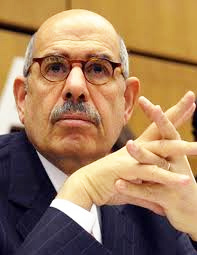 That those who uphold political liberalism could have been so easily deluded into believing that the ambitious men in uniform would share their progressive agenda is puzzling indeed.
It is reported that Mohamed ElBaradei ( left ), a Nobel laureate who was appointed as vice-president after the coup, has now resigned in protest. Given his esteemed position internationally, ElBaradei should not have served under the military in the first place knowing that they are only keener on protecting their vested interests than on rescuing democracy.
More paradoxical is the phenomenon that those who have been supporting wholeheartedly military intervention to get rid of the ‘bad guy’ happen to be the highly educated elites and middle classes, and this has been proven in the case of Thailand, Turkey and now Egypt.
The road to hell...
As the saying goes: the road to hell is paved with good intentions. No military putsch would be complete without the generals masquerading as national saviours.
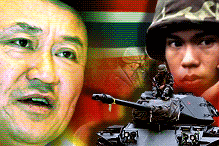 After Thaksin Shinawatra was deposed as prime minister in September 2006, Sonthi Boonyaratglin, the commander-in-chief of the Royal Thai Army, went on TV to declare that “many have asked the military to intervene and safeguard national interests as well as the dignity of the King”.
What ensued in the next few years was more bloodshed and conflicts in Thai society, while the Thai military seized the opportunity to regain the excessive powers that they once enjoyed before 1992.
When the anti-Thaksin yellow-shirters occupied the Bangkok international airport for several days in 2008, the security forces did not lift a finger to restore order, and the mayhem only reinforced the misperception that only a strong military would ensure the survival of Thailand as a viable state.
Today, Prem Tinsulanonda, a former prime minister and a retired army general, is endowed with more powers as head of the Privy Council, with the Yingluck Shinawatra government beholden to his invisible influence.
As I see it, there is no such thing as a democratic coup, for the same army that deposes a legitimate head of state today in the name of ‘public interests’ can do the same to the very applauders of military intervention when the circumstances call for it.
Worse still, nearly all the militaries that have engineered a coup successfully one way or another have accumulated immense political powers and business interests, breeding rampant corruption and undermining constitutional rules along the way.
Meanwhile, endorsing the illegitimate role of the military in the Muslim countries only emboldens the radical elements and extremists such as al-Qaeda and Hezbollah, who now cash in on the opportunity and argue that democracy does not work in an Islamic context, and that raw political power can only be asserted through the barrel of a gun rather than a ballot box.
At the same time, autocracies such as Qatar, Syria and Saudi Arabia are quietly celebrating the havoc in Egypt. It is no doubt tragic to see a greater setback whenever tiny progress is made in the Middle Eastern pursuit of democracy.
The lesson from the Egyptian labyrinth is that an inherently weak society will only make it ready for other parties to manipulate politics. Instead of looking to the military in checking against a powerful leader, one should endeavour to strengthen civil society as an alternative, as has been the case in South Korea and Indonesia. Sending in the army to handle Morsi’s failures is clearly not the answer; neither is the White Knight syndrome.
And both Pakatan Rakyat and Barisan Nasional must condemn the human rights violations being committed in Egypt. In this, Umno’s silence is especially telling - would it take a leaf out of the Egyptian army’s book should it lose power one day?
JOSH HONG studied politics at London Metropolitan University and the School of Oriental and African Studies, University of London. A keen watcher of domestic and international politics, he longs for a day when Malaysians will learn and master the art of self-mockery, and enjoy life to the full in spite of politicians.


