




PM's liberalisation: The emperor wears no clothes
COMMENT In the past few days, one of the worst-kept secrets of the last few months has been let out of the bag. This is that the emperor - a.k.a Prime Minister Najib Razak - has no clothes.
 There are no reports that anyone as a consequence has expired from shock of finding that the PM in the buff has been what he was always suspected to be: a politician of fluff.
The announcement to considerable fanfare last September of the PM’s intended liberalisation of laws governing citizens’ right to assemble peacefully and of detention without trial was not really expected to eventuate in a way that would conform to what not only the Merdeka Constitution guarantees but internationally recognised norms mandate.
But the flurry over the announced intention to liberalise was, nevertheless, met with a modicum of expectation...
COMMENT In the past few days, one of the worst-kept secrets of the last few months has been let out of the bag. This is that the emperor - a.k.a Prime Minister Najib Razak - has no clothes.
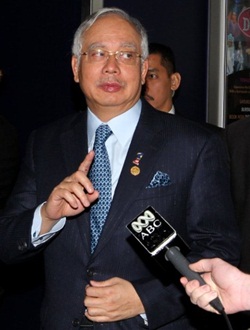 There are no reports that anyone as a consequence has expired from shock of finding that the PM in the buff has been what he was always suspected to be: a politician of fluff.
The announcement to considerable fanfare last September of the PM’s intended liberalisation of laws governing citizens’ right to assemble peacefully and of detention without trial was not really expected to eventuate in a way that would conform to what not only the Merdeka Constitution guarantees but internationally recognised norms mandate.
But the flurry over the announced intention to liberalise was, nevertheless, met with a modicum of expectation.
This was for reason that it would finally - and decisively - show whether Najib can sustain the suspicion he has a reformist bone in his body; or what was more likely, that he had none and that it is just what the more realistic had always predicted: Malaysia’s sixth PM knows how to play at the pretense of reform but intends to leave the status quo intact.
He sure has a way with the jargon of reform, though.
After his Economic Transformation Programme (ETP) had been evaluated as well intentioned but without willpower behind it; and a Government Transformation Programme (GTP) was shown to be more slogan than substance, the liberalising agenda, announced on the eve of the Malaysia Day commemoration - itself a concession to the liberal winds loosed in the land - was touted as certain to reflect the PM’s desire to do some things, at least, differently from his predecessors.
The PM knew Malaysians have a tendency to give the new helmsman at the national stern a chance to show his stuff.
And Malaysians are quite patient and somewhat understanding about difficulties the new navigator may seem to wrestle with while trying to get his reform package on track.
But this forbearance was wearing thin. Signs were proliferating that the PM was tugging at the slack the public allows a new PM.
He had better get down to brass tacks soon or his would be the shortest reign of all the PMs in Malaysian history.
Liberal jargons as smokescreen
After making a hash of the government’s response to electoral reform pressure group Bersih’s impressive display last July of public support for its agenda, a seemingly chastened PM appeared willing - finally - to make concessions.
Existing legislation on street protests and internal security vied for reformist attention.
To be sure, on the latter score Najib and his home minister have been saying for some time that the hoary, old relic of colonial times - the Internal Security Act - needed to be overhauled, maybe even shunted into oblivion.
At the announcement, on prime-time TV no less, that the PM intends to get liberal, the public, despite its skepticism, held its breath and waited.
After all, polls were imminent and the electorate’s verdict on the entire confection waits in the balance, as final arbiter.
Now, while Parliament sits in its traditionally long end-of-year deliberation, and a select committee on electoral reform holds its hearings, the home minister says detention without trial will ever remain a part of our statutes, like, presumably, racial identification in official documents.
Worse, the Peaceful Assembly Bill 2011, tabled for first reading in Parliament, makes illegal the holding of street protests and renders organisers of planned demos dependent on the humour of the police.
This is not just farcical; it is grotesque. It says that this government cannot actually reform; it is beyond it.
The undertow of stale thinking, the detritus of an overly long stay in the saddle, is so deep-seated that all a leader can do is spout liberal jargon as a smokescreen behind which adamant maintenance of the status quo stifles reformist inclinations.
A complaisant mainstream media, a largely compliant judiciary and a subservient civil service, all combine to confirm the incumbent power wielders that the notion of reform can be sustained in the breach than in the observance.
Only those beyond the media-imposed ambit of this fraudulence can see that the emperor has not a stitch on him and deserves to be cashiered.
TERENCE NETTO has been a journalist for close on four decades. He likes the occupation because it puts him in contact with the eminent without being under the necessity to admire them. It is the ideal occupation for a temperament that finds power fascinating and its exercise abhorrent.


