




What about the many other oppressive laws?
The following are quick remarks from three individuals in the wake of PM Najib’s announcement to repeal the ISA.
Constitutional law expert Abdul Aziz Bari
With the move to abolish ISA and to revoke the emergency declarations, it can be said that Umno-BN has suddenly abandoned its own political philosophy. Only yesterday, Home Minister Hishammuddin Hussein denied talks of abolishing the ISA...
The following are quick remarks from three individuals in the wake of PM Najib’s announcement to repeal the ISA.
Constitutional law expert Abdul Aziz Bari
With the move to abolish ISA and to revoke the emergency declarations, it can be said that Umno-BN has suddenly abandoned its own political philosophy. Only yesterday, Home Minister Hishammuddin Hussein denied talks of abolishing the ISA.
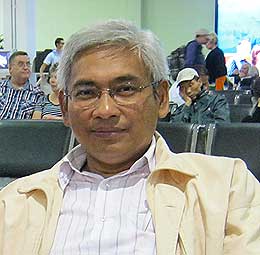 But while the announcement may sound good, what about the repeal of the Universities and University Colleges Act (UUCA) 1971, Societies Act 1966 and section 27 of the Police Act 1967?
The proposal to do away with section 27 was first mooted by the royal commission headed by former chief justice Dzaiddin Abdullah in 2005. In its report, the commission found that the police have abused their power to deny the right to peaceful assembly that is provided for by the constitution. The commission also questioned the formation and operation of the notorious Special Branch, which lacked transparency and accountability.
As for the Societies Act, this legislation has been used to deny citizens right to form association.
There is no good reason why UUCA should remain when all IPTAs (public universities) have their own statutes and constitutions. In fact, the law has been used since 1971 to put various constraints on the academics and students. This law has been a convenient tool to deny students their rights as citizens, particularly the right to freedom of expression, assembly and association.
And what about Official Secrets 1971, which have tightened over the years? This legislation has been a stumbling block to more transparency and accountability in the society.
Did the PM say anything about the controversial Sedition Act 1948? The problem with this archaic and draconian law is that not just ordinary citizens are under its threat. Indeed, even MPs, who are lawmakers, can be prosecuted under it. Even parliamentary privileges cannot save them.
DAP MP for Petaling Jaya Utara Tony Pua
Prime Minister Najib Razak has just proved and vindicated our struggles over the past few decades - that all their attempts to curtail the reforms with various excuses, were just that, invalid excuses.
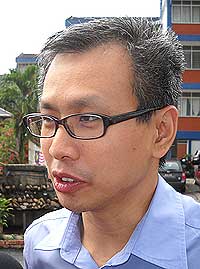 His announcement tonight proved that people’s pressure can succeed, and the Bersih demonstration proved effective in forging change in M'sian politics.
But we shouldn’t count the chickens yet. We have yet to see the fine print. We've seen sufficient U-turns when Najib comes under pressure from right-wing groups, and we won't be surprised if the same happens again.
The fine print could mean that the new laws to be introduced as replacement for the old laws may be little but cosmetic improvements of the old. We have seen that with the amendments to UUCA in 2009. Or the MACC (Malaysian Anti-Corruption Commission) 2010.
If Najib is sincere and not just baiting for votes, the substantive reforms must be implemented before the next general election. Otherwise, he may not even be PM after that.
In summary, we are vindicated by the announcement but are still hesitant to pop the champagne as we await the fine print.
Oh, and Najib lifted everything from our Buku Jingga (Pakatan Rakyat’s Orange Book). Every single thing.
PKR vice-president N Surendran
The limited reforms announced by the prime minister tonight is a testament to the dogged, determined and noble struggle of countless dedicated activists, NGOs and opposition political parties over the past five decades, against the wide array of oppressive legislation maintained by the BN.
To bring about tonight's limited gains, many of these brave Malaysians suffered grievously (including long periods of detention) at the hands of the Alliance/BN government and its merciless security apparatus. It is noteworthy that the PM offered no recognition whatsoever to the historic struggle of the civil society and the political opposition for a free Malaysia.
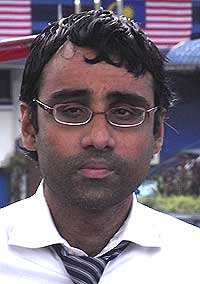 These reforms manifestly fall short and leave substantial undemocratic and oppressive powers in the hands of the government. The ISA is to be abolished; however two new laws are to be enacted providing for preventive detention. The ambit and wording of these two new laws are unknown.
The PM also makes a vague promise to amend the Police Act 1967 to allow for greater freedom of assembly. But he gives no details of the drift and purport of the amendments. Indeed, he accompanies this promise of reform with warnings against "street demonstrations". He should have instead declared the abolition of the requirement of a permit for such assemblies.
It is proposed that the current requirement of annual newspaper licence be replaced with a licence which will be valid until cancelled. This is not reassuring in the least. Why impose the necessity of a newspaper licence? This presupposes the right of the minister or other issuing authority not to issue a licence or to cancel the licence at will. All that should be required of newspaper companies is a business licence.
The government retains massive and dangerous arbitrary powers. There is no reform of the police force or the setting up of an IPCMC (Independent Police Complaints and Misconduct Commission), no reduction of the almost absolute powers of the attorney-general under Article 145 Federal Constitution, no promise of a really transparent and independent judicial appointments mechanism.
The governments stranglehold on our freedoms remains. It is particularly striking that the PM throughout his speech uses the language of oppression and underlying menace to declare apparent new freedoms. Every pronouncement is accompanied by warnings, caveats and restrictions. This does not augur well as a precursor to a new, freer Malaysia.


