




Seeing the silver lining on Sept 16
MALAYSIA DAY Cautious optimism probably best sums up the sentiments of Sabah BN's leaders, as the nation celebrates Malaysia Day on a national scale today for the first time since the country's formation in 1963.
MALAYSIA DAY Cautious optimism probably best sums up the sentiments of Sabah BN's leaders, as the nation celebrates Malaysia Day on a national scale today for the first time since the country's formation in 1963.
While the symbolism behind Prime Minister Najib Abdul Razak's proclamation of Sept 16 as a national holiday is not lost on them, the leaders point out that it's going to take more than rhetoric to make it truly meaningful.
State Tourism, Culture and Environment Minister Masidi Manjun (
left
) lauded
 the celebration as a "good first step" in promoting meaningful integration of Sabah, Sarawak and Peninsular Malaysia, considering the long-held perception that Sabahans have been short-changed in many aspects.
"It's like celebrating one's birthday for the first time after 47 years," he said in an e-mail interview.
Masidi, a Dusun Muslim who is Ranau Umno chief, said the country's recognition of Malaysia Day as a national holiday should also reflect the recognition of Sabahans as "full-fledged Malaysians".
He noted that Sabahans could not help feeling left behind because of the sheer lack of basic amenities, such as roads and schools in rural Sabah, despite the many pleas and promises made.
"Sabahans really just want to be treated as full-fledged Malaysians. Recognising us as equals, in terms of opportunities and development, with the rest is what matters most. The feeling of being equal and, to a certain extent, as important, is all that it takes to make us proud to be Malaysians," Masidi said.
It's all about economics
Plantation Industries and Commodities Minister Bernard Dompok noted that developmental issues in East Malaysia have undeniably caused Sabahans and Sarawakians to feel inadequate and left behind.
"Obviously people who do not have income will not feel the same way as those who are enjoying comfortable positions in jobs and business.
"(The) government has to put (up) a bigger economy so that those
 who are in the rural (areas) will get the development that they want. If we can address some of the concerns of the ordinary people, I think it would be much better," he said.
Taking the civil service as an example, Bernard ( left ), who is also Upko president, said that there were no natives from either Sabah or Sarawak holding high federal posts, which was why East Malaysians felt they were being left on the fringe.
"When people form a nation, for all intents and purposes, they want a nation in which they are proud to be part of to fulfil their hopes. I have to say that, to a large extent, we have not really succeeded in doing this... race and religion have become big stumbling blocks (towards) a nation that is united and progressive," he said.
Baby steps in moving forward
Deputy Minister in the Prime Minister's Department Liew Vui Keong feels national integration and understanding should never be "a rush job", and he emphasised the need to educate all Malaysians on the significance of Malaysia Day.
"It is important that the entire populace understands that Malaysia was
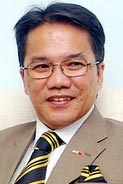 formed on Sept 16, 1963, and our history must correctly reflect this... we cannot afford to make any mistake on this," he said.
Liew ( right ), who is also LDP president, added that the recognition of Malaysia Day as a national milestone stressed the need to focus on our commonalities and to progress from there.
He echoed Najib's slogan that everyone had "a place under the Malaysian sun" in achieving the vision of equality in wealth distribution, regional development, employment opportunities, application of laws, welfare and health.
"We must set aside our differences and not allow anyone to exploit our weaknesses, (leading us) to regress on what we have done thus far," he said.


