




Stormy road to sunshine bill
The country’s first-ever Freedom of Information enactment proposed by the Selangor state government will face many road bumps on its way to approval.
The country’s first-ever Freedom of Information enactment proposed by the Selangor state government will face many road bumps on its way to approval.
 When it was brought up in the state legislative assembly, many questions arose as to whether it was just lip service by the Pakatan Rakyat state government.
Public scepticism is understandable, since a lot of federal and state government documents are still classified confidential under the Official Secrets Act (OSA).
The range of what constitutes an ‘official secret’ is wide, ranging from waste management contracts to toll concession agreements, to blueprints of water treatment plants.
The implications are clear - there must be a lot that the government does not want the public to know.
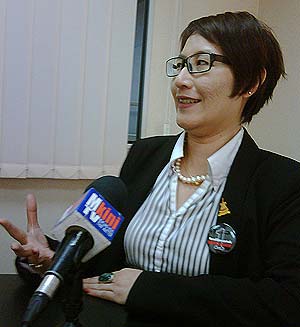
In the second and final part of an exclusive interview with Malaysiakini, Selangor exco member for tourism, consumer affairs and environment Elizabeth Wong explains that although the state government has taken a bold step in making state documents more accessible, it is not going to be an easy ride.
Giving Appeals Board ‘teeth’
Apart from overhauling the documentation system in the various agencies under the state government, they also have to look into empowering the Board of Appeal, giving them teeth to declassify state secrets.
 The Board of Appeal is the next step where an inquiring public can go to if their request has been rejected the first time. Upon writing to the information officer, the agency would have 30 days to produce the information asked. If they still turn it down, the member of public can write to the board within 21 days of the decision.
The board, comprising of former judges and lawyers, will then decide on whether it is of utmost public interest to allow for the release of the information.
Question remains whether they can declassify information classified as a state secret.
Wong says they can compel the MB to invoke Section 2C of the OSA under the MB’s special powers.
“And we won’t fight with the board. It’s not unusual for the appeals board to make decisions contrary to the government,” she said.
However, a line will have to be drawn when it comes to personal data, trade secrets and deals which have yet to be finalised. As such, the enactment will be read together with the Data Protection Act and various parts of the OSA.
“All agreements would have a standard confidentiality clause which says that the document should stay confidential until both parties agree to a disclosure. There is nothing much that we can do about the past agreements that have been signed, but we have since taken steps to tell prospective state investors that we want the agreements to be made public.
“Sometimes we have to sweet-talk them into agreeing, which is usually successful. But if they say that they don’t want to do business with Selangor any more because of this, then we will have to rethink this decision,” she said.
Political repercussions?
When asked if she fears whether the move could backfire tremendously in the state government’s faces if the FOI was taken advantage of by political enemies, she merely brushed it off.
 “We’re not really concerned about leakage to the opposition. I’m sure we can answer them adequately and sufficiently. From that, it is their right to file an MACC report. Their rights must be applied in equal measure,” she said.
“(Leakages of documents) is already happening. There are people declassifying records on their own. So now we just want to have a standard operating procedure, and make it administratively possible for people to access it on their own,” she said.
With a proper library and archive in the pipeline, Wong said that these are simply policies to bring the government “closer” to the people.
“Rate payers must take the information and then make an informed decision. The FOI is not there to cari pasal (find fault) or to expose anyone. It is to help everyone from the government to the taxpayers make better decisions, and to also get feedback from the public,” she said.


