




Birds threatens Georgetown heritage listing
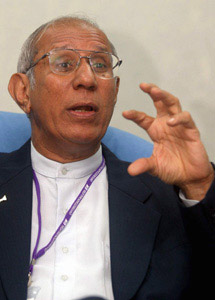
Georgetown’s World Heritage Listing is at risk from the burgeoning swiftlet breeding industry, said Penang Heritage Trust (PHT) trustee Mohammad Anwar Fazal Mohammed.
Georgetown’s World Heritage Listing is at risk from the burgeoning swiftlet breeding industry, said Penang Heritage Trust (PHT) trustee Mohammad Anwar Fazal Mohammed.
Anwar, a former Asia-Pacific regional advisor on Urban Governance for the United Nations, said the industry had become “preposterous and intolerable”.
 He said that the flourishing industry now poses very serious health, social and heritage problems.
“It is a flagrant dereliction of duty by the authorities to allow the situation to continue,” said Anwar ( left ), who is also vice-chairperson of environmental NGO, Sahabat Alam Malaysia.
“The proposed guidelines must be quickly made public and discussed by the stakeholders most affected, especially the local neighborhood and community,” he added.
Anwar said while it was true that swiftlet breeding is an immensely lucrative industry, it should be very strictly licensed and their location should be only in designated or approved areas .
“Just as we have Free Trade Zones, industrial areas and special areas for pig farms, the authorities could proactively designate areas ,and set up an agency that regulates and monitors this systematically,” he suggested.
Feds yet to provide guidelines
Two years ago on July 7, Georgetown was listed as a World Heritage site, and the state government had declared the same day as a state holiday effective this year.
The issue of swiftlets has risen as civil society ponders how the state would manage the problem, with tourists being invited to attend a month-long Georgetown Heritage Festival in July which plans to showcase about 80 arts and cultural events.
The problem has not gone unnoticed by the authorities as Georgetown World Heritage office assistant general manager Maimunah Mohd Sharif had reportedly stated that the swiftlet industry posed a conflict to the World Heritage listing, and should be relocated.
 Penang Local Government Committee chairman Chow Kon Yeow (
right
) had said that the moratorium on swiftlet farming should not be taken as a sign that the state government is allowing the activity in urban areas.
Penang Local Government Committee chairman Chow Kon Yeow (
right
) had said that the moratorium on swiftlet farming should not be taken as a sign that the state government is allowing the activity in urban areas.
He said the moratorium has been extended three times as the state is still waiting for the national guidelines on the industry from the Agriculture Department and the Veterinary Services Department.
Chow, who is also Tanjung parliamentarian, added that the state recognises the swiftlet farming industry as a revenue earning trade but it should be done properly and is mulling over the idea of moving the industry out of urban areas such as Georgetown.
Extend moratorium, urges group
Meanwhile, PHT council member Rebecca Duckett has urged the state to extend the moratorium on swiftlet breeding so that operators cannot start any new farms in Georgetown.
The moratorium was set up to halt the proliferation of swiftlet houses in Georgetown, not as an open bill for them to proliferate freely, said Duckett.
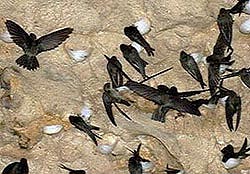 “The breeders are openly setting up new farms all over Georgetown; by condoning and allowing this to happen the state Government and municipal councils accept that they are responsible for any negative impact on public health and environment,” she added.
Duckett requested that the state creates a heft annual tax to be paid by each individual urban swiftlet farm until they have moved from the urban areas of Georgetown on or before the deadline set by the state government.
“Laws are being enforced by the state government on developers, residents and landlords that are trying to revitalise Georgetown as a residential, cultural, heritage and tourist hub, yet swiftlet farms are being allowed to proliferate freely, beyond the realms of law,” she said.
“The state government must act with a balanced hand,” she stressed.


