




Housing for poor - don't repeat past mistakes
COMMENT In my work in Persatuan Masyarakat Selangor & Wilayah Persekutuan (Permas), I have been involved in community organising and advocacy for housing for the poor for the past 25 years.
The announcement by PM Najib that 78,000 units of affordable housing under the Projek Perumahan Rakyat (PPR) for the 10th Malaysia Plan (MP10) is of course welcomed.
COMMENT In my work in Persatuan Masyarakat Selangor & Wilayah Persekutuan (Permas), I have been involved in community organising and advocacy for housing for the poor for the past 25 years.
The announcement by PM Najib that 78,000 units of affordable housing under the Projek Perumahan Rakyat (PPR) for the 10th Malaysia Plan (MP10) is of course welcomed.
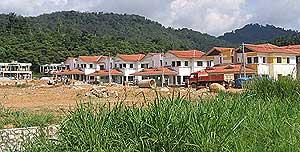 However have to critically reflect on the experience of the previous 8th and 9th MP, so that we can learn, improve ourselves and move forward more effectively.
The government is usually not used to critical comments, especially about their efforts to design and implement national development. However feedback from the rakyat is critical to moving forward.
The 9th Malaysia Plan (2006-2010) stated that “the government will continue to provide low-cost houses under the Program Perumahan Rakyat while the Syarikat Perumahan Negara Bhd (SPNB), and the government will build “more than 29,000 low- and low-medium-cost houses in urban and rural areas.”
These efforts were part of the 9MP to build 270,000 low and medium low cost housing targeted as 38.2 % of total houses that were to be built.
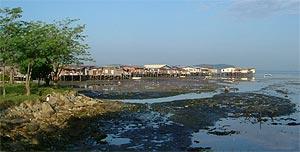 These were supposed to help the poor, who could not afford to own a permanent home. The price of low cost houses were subsidised and priced between RM35,000 to RM42,000; the actual price is between RM65,000 to RM75,000.
Under the 9MP RM9.5 billion (and RM7 billion under the 8th MP) was allocated to develop affordable housing for the poor and the so-called ‘underprivileged’ namely orang kurang upaya (OKU or physically or mentally challenged); the senior citizens or warga emas and single mothers or ibu tunggal.
That period of 2006 - 2010 saw estimated 35,000 to 40,000 ‘squatter families’ in the country occupying about 1,000 settlements who, according to news reports in 2003, were without permanent homes.
This is an underestimate because very often government censuses do not consider those living in temporary urban longhouse settlements (rumah panjang).
Accountability problem?
This raises important questions for the PM and the Housing Ministry.
If the previous low cost housing provisions were adequate, why is it then necessary in the 10MP to build another 78,000 units? Is it because under the current 9MP, the government is already projecting a greater need?
Or is it because the 9MP projection cannot be met and thus the target has spilled over to the 10MP resulting in another 78,000 unit allocation? If so, what has caused this?
Is this symptomatic of an accountability and transparency problem in terms of funds allocated under both previous plans not being channelled to the right places?
The development, allocation, & ownership of low cost housing also needs careful consideration.
Facilitate financing
Financing is an issue that the government must focus on. It is difficult for poor families to secure loans to purchase low cost houses, especially when they are senior citizens and do not qualify. Most housing developers are merciless and will withdraw offers when squatters (urban pioneers) or long house residents cannot secure bank loans.
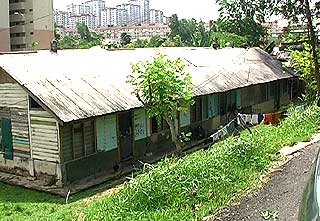 These units would then be offered out to the market at a higher cost, usually to owners who do not qualify for low cost housing.
For instance a RM35,000 low cost unit can fetch RM42,000 from other buyers. Not forgetting the usual “under counter fee" which can range from RM7,000 to RM10,000 per unit.
The government has to mediate financing, and facilitate arrangements with socially-conscious banks and finance companies to support the loans for the poor to own homes.
For example in the past there was the Tabung Perumahan Ehsan (TPE), a joint scheme between the Selangor state government and AmBank where a RM1 deposit can allow one to initiate the process of home ownership.
Location, location
The plan has to also look at location of low cost housing to ensure the poor families are not displaced from the present places of residence. Some of the unit offered to low cost buyers in the past has been as far as 30-40 km from their present homes.
It is not easy for poor families to be uprooted and totally relocated considering the children's education and the parents’ jobs.
Not everyone has the luxury of changing employment easily, especially if they lack professional qualifications and so forth. When squatters are seemingly reluctant to move when offered units to rent or purchase, the authorities often label them as stubborn, unreasonable and anti-development, when in fact it is the government that is careless and inconsiderate in their quest to fulfil their plans.
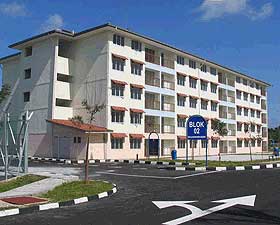 It must be noted that the PPR (
left
) scheme was supposed to be specially designed for squatter relocation and for the ‘poorest of the poor’ families to rent while building their capacity and saving money to finally purchase a low cost house.
It must be noted that the PPR (
left
) scheme was supposed to be specially designed for squatter relocation and for the ‘poorest of the poor’ families to rent while building their capacity and saving money to finally purchase a low cost house.
In 2004, then Local Housing Minister Ong Ka Ting announced the government had planned 55 PPR comprising 56,196 units to resettle squatters. He said that 24 projects comprising 34,584 units would be build in Kuala Lumpur for the relocation of 24,000 families. These projects were supposed to be within reasonable distance from the original squatter and longhouse colonies.
For instance Taman Beringin & Taman Wahyu PPR blocks are within 5 km radius of the Jinjang Utara longhouse settlement of 1,500 families, Jinjang Selatan longhouses and neighbouring urban pioneer communities.
But in practice, there has been instances of families offered to move from Ampang Campuran rumah panjang to Lembah Subang PPR, or Jinajng Untara rumah panjang to Puchong Kg Muhibbah PPR, up to distances of 30 - 40 km apart.
Quantity over quality
The quality of low cost houses are usually poor due to low quality building materials, resulting in owners having to spend thousands to make them livable and durable in the long term.
The common areas in these low cost projects are also often poorly maintained and facilities such as the elevators do not last long, Infrastructure such as access roads, drainage and so forth are also poor.
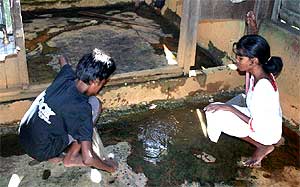 Such challenges drive low income families to try to purchase medium cost or higher cost homes that are beyond their means.
Those who have no access to financing have to endure living in low quality conditions where things start to break down and settlements decay into slums such as Lembah Subang PPR or Setia Alam PPR, where many empty units remain because of refusal to move in or families having moved out because they cannot stand the depressing living conditions.
Grassroots organisations like Permas and even the House Buyers Association (HBA) have been raising these concerns for years. The government must look at all these age-old issues with the 10MP.
More importantly, the people, who are the beneficiary of the plan, must be consulted and careful studies conducted when designing and implementing a plan for housing for the poor.


