




Gerakan: 'You can invite them, too'
Gerakan has defended the Chinese associations’ controversial participation in MCA’s presidential meetings, urging the DAP not to be too alarmed by it.
Gerakan has defended the Chinese associations’ controversial participation in MCA’s presidential meetings, urging the DAP not to be too alarmed by it.
Unlike the DAP, Gerakan has come out in defence of the Malaysian Federation of Chinese Associations’ participation in the MCA’s presidential council meetings.
Gerakan secretary-general Teng Chang Yeow said the DAP can invite the associations (Hua Zong) to their meetings as well to give their views and opinions on the Chinese community or on national issues.
 He advised his rivals not to be too alarmed about the invitation by the MCA, Gerakan’s coalition partner.
"The important message to Hua Zong is that they should always remain bipartisan when dealing with all political matters and issues with either BN or Pakatan Rakyat component parties," added the former Padang Kota state assemblyperson.
"I do not see that by attending MCA presidential meetings, Hua Zong's role as a guardian of the Chinese community would be eroded."
The DAP is upset that the associations - Hua Zong together with Associated Chinese Chambers of Commerce and Industry Malaysia (Acccim) and the Malaysian Seven Major Clans Association – were willing to accept an invitation by MCA President Dr Chua Soi Lek to attend the party’s meetings as observers.
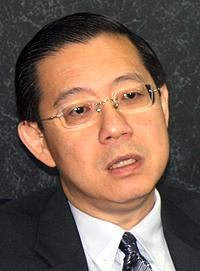
Earlier, Penang CM Lim Guan Eng ( above ) accused the group of being ‘confused’ about their role in politics and he challenged them to declare their links with MCA if they persisted in joining the party’s meetings.
Participation ‘regrettable’
Meanwhile, DAP MP for Bukit Bendera Liew Chin Tong said Hua Zong’s participation in the meeting was ‘regrettable and a lesson for all to learn’.
"It is unprecedented and unacceptable for civil society groups to be treated as appendages of a political party," he told Hua Zong youth members at a national meeting on Sunday in Port Dickson.
"Chinese civil society groups have been at the forefront of political and institutional reforms. For instance, the concept of a two-party system was first mooted and popularised in the country by community leaders as early back as 1986."
Liew was speaking at a forum titled ‘The two-party system and the youth’. The other speakers included Ng Kian Nam, former press secretary to former MCA president Ong Ka Ting, and Lim Hoong Siang, editor of online news portal Merdeka Review .
Liew said since the 2008 general elections, a two-coalition political system was slowly emerging despite a painful transition.
"It is now more important than ever that Chinese civil society groups advocate reform without being tainted as an appendage of MCA," he added.


