




Parents cannot pass the buck
It is said that children learn by observing their elders. So, in the event the child exhibits flaws in character, who should be held responsible - the parents, school or the government?
To pass the buck over to schools as being accountable for producing children with flawless character is certainly unfair. Whilst schools play a role in shaping students as better people, it is the responsibility of parents especially and also society to mould children as people with good character.
Too much is expected from the schools, be it in producing students both with Einstein-like intelligence and who are perfect human beings. But seriously, the buck should stop just here. Parents are the ones who should be concerned with shaping their children as future role models.
It is said that children learn by observing their elders. So, in the event the child exhibits flaws in character, who should be held responsible - the parents, school or the government?
To pass the buck over to schools as being accountable for producing children with flawless character is certainly unfair. Whilst schools play a role in shaping students as better people, it is the responsibility of parents especially and also society to mould children as people with good character.
Too much is expected from the schools, be it in producing students both with Einstein-like intelligence and who are perfect human beings. But seriously, the buck should stop just here. Parents are the ones who should be concerned with shaping their children as future role models.
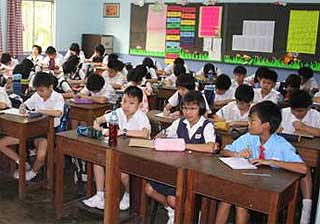 In this regard, former Prime Minister Dr Mahathir Mohamad’s recent suggestion that character building be included in the education system can be done without, as it will only absolve parents from fulfilling the much-challenging task of raising children to become exemplary citizens.
Dr Mahathir’s contention that a subject on character- building was necessary to mould children into better people to overcome social ills like mat rempit and loafing carries no merit.
The damage was done - not by not having such a subject in school - but by not having shining examples for the children to look up to. Character-building takes place outside the school environment, where children are exposed to the everyday living conditions and the harsh realities of life.
To expect children to have good judgement and nurture them into better people is definitely the ‘job’ of parents, not the school alone. But sadly, many parents have conveniently washed their hands of this ‘hardship’ and delegated the task to schools, which are already burdened with the pressure of producing straight A students.
Dr Mahathir is correct in saying that character-building would have a long-term impact on children’s behaviour. However, he should be in a better position to realise all it requires to produce children with good character, instead of taking the shortcut approach by passing the buck to schools.
Rhetoric no help
In his 22 years leading the country, did it not occur to Dr Mahathir that the children needed character-building SOS to become better people? Were there no good brains out there who could have advised Dr Mahathir on the importance of ensuring children grew up holistically? Were bohsia and loafing not a problem during his tenure of two decades?
Time and again concerned parties had raised concerns about the rising incidences of children loafing due to the inconducive living environment, especially those living in the cramped City Hall flats. Gang fights and drug addiction were a common feature among youngsters living in flats like San Peng. What did Dr Mahathir do about it?
Unwed mothers were throwing away babies anywhere and everywhere they could think of, so much so that a call for a baby bank was made. What did the Mahathir-administration do about this social problem?
A good character is formed by positive influence from the family and the community, not to mention a clean leadership displayed by the government. A good judgement can only be formed through guidance from both the home and one’s surroundings. And in the case of surroundings, they without a doubt leave a lot to be desired, considering how the federal government tackled issues concerning human rights in the country.
The prevailing discrimination and stigma on issues like HIV/AIDS, rape, unwed mothers, and sexuality is clear revelation of the failure of the powers-that-be to be non-judgemental and handle these issues with compassion and sincerity; a case of leadership by example gone wrong?
Civics and moral subjects a failure?
The call by Dr Mahathir makes one wonder just what students were being taught during moral and civic lessons, as it looks like both these subjects were a failure as far as the development of wholesome students was concerned.
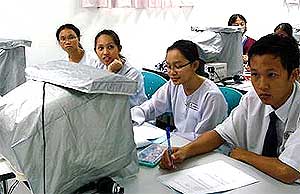 The need, then, is to re-examine the effectiveness of these subjects to determine how well they serve to mould our children into good human beings. As these are not examination subjects, the tendency for teachers to skip both these topics has always been a problem. Must civics and moral education be made an examination subject so that both teachers and students realise the value of lessons imparted by these two paradoxically low-profile subjects?
If finger-pointing is to transpire, then all fingers must make their way to towards Malaysia’s education system, which failed to create the much needed awareness on the importance of moral and civics education.
There seems to be a trend whereby, instead of doing a post-mortem each time a failure occurs, new ideas are dished out instantly to overcome the failure. The education system must be e-looked to enquire where exactly and why it has gone wrong before the necessary changes are put into place.
Every nation aspires to produce exemplary children by virtue of their shining character, and Malaysia is no exception. There should be no ad-hoc or knee-jerk approaches to the problems that crop up along the way.
If Dr Mahathir is sincerely concerned about the character development of youngsters, it would help if he could reflect on what really went wrong for youngsters to unwittingly embrace various social ills. After all, Dr Mahathir managed the country for 22 years, so who best to do an introspection if not the good doctor himself?
JESWAN KAUR is a journalist who spent many years writing for the mainstream media before deciding to 'break free' and put pen to paper to focus on and fight for issues that are conveniently marginalised by the powers-that-be.


