




PM's fast-tracking open to abuse
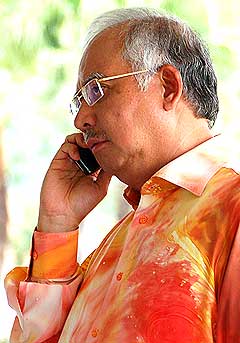
The fast-tracking of personal documents, which was among 11 people-friendly pledges by Prime Minister Najib Razak ( below ) in conjunction with his 100th day in office, has no takers in Sabah.
The fast-tracking of personal documents, which was among 11 people-friendly pledges by Prime Minister Najib Razak ( below ) in conjunction with his 100th day in office, has no takers in Sabah.
Instead, Malaysians in Sabah, and Sabahans who are not Malaysians yet, want the court system in Sabah to be brought in to verify all late claims to personal documents for citizens.
The emphasis should be on transparency of the system “to weed out illegal immigrants getting their hands on Malaysian citizenship and Bumiputera status by the backdoor as in the past”.
This is the stand of the Sabah Justices of the Peace Council (Majaps) on the issue of Malaysian personal documents and unanimously endorsed by people from all walks of life.
“Any late registration of births must be verified in court, as provided for by law, in view of the large illegal immigrant population in Sabah,” said Majaps Honorary Secretary Lawrence Thien.
“The prime minister’s promise to deal with the problem of birth certificate and citizenship matters, especially in Sabah and Sarawak, would come to nothing if no support is given to the courts, especially the mobile courts.”
Thien worries that the National Registration Department (NRD), in the absence of transparency, may accept evidence not admissible in a court of law.
 “This could even mean issuing citizenships to illegal immigrants who would then claim Bumiputera status, get on the electoral roll and get elected to public office as allegedly happened in the past,” added Thien.
The court system, it is held, would filter out the illegals and only Malaysians would be issued with personal documents like MyKads (identity cards) for citizens.
According to figures released by Najib himself in recent days, a whopping 92 per cent of the 36,000 applications since 2005 for late registration of births have been approved.
In Sarawak, 80 per cent of 19,000 applications since 2005 for late registration of births have been approved. No breakdown is available for citizenship applications.
Of the 34,000 applications nationwide as at November 1 last year, 46 per cent have been approved, according to Najib.
These figures make for a worrying read for people in Sarawak, and especially in Sabah, which has borne the brunt of illegal immigration and human trafficking activities.
Citizenship a never-ending issue
Consumer Association of Sabah and Labuan (Cash) president Patrick Sindu suggests that mobile courts be deployed in the rural areas.
“The magistrates can do the proper vetting of late applications for registration of birth,” said Sindu who expressed confidence in the mobile court system.
“The issue of citizenship is never-ending in Sabah beginning with the Projek IC Mahathir in the early 1980s”
“We fear that another catastrophe is about to unfold with the fast-track system. We fear that more illegal immigrants would see this as an opportunity to apply for citizenship using dubious identification documents.”
Assistant Sabah Youth and Sports Minister, Jahid Jahim, called for “a mechanism to be put in place to detect the possibility of misuse of authority involving citizenship applications in Sabah”.
Jahid is also PBS (Parti Bersatu Sabah) Youth Chief.
Deputy Natural Resources and Environment Minister, Joseph Kurup, does not want the NRD to proceed with the fast track system. Instead, he wants the NRD to include the mobile court and other legal officers to certify the authenticity of a person’s birth for citizenship purposes.
 “It is improper for these legal officers to be excluded from the process particularly in the late registration of births in rural areas,” said Kurup (
left
), also the president of PBRS (Parti Bersatu Rakyat Sabah).
“It is improper for these legal officers to be excluded from the process particularly in the late registration of births in rural areas,” said Kurup (
left
), also the president of PBRS (Parti Bersatu Rakyat Sabah).
“Sabah is known worldwide to be inhabited by many illegal immigrants who are the root cause of unhappiness among the people of Sabah.”
The fast track system will definitely give the impression, especially if the mobile court system is excluded, that the federal government has an ulterior motive, added Kurup.
PKR stalwarts Jeffrey Kitingan and lawyer Christina Liew both endorsed the mobile court system with a caveat: Village heads in the interior have been known to endorse applications from illegal immigrants for late registration of birth “for a few paltry ringgit”.
“We know many people have been waiting 30 to 40 years for their applications to be approved,” said Liew, the losing candidate by a narrow margin in Kota Kinabalu in last year’s General Election in a three-corned fight which the DAP won.
“However, it’s important to have a proper system in place first. Sabah should study the complex system that they have in place in Sarawak to prevent fraud. There, no Tom, Dick and Harry can get Malaysian personal documents.”
NRD not doing its job
Jeffrey ( below ), a national PKR vice president and chair of the Borneo Heritage Foundation, said that he will hold people like Kurup personally responsible if anything goes wrong with the fast track system.
“They better make sure that nothing goes wrong or they will really face more than the wrath of the people this time. It’s no use paying lip service or indulging in window-dressing,” said Jeffrey.
 “Anyone can complain but since they (Kurup and others) are in the government, it’s incumbent upon them to do something about it. Get the mobile court system involved and make sure it works.”
Sabah Peoples Progressive Party (Sapp) likewise has concerns about forged statutory declarations ( surat akuan ) and unscrupulous village headmen throwing a spanner in the works.
“We have many cases of surat akuan being backdated 25 years and everybody knows this. Sabah is still grappling with the problems created by false statutory declarations which are accepted by the NRD without question,” said Sapp information chief Chong Pit Fah.
‘The state government is aware of the threat to national security posed by the phenomenal increase in the Sabah population since the 1970s from 700,000 to 3,000,000 in 2005 or an increase of 328 per cent compared with 130 per cent in Sarawak.”
The implication, according to Chong, is clear: The NRD has not been doing its job to ensure that Malaysian personal documents don’t fall into the hands of those who are not eligible.
While anyone born in Malaysia is entitled to a Malaysian birth certificate, the same document does not automatically bestow the right of citizenship.
Kota Kinabalu MP Hiew King Chew noted in a statement that “the NRD, having ignored the mobile court system and accepted statutory declarations without question, is solely responsible for sidelining the Natives in favour of the illegal immigrants”.
Native Chief Rocky Binau Mabin, from the suburbs of greater Kota Kinabalu, describes his errant colleagues as “a threat to national security”.
“Chong should lodge a police report if he has any evidence,” advised Mabin who doesn’t want to be lumped together with those who run foul of the law for pecuniary gains.


