




Taming the political beast
Any political party in Malaysia is a strange political beast.
The system of party politics evolved out of the rise of democracy in Europe and North America in the 19th century. Any group of people with an eye on power in the newly emergent nation-state can form a political party.
Any political party in Malaysia is a strange political beast.
The system of party politics evolved out of the rise of democracy in Europe and North America in the 19th century. Any group of people with an eye on power in the newly emergent nation-state can form a political party.
 Usually, they will develop some political programme that encompasses their ideology, and a political agenda that they will implement should they come to power through democratic election.
At the time of independence, the founding fathers of Malaysia decided to fashion our parliamentary democracy after the Westminster model, and with it our system of political parties was born.
Except for the ideological bent of the Socialist Front, of which the Labour Party was the backbone, political parties in our country have always been formed along religious and racial lines.
The political divide into left and right, with variations between these two poles, as is often seen in developed democracies, is seldom important in Malaysian party politics.
Race and religion are very important
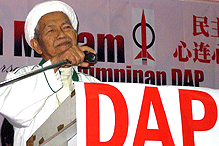
Race and religion play such an important part in our national politics that those professing to be multi-racial are often driven into racial or religious enclaves. DAP might have professed affinity to democratic socialism in its party constitution, but they too have been imprisoned in their Chinese-majority constituencies in the urban area.
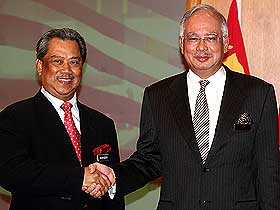
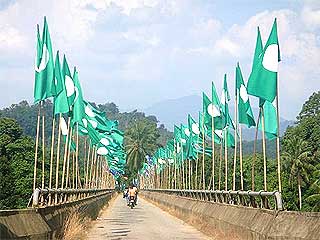 Because of the demographic composition of Malaysia, no single party can aspire to power. That is why coalition politics has come to dominate our national scene.
It was after the general election in 2008 that we began to see the possibility of a two-coalition system.
For nearly 20 years, I was an active member of a political party, rising slowly to be an important national leader. I also had numerous and frequent contact with leaders and members of other political parties.
Labour Party very close to the ground
I joined a political party out of ignorance. Eventually, I retired from party politics out of knowledge. There is a Chinese poem that says: “If you have been part of the vast sea, it is hard to be a drop of water.”
I remember the Labour Party as one very close to the ground. They tried mass mobilisation by organising their members at every level, right down to every village and even every road.
Their party spirit was cemented by their members helping one another in their everyday life. If one member needed to dig a fish pond on his farm, hundreds of members would turn up to help him complete the task. The spirit of camaraderie has mostly disappeared from other parties nowadays.
 Most other parties still try to emulate their method of mass organisation. They all have constitutional provision to form various levels of hierarchy, from national, state, division, right down to the branch level.
The first characteristic of all these parties you observe on both the ruling and the opposition coalitions is that the parties are seldom truly democratic.
Their leadership tend to rule their party from the top down. There might be room for democratic voting, but challenge to established orthodox incumbency is seldom tolerated.
Even if the challenge to one of the top post is proven to be successful, the new office bearer may be farmed out to the wilderness. The fate of the new MCA deputy president Chua Soi Lek is a glaring classic example.
Delegate system can be abused
Most political parties use the delegate system for the election of their national top officials. That system is subject to a great deal of abuse. In the case of Umno, it has spawned off the corrosive abuse of corruption and vote buying.
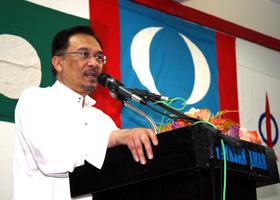
PKR has just amended their constitution for direct election of their top national leaders while limiting the term of service for their president.
 They have blazed the trail in trying to make political parties more democratic in that process.
But setting new enlightened rules is one thing; whether the leaders and members would follow those rules is quite another. We will have to wait and see.
One of the ways in which top national leaders can consolidate their control over leaders and members down the line is to monopolise the right to appoint candidates during general elections.
The state chiefs probably have a big say over the matter in their respective state, and so can also consolidate their positions of power.
In my time, the secretary-general of my party was practically the only one who appointed all election candidates. On the eve of nomination, there would be a huge crowd of hopefuls loitering around the party headquarters waiting to receive the appointment letters.
Very late into the night during one election, one chap was left, and so he was appointed in a constituency in which he had no hope of winning.
 The next day, the BN candidate was disqualified and this hopeless candidate from my party won without a contest! That was like striking first prize in the lottery draw that every candidate dreams about.
The scramble for the power to appoint candidates and to stand as candidates often led to very ugly acrimonious factional fight within the party at all levels.
Demonising their opponents
I have seen with my own eyes over many years how young people would join political parties as dedicated members out to serve the people and end up corrupted by factional fights.
This is where we see how immature our culture of party politics is. The leaders and members of our political parties cannot have a mature party election.
They do not contest as individuals or camps by arguing for their positions on political issues rationally in their effort to seek support from the voting members.
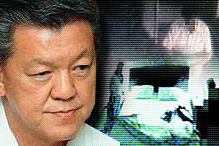 They must resort to demonising their opponents in the dirtiest manner possible. The videotape of Chua Soi Lek’s personal indiscretion probably had something to do with the internal discord of the MCA.
When the infighting becomes intense, members would go against one another more fiercely than they would treat the members of those parties on the other side of the political divide.
After the intense contest, members of the two different camps would let this enmity or even hatred fester for years – and even decades, though members from all the factions say they love their party and would make great personal sacrifice for their common cause.
The odd ones would of course become so disillusioned that they would jump ship and join another party. This is another thing about the immaturity of Malaysian democracy.
Leaders and members of a political party will all proclaim their love for their party and profess their willingness for their cause. But they often demand a reward for their sacrifice, in the form of appointment to be a candidate for instance, no matter how unsuited and unqualified they are.
That is how we end up with very incompetent councillors, YBs, state executive councillors, and even government ministers.
Sowing the seeds of future defections
If these ambitious but obviously unsuitable party members are not appointed to posts they wish for, then they will threaten their leaders to sabotage their own party candidate during the election, or to resign and join another party on the other side en masse.
In order to be inclusive, the top party leadership often capitulate to their unreasonable request, and therefore sow the seeds of future defections of elected YBs. This probably happened with the three PR defectors in Perak.
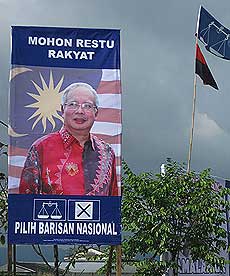 Behind the daily reports of internal discords within various political parties, this cancer of what Kua Kia Soong once described as “careerist opportunism” continues to corrupt the democratic fabric of our society.
I have known many dedicated idealistic members of political parties who give the best part of their life to their political organisation. But the web of internal power relation is so complex and widespread that sooner or later, no active party member can be exempt from the sewer of factional fights. Often, real political talents have been sacrificed in the filthy intra-party power play.
I often give my unsolicited advice to budding political talents not to join political parties, but instead to join the civil society and NGO groups to serve as checks and balances on all political parties. They are immature, and they need to be watched and criticised, bar none.
In my ageing mind, all political parties are a necessary evil in Malaysia. You cannot really live with them, and you cannot live without them.
Only the people can tame these political beasts. Unfortunately, our voters are only too ready to leave politics to the professional politicians.
At least, in forums like Malaysiakini , we can begin the process of agitating the voters to reward and punish political parties for their merits and demerits, and not merely out of blind love or blind fear.
SIM KWANG YANG was MP for Bandar Kuching between 1982 and 1995. He can be reached at kenyalang578@hotmail.com.


