




Local councils, corruption, and hawkers
There is a mid-level link in our national government structure that has seldom been discussed in the alternative media: the city, town, and district councils.
When the Pakatan Rakyat took power in five states in the March general elections last year, there was high expectation that perhaps there would be elections for these local councils. That did not come about.
There is a mid-level link in our national government structure that has seldom been discussed in the alternative media: the city, town, and district councils.
When the Pakatan Rakyat took power in five states in the March general elections last year, there was high expectation that perhaps there would be elections for these local councils. That did not come about.
As long as the Barisan Nasional controls the Parliament, there is little chance that local elections commonly dubbed as the Third Vote would be held. Lawyers have already argued over this issue on both sides of the debate.
Nevertheless, as long as the redrawing of the electoral wards is required by the Election Commission, it would seem that amendment to the federal laws would make it much easier to hold local councils.
To-day, there are 146 local councils in Malaysia, made up of city councils, district councils, and special authorities. Since the abolition of the local councils via the Local Government Act 1976, the working of the local councils has become increasingly opaque, opening up loopholes for corruption.
In a Public Opinion Survey conducted by Transparency Malaysia in 2001, it was found that municipal councils were perceived as more corrupt than the land office, judicial office, environment office, police, and even the land transport department.
Since the local councils hold sway over many facets of the citizen’s daily life, from garbage collection to control of new building projects, it offers vast prospect for corruption at a massive grass-root scale.
Paying bribes to get things done
To tackle corruption, it is best to eradicate corruption at the level of the local authorities first. That cannot be done without local elections, and a change of government at the federal level.
Due to the opaque working of the councils, only 5.3 per cent of the corruption cases investigated by the anti-corruption agency have involved local council officials. As long as there is no transparency and accountability at the level of grass-root government, citizens expect to pay bribes for whatever they need from the councils.
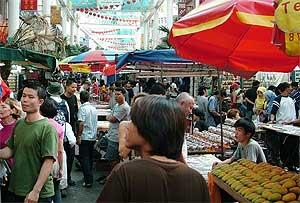 This fact is flung in my face everyday now, as I try to help the hawkers at my neighbourhood night market to organise themselves and to fight for their rights and interests by standing up to the corrupt council officials.
The hawkers I am helping are trying to make a living in Selangor, a state that has been taken over by Pakatan Rakyat in 2008.
Obviously the Menteri Besar, Tan Sri Khalid Ibrahim, is trying to reform state administration. His handling of the recent garbage collection contract in Ampang is exemplary.
This impressive change has yet to sink in with the hawkers. Poisoned by decades of corruption under BN rule, they think that they still have to bribe the local council officers in order to get things done.
One hawker leader paid RM50 to the junior council officer who delivered licences to the hawker for every licence issued. He saw it as a moral norm, no matter how much and how often I lectured him on the corrupt nature of the payment.
“This is the way in Malaysia,” he told me resolutely. I discovered to my horror that all the hawkers think like that! This is still carrying on!
Give licences to illegal hawkers
After my neighbourhood pasar malam hawkers association was formed, a dialogue was arranged for the newly-elected officials with the council officials in charge of their affair. They wanted the council to issue licences to the so-called illegal hawkers.
Out of the more than 100 working stalls there, only less than 50 have been issued licences. The rest were considered illegal hawkers and risked raids from council enforcement officers every night they trade there.
My position on this issue is simple, even when I was serving the hawkers in Bandar Kuching as MP: Hawkers just to want to make an honest living, and in the process, they offer cheap consumer goods and services to the public, making a valuable contribution to the country.
If any bona fide hawker is illegal because he does not have a licence, then just make him legal by giving him a licence, as long as he fulfils the minimum requirement of the local councils.
This is how it works. Licensing has been use widely by all government authorities as leverage for a twisted form of ransom money. Even the lowly humble hawkers are not exempt from its long tentacles!
As we discuss and prepare for the dialogue between the pasar malam hawkers and the council top officials, the newly-elected chairman of the hawkers association was visibly distressed.
She whispered to me that the old chairman who had just died had collected over RM10,000 and delivered it to somebody inside. That was over a year ago, before the PR had come to power in Selangor. A few licences had been issued. How much would it cost them this time around?
Some hawkers taking bribes too
Fortunately, I had the assistance of a strong local DAP leader with me. We both convinced her that they all needed to pay no more than the licence fee itself, or else we would take the matter to authorities higher up, up to the menteri besar if necessary.
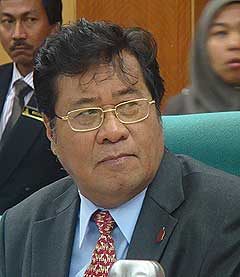 We told her how Tan Sri Khalid Ibrahim had gone down to the ground to meet and handed licences to the hawkers at Malaysia’s biggest night market in Taman Connaught in Cheras nearby, boasting of over 800 stalls.
As I dug deeper, I discover how corruption in the local councils had corrupted the hawkers themselves in the past.
Hawkers who claimed to have contacts inside the local councils extort exorbitant under-table money from the hawkers who wanted to trade at the choicest spots. The poor ignorant and cynical hawkers fell victims to this trick and dished out thousands for a single stall. The old chairman collected over RM100,000 and was soon seen to be driving a new car!
Stuck in the quagmire of corruption within the officialdom and drawn into corrupt assumptions, these petty traders have little confidence in themselves. The local DAP leader and I work constantly with them, trying to persuade them to move to a more transparent way of doing things.
Finally, the dialogue between the pro-tem committee members and the top council officials took place. The senior pegawai turned out to be friendly and helpful.
They settled many issues, on licensing, garbage collection, payment of fees, and the settlement of all the problems accumulated over the past years. All the fears of the hawkers had been dispelled. The chairman of the pro-tem committee walked out with a new confident swagger.
Councillors getting low allowance
I know that all the councillors’ one-year term of service is up for review. So I suggested to this local DAP councillor to take up the post. He was obviously interested, but seemed reluctant nevertheless.
Then, to my great shock, he told me that the councillor is paid RM750 per month. The job requires full-time commitment, but on the salary, you simply cannot live a decent life in the Klang Valley! In Penang, they pay their councillors RM500 a month!
You pay peanut and you get monkeys. No wonder the councillors in the past survived by playing hanky panky and getting all kinds of illicit side income.
By and large, councillors do render an invaluable service to the people at the grass-root level. In fact, they can serve people in their daily lives more effectively than the state assemblymen and the members of parliament in looking after the daily concerns of the local residents, from garbage collection to repairing potholes on the road.
Frankly, I think they should be paid RM2000 to RM3000 per month. At least, that will enable a part-time councillor to hire a personal assistant to do the daily donkey work of running around and taking care of small complaints from the residents.
Meanwhile, I still dream of the government changing hands at the federal level. Among other things, that will create the opportunity for us to elect our local councillors and clean up the local authorities.
Sim Kwang Yang was MP for Bandar Kuching from 1982 to 1995. He can be reached at kenyalang578@hotmail.com.


