




Disorder in the House
The Sarawak state assembly has become the place where unparliamentary words are hurled by both sides. Gone are the days when debates were governed by substance.
The Sarawak state assembly has become the place where unparliamentary words are hurled by both sides. Gone are the days when debates were governed by substance.
"Shouting matches and baseless accusations have become the order of the day," lamented state land development minister James Masing.
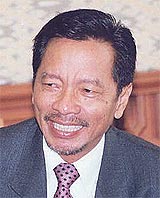 "First it started on one side of the House, but now the unruly behaviour has spread to the other side. The question I would like to ask is who is accountable for the members' unruly behaviour in the house? Is it the members themselves or the voters who elected them?" he asked.
After the 2006 state elections, the opposition increased its members to nine - six DAP, two PKR and one Sarawak National Party (Snap).
The DAP and PKR state assemblypersons have been very vocal in the House, resulting in Wong Ho Leng (DAP-Bukit Assek) being suspended for one year and Chong Chieng Jen (DAP-Kota Sentosa) and Dominique Ng (PKR-Padungan) being referred to the Committee of Privileges.
Masing, in his winding- up speech, said members elected for the first time must be blamed for their unruly behaviour because the voters would not be in a position to gauge how their respresentatives would behave.
But if the members are elected for a second term, Masing said, the voters must then be held accountable for the behaviour of their elected representatives.
A reflection on the voters
The elected representatives' behaviour and work ethic are a reflection of the voters' character. They are a product of the electorate, he said.
"If the products of the electorate exhibit unruly behaviour, remain recalcitrant, do not get the cooperation of colleagues and become a nuisance to himself and others, and by doing so cannot get any good thing done for his constituents, who should the electorate blame?
"Would the electorate blame the government of the day, the YBs, or themselves for electing unproductive YBs? The answer to these questions will touch on the fundamental tenets of parliamentary democracy."
Whatever the answers, he advised the voters to exercise their right to vote with care, adding that they should not exercise that right in anger or in protest.
If they exercise their right to vote with anger, then they would likely end up with leaders who have an axe to grind.
"Those leaders usually do not put the voters' interest first. They instead use their position to further their own interests or to settle scores with their opponents.
"These elected representatives are not good for the voters or the country in general."


