




Protect property rights, check poverty
Poverty eradication is an important agenda for our country. In the Ninth Malaysia Plan, the government stated its ambition to completely eradicate hardcore poverty and reduce overall poverty by half to 2.5 percent by 2010.
This is a challenging target, and RM11.5 billion has been allocated for efforts to alleviate poverty and restructuring of society. The Agropolitan project run by Felcra is just one of the many projects to this end.
Poverty eradication is an important agenda for our country. In the Ninth Malaysia Plan, the government stated its ambition to completely eradicate hardcore poverty and reduce overall poverty by half to 2.5 percent by 2010.
This is a challenging target, and RM11.5 billion has been allocated for efforts to alleviate poverty and restructuring of society. The Agropolitan project run by Felcra is just one of the many projects to this end.
In an international study joined by the Malaysia Think Tank, it was found that one of the most important step in poverty alleviation is ensuring proper protection of property rights, both physical property as well as intellectual property.
The study, International Property Rights Index (IPRI) 2009, found that there is a direct correlation between the quality of property rights protection with the nation’s economic development.
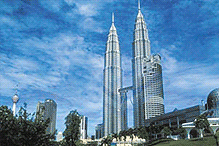 IPRI 2009 was launched on Feb 24 in cities around the world including Kuala Lumpur. It is a composite ranking of three comprehensive areas of property rights: legal and political environment, physical property rights, and intellectual property Rights in 115 countries representing 96 percent of the world’s GDP.
Malaysia was ranked 36th this year, a fall from 31st last year. However, compared to the other five Asean countries included in IPRI 2009, Malaysia did relatively well, coming second only after Singapore. Malaysia is followed by Thailand, the Philippines, Vietnam and Indonesia.
In the ranking, Malaysia did relatively well in protection of physical property rights but there is room for improvement when it comes to legal and political systems as well as protection of intellectual property (IP) rights.
One of the key findings of IPRI 2009 is that improved protection of property rights will contribute to economic growth. Nations with higher IPRI ranking tend to have higher income per capita and higher GDP per capita than those at lower end of the index.
Of the 115 countries included, the top quartile averaged US$39,991 in GDP per capita while the average in the bottom 20 percent was only US$4,341 per capita. The second, third and fourth quartiles averaged US$23,982, US$11,748, and US$4,891 respectively.
The nearly linear data trend shows that countries placing a high priority on property rights see increased economic security.
Benefits for Malaysians
Property rights is not an issue debated regularly among Malaysians. But its importance is clear. Better protection of property rights contributes to increased level of national stability and provides people with the knowledge and comfort that their property will remain theirs, recognised and protected by law.
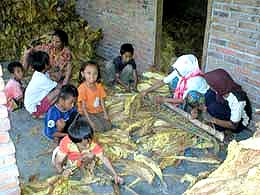 Many Malaysian villagers own their land and houses. Land and asset rights can provide empowerment through ownership, allowing citizens to utilise their land and assets including as collateral for loans to start or continue productive economic activities that will improve their livelihood. They could even allow other interested parties to use their assets, generating income from rent or profit sharing.
The same applies to improved protection of intellectual property rights. In 2007, the World Intellectual Property Organisation (Wipo) and United Nations University published a study investigating the economic impact of improved property rights protection in six Asian countries.
Malaysia was part of this study. Experts from the Universiti Teknologi Mara and the International Islamic University formed the Malaysian team.
The study found a positive relationship between strengthening of intellectual property rights protection with inflow of foreign direct investment. Continuous efforts to strengthen enforcement of copyrights and patents, as well as legal actions on piracy, generated a positive effect on GDP. Indirectly this means a better protection of intellectual property rights will help improve Malaysians’ per capita income.
 Overall, the Wipo study proved the positive relationship between protecting intellectual property rights with national economic growth. Other countries that took part in this study - China, India, Korea, Japan and Vietnam - also found the same results.
Protecting physical and intellectual property rights is clearly an important precursor in poverty eradication and economic development. A higher level of confidence that properties are protected by law will contribute to national stability as people and businesses know their properties are protected.
People will also be empowered to utilise their assets in economic activities, which will in turn improve their social mobility.
Additionally, investors will be more confident that their investments are safer. This will increase the level of investment, both from domestic as well as foreign sources.
Poverty eradication can only happen in Malaysia if measures to strengthen property rights protection, both physical property as well as intellectual property, are incorporated as an important pillar of the nation’s poverty alleviation strategy.
Policy makers, including those in the Ministry for Rural and Regional Development, and political leaders should take heed. IPRI 2009 provides clear evidence of this.
WAN SAIFUL WAN JAN is director-general of the Malaysia Think Tank.


