




Furthering the common good
On Feb 16, Indonesian Health Minister Siti Fadilah Supari informed senior World Health Organisation (WHO) officials that her country would continue withholding its bird flu virus samples from WHO's collaborating centres pending a new global mechanism for virus sharing that had better terms for developing countries.
In breaking with the existing practice of freely sending flu virus samples to these laboratories, she expressed dissatisfaction with a system which obliged WHO member-states to share virus samples with collaborating centres, but which lacked mechanisms for equitable sharing of benefits, most importantly affordable vaccines developed from these viral source materials by patent-seeking commercial entities.
To consolidate regional support for this initiative, a meeting of Asia-Pacific developing countries was convened in late March to explore mechanisms for more equitable access to vaccines produced from virus sharing arrangements. The Indonesian decision elicited unease, but also sympathy from a cross-section of the global community, including an editorial from The Lancet .
On Feb 16, Indonesian Health Minister Siti Fadilah Supari informed senior World Health Organisation (WHO) officials that her country would continue withholding its bird flu virus samples from WHO's collaborating centres pending a new global mechanism for virus sharing that had better terms for developing countries.
In breaking with the existing practice of freely sending flu virus samples to these laboratories, she expressed dissatisfaction with a system which obliged WHO member-states to share virus samples with collaborating centres, but which lacked mechanisms for equitable sharing of benefits, most importantly affordable vaccines developed from these viral source materials by patent-seeking commercial entities.
To consolidate regional support for this initiative, a meeting of Asia-Pacific developing countries was convened in late March to explore mechanisms for more equitable access to vaccines produced from virus sharing arrangements. The Indonesian decision elicited unease, but also sympathy from a cross-section of the global community, including an editorial from The Lancet .
On March 29, immediately following an interim agreement for Indonesia to resume sending flu virus samples to WHO, health ministers of 18 Asia-Pacific countries issued a Jakarta Declaration which called upon WHO "to convene the necessary meetings, initiate the critical processes and obtain the essential commitment of all stakeholders to establish the mechanisms for more open virus and information sharing and accessibility to avian influenza and other potential pandemic influenza vaccines for developing countries".
These proposals were tabled at the 60th World Health Assembly in Geneva (May 14-23) as part of a resolution calling for new mechanisms for virus sharing and for more equitable access to vaccines developed from these viral source materials.
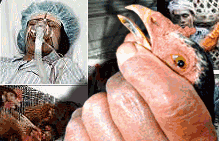 In the course of the deliberations, it emerged that WHO had violated the terms of the 2005 WHO guidelines on sharing of viruses which required the consent of donor countries before its collaborating centres could pass on the viruses to third parties such as vaccine manufacturers. Indeed WHO's collaborating centres themselves, as well as third parties, had sought patents covering parts of the source viruses used in developing vaccines and diagnostics.
The Indonesian stand-off with WHO comes on the heels of Director-General Margaret Chan's admonishment to the Thai public health ministry in February over the issuance of compulsory licences for HIV/Aids and heart medications. In the course of a visit to the National Health Security Office in Bangkok, she had publicly urged the Thai health authorities to seek instead a negotiated compromise with pharmaceutical companies over high drug prices. This perceived tilt drew strong criticism from health advocates in Thailand and elsewhere.
They pointed out that the Thai ministry "has been in regular contact with the industry over high prices of its drugs in Thailand, but these negotiations have led nowhere. The best price for originator's efavirenz is still twice the price available from Indian generic sources (US$500 per patient a year vs US$224). The best offer for originator's lopinavir/ritonavir is US$2,000 per patient a year, five times more than WHO's estimate of manufacturing costs. The Thai healthy ministry estimates that the price of clopidogrel would fall by over 90 percent if made generically. These are substantial price differences in a country where the average annual wage is US$1,400 a year".
Implications for equity
It is unclear whether these episodes amount to tactical shifts, let alone a more fundamental re-alignment between WHO, member-states, corporate actors, and health activists on the issue of access to essential medicines. The ramifications are clear however for the interlinked concerns of global health equity and international health security.
The Indonesian government's stance in particular was notable on three counts:
It was explicitly a critique of WHO's balance of pragmatism which it felt was overly accommodative of corporate priorities , to the detriment of the health and well being of a key constituency that WHO was mandated to defend, the under-served communities among its member states.
It was an exercise of leverage by a source country of biological materials seeking to redress the inequities of access to what may be vitally important health inputs (avian flu vaccines) developed from these source materials.
It was seeking equitable benefits from commercial developers not just for its nationals but for other communities as well who were likely to be sidelined by commercially-driven product development and distribution systems.
In the 1990s, Rural Advancement Foundation International (RAFI, now the Action Group on Erosion, Technology and Concentration, ETC) together with a network of indigenous peoples support groups proposed an international campaign aiming at a formal Declaration of a Global Genetics Commons. Sir John Sulston (2002 Nobel laureate in medicine or physiology) endorsed a very similar idea, which sought a declaration of the human genome as the common heritage of humanity and for its DNA sequences to be off limits to patents and intellectual property claims.
In the event, the idea was shelved, in part due to the realisation that even if genomic DNA sequences were not patentable, downstream technologies arising for example from transcriptomics and proteomics could still be subject to intellectual property claims .
Was the patenting of body parts and genetic information part and parcel of an unavoidable trend towards the commodification of life forms then?
A middle path which accepts intellectual property claims on these biological entities but which ensures that these are retained within the (international) public domain (vested for example in trustee institutions which are mandated to serve the public good on an equitable needs basis) is one option which may be worth exploring. Indeed the Convention on Biological Diversity (1993), in recognising the sovereign rights of countries over their biological and genetic resources, enshrines one form of this principle.
Five years ago, I participated in European Commission (EC) grant review panels for EC-funded collaborative research between EU and Asian countries. A suggestion was made that the intellectual property arising from the projects under review could perhaps be vested in, say WHO, as an example of an international public agency, to keep the intellectual property within the international public domain.
 In such a scenario, WHO could for instance license these patents on a non-exclusive basis for product development so that useful and affordably-priced generics could be produced in a competitive environment. (For that to happen however, WHO would have to regain its credibility among developing countries, eroded in the aftermath of the 60th World Health Assembly, and achieve a better balance between profit-driven production of essential medicines, and equitable access to these products.)
The modest fees that WHO could earn from this non-exclusive licensing could perhaps further yield a small bonus by reducing the dependence of the institution on donor governments (and corporate donors), and hence expand the latitude for its independent role in international health policy advising and technical support. The recent episodes between Asean governments and WHO over access to essential medicines arguably underscore the importance of independent sources of revenue for WHO.
Consider trusteeship
Set in this context, the Indonesian initiative on new virus sharing arrangements is therefore noteworthy and its exercise of donor leverage may presage a consideration of trusteeships which could serve as public (international or regional) repositories of genetic resources, genomic information, and other biological materials.
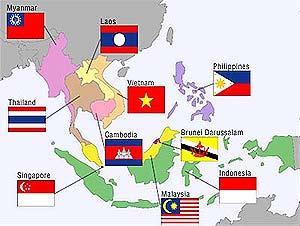 The 1997 Asian financial crisis gave impetus to a regional effort at managing financial instability caused by volatile capital flows and speculative currency attacks. Recognising the increasing integration of East and Southeast Asian economies, a Chiang Mai Initiative emerged in May 2000, initially as a network of bilateral swap agreements among ASEAN+3 member-states, which might yet evolve into a
de facto
Asian Monetary Fund following a May 2007 decision to multi-lateralise a US$80 billion pool of foreign exchange reserves of ASEAN+3 member-states.
The 1997 Asian financial crisis gave impetus to a regional effort at managing financial instability caused by volatile capital flows and speculative currency attacks. Recognising the increasing integration of East and Southeast Asian economies, a Chiang Mai Initiative emerged in May 2000, initially as a network of bilateral swap agreements among ASEAN+3 member-states, which might yet evolve into a
de facto
Asian Monetary Fund following a May 2007 decision to multi-lateralise a US$80 billion pool of foreign exchange reserves of ASEAN+3 member-states.
Beyond the risk of financial contagion in globalised capital markets, the Sars epidemic of 2002-2003 forcefully demonstrated the regional economic consequences of a life-threatening infectious epidemic, effects which would pale in comparison with the devastating human and economic impact of an outbreak of highly transmissible and lethal human flu on the scale of the 1918-1919 pandemic.
Notwithstanding the resolution adopted at the 60th World Health Assembly requesting WHO to establish an international stockpile of vaccines for H5N1 or other influenza viruses of pandemic potential, the limited production capacity globally, not to mention the financial needs for establishing and maintaining such a stockpile, are key issues that remain to be addressed.
A persuasive case could therefore still be made that ASEAN+3 might provide a potential institutional framework for mobilising the financial and technological resources in the region to enhance regional preparedness and response capabilities in a likely epicentre of an emergent flu pandemic. This would go beyond the existing co-ordination of surveillance networks to include the development and acquisition of vaccine manufacturing capabilities, to augment regional stockpiles of avian flu vaccines which can be made available as public goods on a priority needs basis.
Beyond the immediate concerns of timely and affordable access to pandemic flu vaccines, the Indonesian initiative has also raised the intriguing possibility of other analogous instances where individuals or groups of donors of biological materials and personal data could utilise the leverage of their gift relationship in clinical trials or other research settings in furtherance of the common good (rather than succumb to mercenary tendencies encouraged by a neo-liberal ethos).
PROF CHAN CHEE KHOON is the Convenor, Health & Social Policy Research Cluster, Women's Development Research Centre (Kanita), Universiti Sains Malaysia.


