




Accept reality of separate Tamil state
The conflict in Sri Lanka has gone too long, too many lives lost, too many people uprooted from their homes and with no solution in sight. But the solution has always been there, it is just that the international community and the Sri Lankan state have focused their energies on solutions that would not be accepted by Tamils.
The conflict in Sri Lanka has gone too long, too many lives lost, too many people uprooted from their homes and with no solution in sight. But the solution has always been there, it is just that the international community and the Sri Lankan state have focused their energies on solutions that would not be accepted by Tamils.
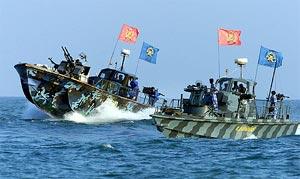
In the ultimate perspective, given the concrete realities, it would be best for the international community to accept the reality of a separate state for Tamils in the northeast of the island of Sri Lanka. An intelligent move towards such an option long advocated by the Liberation Tigers of Tamil Eelam (LTTE) would not only bring the conflict to halt, but would also ensure that indiscriminate killings will be brought to end. The Sri Lankan establishment must accept the fact that the LTTE is in control of nearly 70 percent of territory backed by a powerful army, navy and burgeoning airforce and not to mention the other usual trappings of a modern nation-state.
 Accepting the inevitably of a separate state for the Tamils would not be an aberration, but would acknowledge that under the present conditions of national oppression, it would be impossible for Tamils on the island to lead a decent and dignified existence under the oppression of the Sinhala- Buddhist hegemony.
The long years of liberation struggle as a response to Sinhala -Buddhist chauvinism demonstrates that Tamils will not obtain any justice under any political system organised and managed by the elite segments of the Sinhala-Budhsit society. History has proven beyond reasonable doubt that Tamils never received any sympathetic consideration under the Sinhala-Buddhist rule and there is no evidence to indicate that a singular political system under the Sinhala-Buddhist hegemony would provide a hope for Tamils.
Contrary to the prognosis of defenders of territorial integrity, the creation of a separate state for Tamils should not be construed as a chauvinistic endeavour. In fact, in the case of Sri Lanka, it represents the only viable option for the total emancipation of the Tamils. However, those arguing in support of federalism, autonomy and other forms of alternative models do not realise that such political options would have no place within the present unitary constitutional set up.
Vested interests
Such thinking should have been present in the fifties and sixties, not at time when the Tamil liberation movement has come to full fruition. Events in the last few years following the ceasefire have shown that the Sinhala-Buddhist state - immaterial of the party in control - cannot recognise the legitimate aspirations of the Tamils. Sinhala-Buddhist political maneuverings resulting in the rejection of the LTTE's interim administration proposal and the Supreme Court's nullification of the P-TOMs agreement among others, illustrate the sheer futility of Tamils even in obtaining minimal demands.
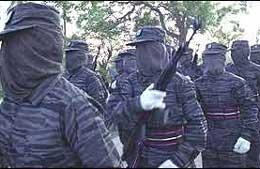 However, the international community (there is a need for a conceptual clarification of the term), dictated by the vested interests of certain super and regional powers, has not been in an objective position to evaluate and understand the historic nature of Tamil suffering on the island. It has failed to understand why the LTTE was formed in the first place and why it took up the struggle of Tamils.
Rather, it has found a very convenient route to label the organisation as a terrorist outfit that should be constrained if not totally curbed. Meanwhile, the so-called objectively-minded international community has sought to condone and at times support the action of the Sri Lankan state in containing the 'terrorist' LTTE. Very recently, the US Ambassador to Sri Lanka accused the LTTE of pushing the country in the direction of war and warned that it might face a powerful and well-armed Sri Lankan army.
The hypocrisy and double-speak of the international community is all written on the wall. It does not have the legitimacy nor the moral clout to intervene in the Sri Lankan conflict to provide a solution. In fact, there is no solution. The solution that this 'holier than thou' grouping is advocating is for Tamils to remain as third and fourth class citizens under the Sinhala-Buddhist domination and exploitation.
Political solution
But Tamils who have taken up arms to defend their rights and homeland will never be dictated by super powers or regional powers. The LTTE has time and again proved beyond doubt that it is the champion and guardian of the Tamils and no amount of pressure or intimidation will force them to abandon their most cherished objective of creating a separate state for Tamils - Tamil Eelam.
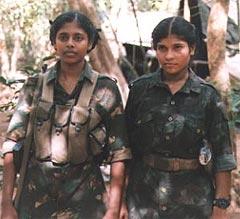 A time has come for the international community to accept whether it likes or not the inevitably of a separate state for Tamils in the northeast of Sri Lanka, an area that has been internationally recognised as the historic homeland of the Tamils from time immemorial. It is not for the international community to provide this option on a sliver platter; the LTTE will take what is legitimately belongs to Tamils.
The two-faced nature of the Sri Lankan state towards a peaceful solution for the Tamils has been laid bare. Attempts to entrap the LTTE within the international safety net collapsed with the defeat of Ranil Wickermesinghe in the recent presidential election. The use of Tamil paramilitaries to weaken the LTTE's hold on the east has backfired with the rise of Tamil resurgence movements in both the north and east. Finally, after losing many of their valuable cadres, the LTTE has finally found a way to deal effectively with the problem of Tamil paramilitaries.
The only political solution that would bring an halt to the conflict in Sri Lanka is the acceptance of the inevitably of a separate state for Tamils. If such an option is accepted, the international community can play a meaningful role in providing the conditions for this particular transition. Beyond this, the international community cannot envisage any other role.
PROF P RAMASAMY is visiting professor at at University of Kassel, Germany.


