




War and peace Part 1
"The military does not start wars, politicians start wars," quipped a former American general.
William Westmoreland's remark would have certainly irked politicians and bruised their egos. It is perhaps a credible analysis from his life experiences after having been professionally engaged in two wars, namely the Second World War and Vietnam War.
 The Stanford Encyclopedia of Philosophy also concurs that "war is a phenomenon which occurs only between political communities".
Defined as those entities which are either states or intend to become states (in order to allow civil war).
It also contends that classical war is international war, a war between different states, like the two World Wars.
"The military does not start wars, politicians start wars," quipped a former American general.
William Westmoreland's remark would have certainly irked politicians and bruised their egos. It is perhaps a credible analysis from his life experiences after having been professionally engaged in two wars, namely the Second World War and Vietnam War.
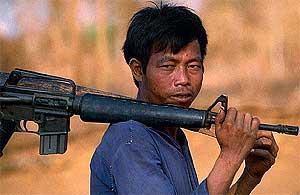 The Stanford Encyclopedia of Philosophy also concurs that "war is a phenomenon which occurs only between political communities".
Defined as those entities which are either states or intend to become states (in order to allow civil war).
It also contends that classical war is international war, a war between different states, like the two World Wars.
Today, certain political pressure groups, like terrorist organisations, might also be considered "political communities" in that they are associations of people with a political purpose and indeed many of them aspire to statehood or to influence the development of statehood in certain lands.
Hence, it is not surprising that the history of human civilization is saturated with a voluminous literature on war. Besides classical discourses on warfare particularly spanning the period from the middle-ages to modern times, we can read of war in poems, stories, anecdotes and histories encompassing conceptions of epic wars.
Human beings are warlike creatures. From ancient days of war horses to modern war heads, inventions are getting better and more effective at mass killing. The modern mind has increased the complexity in arguing the nature of wars and hence given birth to many schools of thought on war. An alternative definition of war even suggested that war is an all-pervasive phenomenon of the universe.
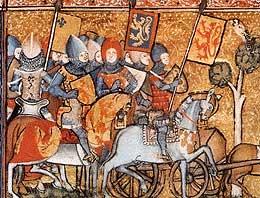 The Hegelian philosophy states that "war is the father of all things". Even Voltaire said, "famine, plague and war are the most famous ingredients in this wretched worldall animals are perpetually at war with each other.Air, earth and water are arenas of destruction," (source: Pocket Philosophical Dictionary).
In fact, the entire literature on war is itself, an academic discipline in classical literature and modern studies linking culture, political philosophy, psychology and state-of-the-art in military affairs.
Yet today, students of war are nowhere nearer to the truth despite grappling various sub-disciplines in trying to understand the "real" underlying causes of human nature and war.
Glorifying war
Even wartime leaders are remembered and glorified long after their deaths, leaving behind a legacy of publications on war literature and heroes. History of wars, stretching even before Julius Caesar's famous quotation, "I came, I saw, I conquered" stretches the imagination on the greatness of war conquerors in history books.
 Perhaps most remembered by historians is World War II leader Sir Winston Churchill, who was once voted as "the greatest British prime minister of the 20th century" by BBC. Quotable quotes of Churchill whipping up courage and bravery among soldiers, such as: "We shall defend our island, wherever the cost maybe, we shall fight on the beaches, we shall fight on the landing grounds, we shall fight in the fields and in the streets, we shall fight in the hills; we shall never surrender."
Yet there have been those who have led and fought wars without seeking war in his culture but wisdom in his faculty of reason. One of them was American General Omar Nelson Bradley who was also involved in the commanding of allied forces on D-Day in North Africa and Sicily (during World War II). Raising doubt and wisdom on wars, he remarked: "The world has achieved brilliance without wisdom, power without conscience. Ours is a world of nuclear giants and ethical infants. We know more about war than we know about peace, more about killing than we know about living."
Military historians and peace activists across the globe continue to argue over war's morality. From John Donne's concept that "no man is an island" to Aristotle's "man is a political animal", some critics prefer an organic conception of the community in which the individual's ability to negotiate for peace (through a social contract) or to wage war is embedded in the social structures that form him. And the oldest military treatise in the world, Chinese literature, "Sun Tzu" (Art of War) continues to generate much academic and professional interest among military, business and political institutions as well.
The philosophy of war
It is said that "to conquer peace, we must seek to understand war." Wars do not involve the mere killing of people but more often than not, unbelievable acts of atrocities committed against innocent civilians particularly women and children. The atrocities of war are acts against humanity. Unlike a student of war seeking to examine the definitions of war, moralists pose applied ethical and political questions. Is it ever right to wage war? Should certain acts of war be impermissible? What should be the legitimate authority to declare war? The philosophy of war indeed covers theoretical and applied areas. Examining wars begins with general questions: What is war? What causes war? What is the relationship between human nature and war? To what extend can humans be responsible for war?
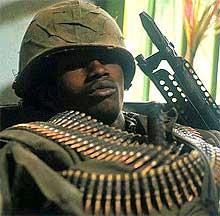 The nature of the philosophy of war is often complex. Pacifism does not share realism's moral skepticism. For the pacifist, war is always wrong. Where "just war theory" is sometimes permissive with regards to war, pacifism is always prohibitive. But to the pacifist, there is always some better resolution to the problem than waging wars. In fact, many of the rules developed by the just war tradition have since been codified into contemporary international laws governing armed conflict, such as the United Nations Charter and the Hague and Geneva Conventions.
The "just war theory" can be meaningfully divided into three parts: (1) jua ad bellum , which concerns the justice of resorting to war in the first place; (2) jus in bello , which concerns the justice of conduct within war, after it has begun and (3) jus post bellum , which concerns the justice of peace agreements and the termination phase of war. Since political leaders are the ones who inaugurate wars, setting their armed forces in motion, they are to be held accountable to fus ad bellum principles. If they fail in that responsibility, then they commit "war crimes".
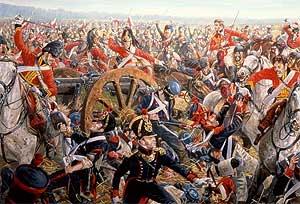 Aggressive leaders who launch unjust wars commit "crimes against peace". The emergence of international laws and related framework to safeguard world peace and stability on legitimacy of governments, political sovereignty and territorial integrity are constantly being tested and challenged by continuous acts of aggressions, civil wars, genocides and massacres in the recent past..
Exemplary cases of acts of aggression are like Nazi Germany into Poland in 1939 and Iraq into Kuwait in 1990. Other cases of deployed armed forces massacres of own citizens: Cambodia and Uganda in the 1970s, Rwanda in 1994, Serbia/Kosovo in 1998-99 and in Sudan/Darfur from 2004 to the current period. In Bosnia-Herzegovina vicious attacks against Muslims by Serbs. In African countries, hundreds of thousands were massacred or driven away from their homes and countries without effective actions from the United Nations against the aggressors.
Violations of world peace
Almost 17 years ago, the world celebrated the "peace dividends" of what it thought was the end of the Cold War or that the cold war was drawing to a close symbolised by the impending collapse of the Soviet Union. Pacifists and hawks thought the arms race would end. Many cherished hope for nuclear disarmament and idealists were optimistic for a new brave world to emerge.
World religious leaders prayed for a world with no violence, no oppression, no terror and an end to world poverty. But there was no peace. The Iran-Iraq war, the Soviet occupation of Afghanistan, the war in Cambodia, some of the Central American wars, the continuing violent Palestinian-Israeli confrontation and South Africa's apartheid dominated news headlines across the globe. Today, some of these conflicts may have been resolved, partially or completely. Were there valuable lessons learnt from all these violations of world peace?
The answer continues to lie in the future. Former American president John Fitzgerald Kennedy in his address before the General Assembly of the United Nations on Sept 25, 1961, said: "Unconditional war can no longer lead to unconditional victory. It can no longer serve to settle disputes. It can no longer concern the great powers alone. For a nuclear disaster, spread by wind and water and fear, could well engulf the great and the small, the rich and the poor, the committed and the uncommitted alike. Mankind must put an end to war, or war will put an end to mankind".
Earth and its inhabitants are constantly under threat by advanced and devastating technological and biological weapons of war. After the dropping of the atomic bomb in Japan which ended the Second World War by the Americans, renowned scientist and discoverer of the atomic theory Albert Einstein lamented, saying, "The release of atom power has changed everything except our way of thinking. The solution to this problem lies in the heart of mankind. If only I had known, I should have become a watchmaker".
 The shocking devastation caused by the atomic bombing besides killing millions of Japanese and bringing untold misery to many more thousands who later died of genetic deformations and diseases even years after the bombings. Former American President Ronald Reagan remarked on his country's relations with Russia in 1984, "History teaches that wars begin when governments believe the price of aggression is cheap. To keep the peace, we and our allies must be strong enough to convince any potential aggressor that war could bring no benefit, only disaster".
"War indeed does not determine who is right, only what is left," reflected philosopher Bertrand Russell.
Former Army General H Norman Schwarzkopf even went as far as saying that any soldier worth his salt should be anti-war. "A professional soldier understands that war means killing, war means maiming people, war means families left without fathers and mothers. All you have to do is hold your first dying soldier in your arms, and have that terrible futile feeling that his life is flowing out and you can't do anything about it. Then you understand the horror of war".
Former American President Franklin D Roosevelt in 1936 described the tragedies of wars. "I have seen war. I have seen war on land and sea. I have seen blood running from the wounded. I have seen men coughing out their gassed lungs. I have seen the dead in the mud. I have seen cities destroyed. I have seen 200 limping, exhausted men come out of line - the survivors of a regiment of 1,000 that went forward 48 hours before. I have seen children starving. I have seen the agony of mothers and wives. I hate war. I have passed unnumbered hours, shall pass unnumbered hours thinking and planning how war may be kept from this nation".
Part II will be published tomorrow
STANLEY KOH is attached to the Research and Planning Department of the MCA headquarters in Kuala Lumpur.


